Influencer marketing must move from visibility to measurable outcomes: Dheeraj Sinha
Speaking at IMPACT Digital Influencer Conference 2025, Dheeraj Sinha, CEO, FCB India, said that the single biggest challenge for marketers and leaders today is separating noise from real signal
 by
by
Published: Dec 17, 2025 5:50 PM | 4 min read
 Follow Us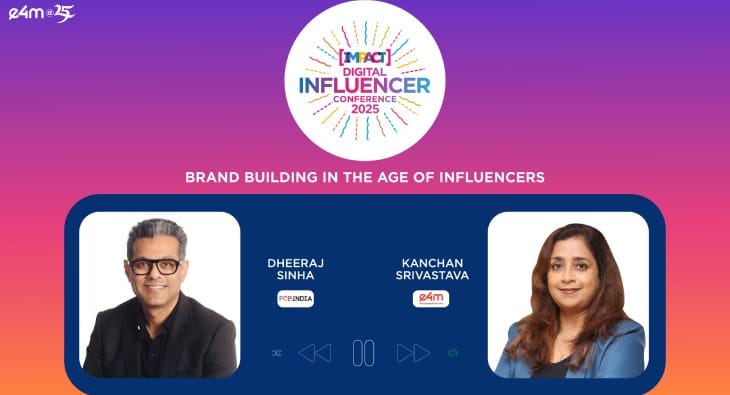

The scale, speed and seriousness of India’s creator economy is rapidly reshaping how brands think about growth, trust and commerce. With over 2 million active creators in the country, the ecosystem today is estimated to impact more than $350 billion in consumer spending. As ad spends on creator-led platforms are poised to overtake traditional media revenues, influence is no longer a tactical add-on but a central pillar of brand strategy. It was against this backdrop that a fireside chat on ‘Brand Building in the Age of Influencers’ unfolded at the IMPACT Digital Influencer Conference 2025, featuring Dheeraj Sinha CEO, FCB India (Now CEO, McCann), in conversation with Kanchan Srivastava, Senior Editor and Group Editorial Evangelist, exchange4media.
Sinha began the session by reflecting on his own leadership journey, noting that the single biggest challenge for marketers and leaders today is separating noise from real signal. “In times of constant change, where do you invest your mental energy? It’s very easy to get lost in noise,” he said, adding that clarity of focus has emerged as a critical leadership skill in an era marked by constant disruption, from platform shifts to AI and industry consolidation.
The conversation then moved to the growing cultural power of influencers and what it means for brand building beyond mere marketing. Sinha pointed out that influencers were initially deployed largely as a media lever for reach and velocity, especially for brands looking to scale quickly.
“Today, the question brands are asking is far more fundamental—did the influencer move the needle on behaviour, on purchase?” he said. “Likes and views alone are no longer enough.”
According to Sinha, influencer marketing must now move decisively towards brand signs and measurable business outcomes, particularly for mature brands where visibility without conversion becomes increasingly difficult to justify.
“In the early stages, influencers were used primarily to create awareness and velocity. But today, both brands and influencers need to ask: am I serving awareness, or am I helping conversion, or am I driving purchase?”
He cautioned that if influencers continue to be used only as a visibility engine, the model will inevitably come under scrutiny. He added that the influencer marketing ecosystem must evolve a few steps ahead, towards stronger integration with brand strategy and commerce outcomes. “Influence has to move towards purchase and conversion. Otherwise, we are in trouble,” he remarked.
Addressing how brands can remain relevant and trustworthy without losing their core identity in an influencer-led ecosystem, Sinha mentioned that consumers are capable of clearly distinguishing between influencers, celebrities and brands, each serving a different purpose in the decision-making journey. “People consume influencers for trust, empathy and content. They look at celebrities for aspiration. But when it comes to brands, they are looking to buy,” he said, stressing that a brand’s role is fundamentally commercial, not performative.
While influencers and brands can work symbiotically, Sinha maintained that influencers alone cannot substitute brand purpose or product value.
The duo further discussed how balancing brand consistency with influencer authenticity has become a growing challenge for marketers as they collaborate with creators. Sinha acknowledged that while brand managers were traditionally accustomed to controlling every aspect of messaging, today’s ecosystem demands a far more flexible approach.
“From 100% control, marketers are now willing to loosen their grip,” he said. “It’s okay to let the brand adapt to the personality and values of the influencer, but the question is, how much?”
According to him, relinquishing too much control risks diluting brand objectives, while excessive control can undermine the very authenticity that gives influencers their credibility.
Sinha emphasised that both brands and creators must move towards the middle ground, where creativity and commercial intent coexist. “The most successful influencers show remarkable consistency, in the topics they choose, the way they communicate and how they show up.”
“Choose your consistency like you choose your heart,” he said, advising brands to look beyond follower counts and evaluate whether an influencer’s content patterns, values and positioning truly align with the brand’s own narrative.
Concluding the session, Sinha outlined how creative agencies are redefining their role in the influencer-led ecosystem. He added that agencies are increasingly working with AI creators, influencers and platforms through structured frameworks, tools and long-term partnerships, signalling a more scientific and outcome-driven approach to influence marketing.
Read more news about Digital Media, Internet Advertising, Marketing News, Television Media, Radio Media
For more updates, be socially connected with us onInstagram, LinkedIn, Twitter, Facebook, YouTube & Google News