Good news for marketers: Union Budget 2025 raises tax rebate threshold to Rs 12 lakh
By freeing an estimated Rs 85,000–1.19 lakh crore in disposable income across 30% of urban households, the policy directly amplifies purchasing power
 by
by
Published: Feb 1, 2025 4:34 PM | 2 min read
 Follow Us

Finance Minister Nirmala Sitharaman’s Union Budget 2025 announcement, raising the income tax rebate threshold to those earning ₹12 lakh annually, marks a transformative shift for India’s middle class and B2B marketing landscapes.
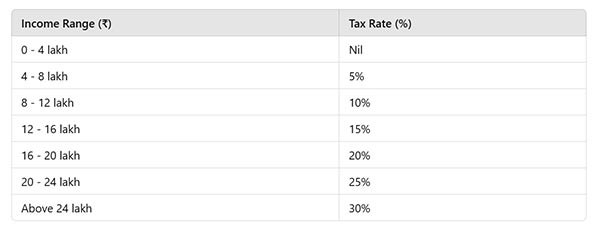
Sitharaman proposed to revise tax rate structures as follows. 0 to 4 lakh rupees nil, 4 to 8 lakh rupees 5%, 8 to 12 lakh rupees 10%, 12 to 16 lakh rupees 15%, 16 to 20 lakh rupees 20%, 20 to 24 lakh rupees 25% and above 24 lakh rupees 30%.
By freeing an estimated ₹85,000–1.19 lakh crore in disposable income across 30% of urban households, the policy directly amplifies purchasing power in discretionary sectors like consumer electronics, premium FMCG products, and lifestyle services.
This liquidity surge positions B2B marketers to anticipate increased client budgets, particularly in urban markets where middle-class aspirations increasingly drive demand for premium offerings.
The digital-first consumption patterns of younger demographics (Gen Z/Millennials) will likely accelerate investments in hyper-personalized advertising, mobile-optimized platforms, and buy-now-pay-later payment integrations.
With 91% of middle-income shoppers prioritizing essential needs, B2B strategies emphasizing customer retention—such as AI-driven loyalty programs and predictive analytics for demand forecasting—could gain strategic importance.
Sector-wise, real estate marketing may see collaborations between developers and fintech firms to leverage new tax incentives for first-time homebuyers, while healthcare and education providers might channel surplus household funds into premium service campaigns.
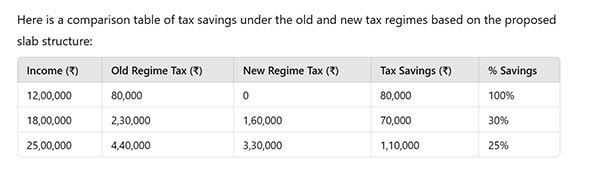
"The total tax benefit of slab rate changes and rebate at different income levels can be illustrated with a few examples. A taxpayer in the new regime with an income of 12 lakh rupees will get a benefit of 80,000 rupees in tax which is 100% of tax payable as per the existing rates. A person having income of 18 lakh rupees will get a benefit of 70,000 rupees in tax that is 30% of tax payable as per existing rates," said Sitharaman.
Marketers must align with evolving consumption trends, leveraging data analytics to identify micro-segments and craft narratives that resonate with newly empowered middle-class consumers seeking both financial prudence and lifestyle upgrades.
Read more news about budget 2024, Marketing, PR and Corporate Communication, Internet Advertising, People Movement
For more updates, be socially connected with us onInstagram, LinkedIn, Twitter, Facebook, YouTube & Google News
