Truth will prevail: Subhash Chandra responds to NCLT controversy
Zee founder says the widely cited Rs 22,000-crore figure relates to claims arising from personal guarantees, not money borrowed by him
 by
by
Published: Aug 28, 2026 2:51 PM | 7 min read
 Follow Us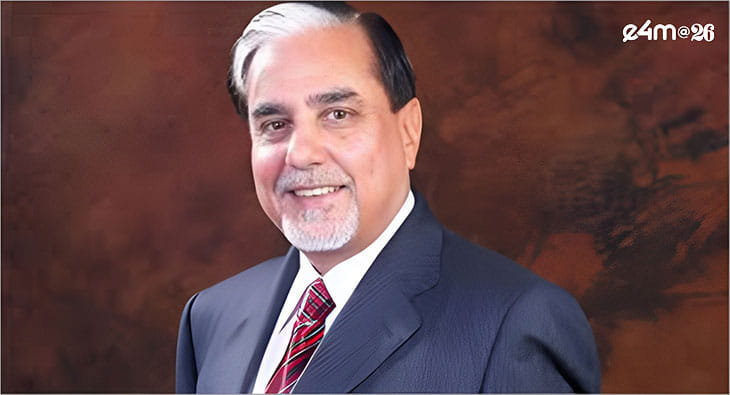

- Dr. Subhash Chandra, founder of Zee and the Essel Group, addressed the controversy regarding a National Company Law Tribunal (NCLT) order approving a Rs 6.5-crore repayment plan in his personal insolvency proceedings, clarifying that the proceedings relate to personal guarantees for loans taken by Essel Group companies, not a personal loan of Rs 22,000 crore.
- The NCLT approved the repayment plan on August 25, which allocates Rs 6.25 crore for creditors and Rs 25 lakh for insolvency costs, amidst claims totaling approximately Rs 22,006 crore, leading to criticism over the low recovery rate of about 0.03%.
- Chandra emphasized that the reported Rs 22,000 crore figure includes claims based on guarantees and does not represent his current personal debt, asserting that the Essel Group has repaid around Rs 43,000 crore of its total borrowings of Rs 45,000 crore since a financial crisis in January 2019.
- He disputed claims regarding his personal net worth, stating that earlier figures misrepresented his wealth, and expressed confidence in rebuilding his financial standing, while inviting public inquiries to clarify misconceptions.
Dr Subhash Chandra, founder of Zee and the Essel Group and Chairman Emeritus of Zee Entertainment Enterprises Ltd, has broken his silence on the controversy surrounding a National Company Law Tribunal order approving a Rs 6.5-crore repayment plan in his personal insolvency proceedings.
In a direct video address, Chandra rejected the suggestion that he had personally borrowed Rs 22,000 crore and was now walking away after paying only a fraction of that amount.
At the heart of Chandra’s response is a distinction that has often been lost in headlines and social-media posts: the proceedings concern personal guarantees he extended for loans taken by Essel Group-linked companies, rather than a Rs 22,000-crore personal loan taken by him.
The NCLT order, pronounced on August 25, approved a plan providing Rs 6.25 crore for creditors and Rs 25 lakh towards insolvency-resolution costs. The proceedings have been widely reported against admitted claims of approximately Rs 22,006.57 crore, producing an apparent recovery of about 0.03 per cent. The scale of the differential has triggered criticism from political figures, commentators and some lenders.
Chandra, however, argued that the headline comparison gives an incomplete account of the underlying borrowings, the repayments already made by the principal borrowers and his role as a guarantor.
“On January 24, 2019, our group faced a problem because of an asset-liability mismatch,” he said, recalling the open letter he issued at the time to lenders, investors and the wider public. “I said that I had made some mistakes and that the borrowing entities of our group would repay the financial system.”
Chandra said the group and his family subsequently sold assets to meet their obligations.
“We sold our family’s assets, we sold our assets and we did not keep anything, but we paid everyone’s money,” he said.
According to Chandra, the Essel-linked companies for which he had furnished guarantees had aggregate borrowings of around Rs 45,000 crore at the time of the January 2019 crisis. Of this, he claimed, approximately Rs 43,000 crore has since been repaid. The balance, he said, relates to companies where asset-liability issues have held up full settlement.
These figures are assertions made by Chandra and the borrowing entities; they are separate from the claims admitted in the personal insolvency process. That distinction is central to the competing narratives around the NCLT outcome.
Chandra Disputes The Rs 22,000-Crore Narrative
Chandra said the Rs 22,000-crore figure represented claims filed on the strength of guarantees and did not reflect the amount currently outstanding from him as a personal borrower.
His office has said that claims filed in the proceedings totalled around Rs 22,006 crore and that about Rs 21,696 crore was admitted. It has separately stated that lenders objecting to the repayment plan accounted for claims of around Rs 3,992 crore.
Of that Rs 3,992 crore, Chandra said claims worth about Rs 620 crore had already been settled. He added that the relevant borrower entities had placed offers of roughly Rs 1,100 crore before lenders and that discussions were continuing.
“The entities of our group are committed to repaying everyone’s money,” Chandra said. “This is what our elders taught us: whoever has to be paid should be paid.”
He also said some infrastructure companies were awaiting receivables from state governments and that the group was pursuing those payments. Additional properties may have to be sold to settle the remaining amounts, he added.
The NCLT proceedings arose from guarantees provided by Chandra for corporate borrowings. Under insolvency law, a lender may pursue a personal guarantor when the principal borrower defaults, subject to the terms of the guarantee and the applicable legal process. Claims admitted against a guarantor can therefore be substantially larger than the guarantor’s present personal assets.
Why The Tribunal Approved The Plan
The repayment plan was approved by creditors holding 80.81 per cent of the voting share. A two-member NCLT bench had earlier delivered a split verdict, after which Judicial Member Nilesh Sharma was appointed as the third member to resolve the difference.
In his August 25 order, Sharma held that the plan should be approved under Section 114 of the Insolvency and Bankruptcy Code. He found that the record did not establish procedural violations serious enough to invalidate the process or overturn the decision of the required majority of creditors.
The tribunal did identify an irregularity in the admission of claims submitted by two individuals on behalf of 1,260 people without adequate supporting material. It directed the resolution professional to remove those claims, prepare a revised list of creditors and redistribute the repayment amount among the remaining eligible creditors.
The order said the approved plan would bind both assenting and dissenting creditors under Section 115 of the IBC.
Several financial institutions had opposed the proposal, questioning the exceptionally low recovery and the assessment of Chandra’s assets.
HDFC Bank has said its admitted claim represented 3.2 per cent of the total stated claim amount, that it voted against the plan and that it is exploring an appeal before the National Company Law Appellate Tribunal.
LIC Housing Finance, Axis Bank, Canara Bank, RBL Bank and Union Bank were also among the lenders reported to have opposed the plan.
The Dispute Over Personal Net Worth
Chandra also used the address to challenge reports that his personal net worth had fallen from more than Rs 45,000 crore to Rs 31.79 crore.
He said the higher figure had incorrectly treated the market capitalisation of group companies as his personal wealth. Referring to the asset declaration he made when entering the Rajya Sabha in 2016, Chandra said he had publicly declared a net worth of a little over Rs 39 crore at the time.
“If I declared around Rs 39 crore in 2016, how could my personal net worth become Rs 45,000 crore in 2017?” he asked.
The tribunal order records that certificates submitted to RBL Bank in 2017 and Canara Bank in 2018 had reflected net-worth figures of about Rs 45,888 crore and Rs 40,562 crore, respectively. Objecting creditors relied on these documents to demand deeper scrutiny and an independent asset-tracing exercise.
The third member acknowledged that the sharp difference between those historical figures and Chandra’s reported 2024 net worth of Rs 31.79 crore justified questions.
However, he held that the old certificates did not by themselves prove concealment, diversion or fraudulent transfer of assets, and that the IBC did not make a forensic audit a mandatory precondition for considering the repayment plan.
The order records personal assets with a market value of about Rs 31.79 crore as of July 31, 2024, including a residential property valued at approximately Rs 25 crore. The Rs 6.5-crore proposal was arrived at after leaving that residential property outside the amount offered under the plan.
Chandra said he had rented out part of his home and was meeting his expenses through the rental income. He added that the remaining Rs 6.5 crore available to him would have to be paid under the approved plan.
‘I Have No Regrets’
Despite describing the erosion of his family’s assets, Chandra adopted a defiant and forward-looking tone.
“I have no regrets. I will earn again,” he said. “I am a pioneer. I know how to do good and new things, and I will continue to do them.”
He said he planned to meet an investment professional in Switzerland in the coming weeks to explore opportunities in India and elsewhere. He also indicated that he could borrow Rs 2 crore to Rs 4 crore from family members to invest in new businesses and begin rebuilding.
Chandra invoked his record as a first-generation entrepreneur, saying the ventures he created had provided employment to thousands of families and contributed substantially to the financial system over more than five decades.
The Zee founder ended his address by asking the public not to accept social-media claims at face value. He invited people to send him questions directly and said he would respond.
“The truth will ultimately prevail,” Chandra said.
Read more news about Television Media, Digital Media, Advertising India, Marketing News, PR and Corporate Communication News
For more updates, be socially connected with us onInstagram, LinkedIn, Twitter, Facebook YouTube & Google News