YouTube’s print ads make a case for print’s enduring influence: Dabur’s Rajiv Dubey
Dabur’s Vice President and Head of Media says YouTube’s newspaper campaign highlights why marketers should combine the strengths of different media
 by
by
Published: Oct 13, 2026 12:43 PM | 2 min read
 Follow Us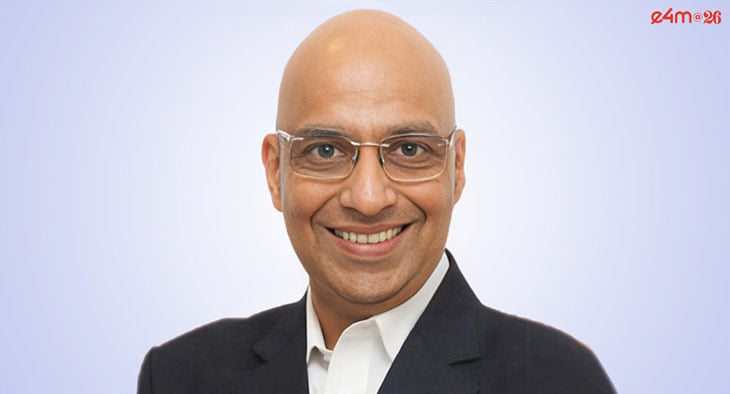

- Rajiv Dubey, Vice President and Head of Media at Dabur, emphasizes the ongoing relevance of print media following YouTube's recent full-page newspaper advertisements in Mint and The Economic Times to attract advertisers.
- Dubey highlights the irony of a digital platform, often seen as a competitor to print, utilizing traditional media to promote itself, suggesting that print may not be "dead" as commonly believed.
- He advocates for a holistic view of media planning, arguing that different platforms serve unique roles in marketing strategies, with print providing credibility, television offering mass reach, and digital ensuring precision.
- Dubey encourages marketers to leverage the strengths of various media rather than framing the conversation as a competition between them, asserting that traditional media can still effectively support digital platforms.
YouTube’s use of newspaper advertising to reach advertisers has prompted Rajiv Dubey, Vice President and Head of Media at Dabur, to highlight print’s continuing influence and question the tendency to frame media planning as a contest between platforms.
In a LinkedIn post, Dubey pointed to full-page front-page YouTube advertisements in Mint and The Economic Times, describing the campaign as an illustration of a digital platform turning to traditional media to make its pitch to advertisers.
“The medium accused of killing print is now buying print to sell itself,” Dubey wrote. “Maybe print isn’t dead after all.”
He noted the irony of digital platforms, after decades of taking advertising share from traditional media, using newspapers to encourage advertisers to direct their budgets towards YouTube. He characterised the pitch as: “You’re investing in print? Great. Now come to YouTube.”
For Dubey, however, the larger lesson was about the complementary roles of different media in a marketer’s strategy.
“Media should not be viewed as Print vs TV vs Digital vs YouTube,” he wrote, arguing that each medium performs a different job.
In his assessment, print brings credibility and influence, television delivers mass reach and impact, and digital offers precision and addressability. YouTube, meanwhile, combines video and scale with full-funnel measurability.
Dubey urged marketers to connect these strengths rather than declare one medium dead and another victorious. His argument places the emphasis on how platforms can work together to meet advertising objectives, with their individual strengths contributing to the broader media mix.
YouTube’s newspaper campaign, in his reading, demonstrates that a medium facing disruption can still play an influential role in promoting the platform associated with that disruption.
“Because sometimes, the medium that is supposedly being disrupted is still powerful enough to sell the disruptor,” Dubey wrote, calling it an argument for the enduring power of print.
Read more news about Marketing News, Advertising News, PR and Corporate Communication News, Digital News, People Movement News
For more updates, be socially connected with us onInstagram, LinkedIn, Twitter, Facebook, YouTube & Google News
