Reach, relevance & revenue built by following consumers, content and trust: Ashish Sehgal
Ashish Sehgal, CEO of Times Television Network and Chief Growth Officer, spoke at a recent roundtable on ideas like an integrated newsroom, the shift from GEC to news, his outlook for 2026 and more
 by
by
Published: Dec 18, 2025 9:19 AM | 7 min read
 Follow Us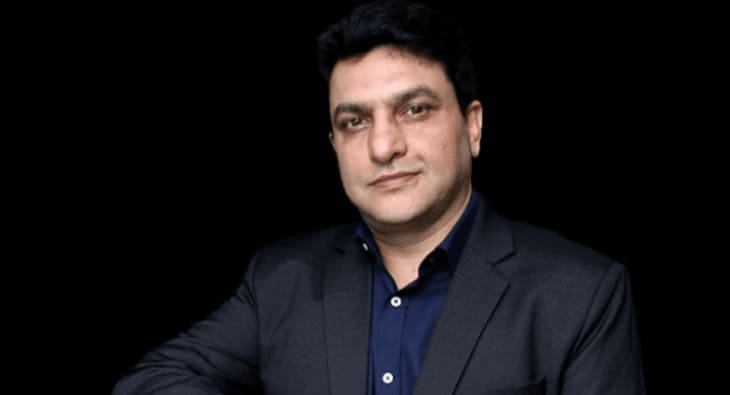

Calling the TV versus digital debate a false binary, Ashish Sehgal says media companies must move past platform silos. The newly appointed CEO of Times Television Network and Chief Growth Officer for Media and Entertainment argues that consumer behaviour, not medium, should drive content and business strategies.
“There is no competition between TV and digital,” Sehgal said at a media roundtable on Wednesday, describing today’s media ecosystem as an “AND world”. Audiences, he argued, are no longer confined to a single screen. “The consumer today sits across formats and devices,” he said, adding that content strategies must be built with this reality at the centre rather than around platform silos.
Read e4m newsbreak on Ashish Sehgal's appointment at Times Television Network
One newsroom, many platforms
Central to Sehgal’s approach is the creation of a single integrated newsroom that services multiple platforms. The idea is to originate content from one editorial core and then adapt it for television, digital and social platforms based on how audiences consume content in each environment.
“Content has to be created once, and then distributed intelligently,” Sehgal said. Long-form narratives, he noted, may work best on television, while key highlights can travel to social media and extended or supplementary material can find a home on platforms like YouTube. This, he clarified, is not a radical shift but an acceleration of an existing vision at Times Network. Drawing from his experience across media businesses, he sees his role as sharpening execution and strengthening synergy rather than introducing change for its own sake.
The day Ashish Sehgal took charge
From GEC to news: The mindset shift
Having spent several years in a GEC-led environment at Zee, Sehgal acknowledged that moving into a news-first setup requires a recalibration of mindset. While he pointed out that he has also led Zee Media Corporation and is well-versed with newsroom operations, he said the difference lies in how content is positioned and monetised.
“Entertainment talks to the masses, news talks to thought leaders,” Sehgal said, explaining how influence in news cascades outward from opinion makers to wider audiences. As a result, content creation, business strategy and even the P&L approach differ. In news, content often plays an advocacy role, shaping narratives rather than simply delivering viewership.
Bringing consumer insight into journalism
One of the key learnings Sehgal brings from entertainment into news is a sharper focus on consumer insight. He observed that while entertainment companies invest deeply in understanding audience preferences, newsrooms often build narratives primarily from a journalist’s perspective.
“News also needs to be informed by consumer behaviour,” he said, adding that audiences consume information differently across screens and formats. At the same time, he stressed that news carries a far greater responsibility. Unlike entertainment, news content actively shapes future narratives and public opinion. This makes accuracy, accountability and balance critical, especially in an environment where television is regulated but digital platforms are not.
Building credibility on digital, he said, is therefore a major priority for Times Network, Sehgal added.
Elections, responsibility and the role of news
With 2026 shaping up to be an election-heavy year, Sehgal sees both opportunity and obligation for news broadcasters. Elections are commercially beneficial, he said, but they also heighten the responsibility of acting as a bridge between citizens and the government.
“A news network has to take the government’s agenda to the people, and the people’s concerns back to the government,” he said. Platforms like the India Economic Conclave, he noted, play a vital role in shaping economic and policy discourse well ahead of formal announcements such as the Union Budget.
These forums help set agendas, inform policymaking and provide insights into sectors likely to see growth. From a commercial standpoint, such insights also help news networks identify advertiser categories aligned with policy-driven consumption.
Reach, relevance and revenue
Sehgal’s consumer-first philosophy extends across demographics. While Gen Z, working-age adults and senior citizens have different priorities, he said they share common aspirations around well-being and national progress. News, he argued, has the flexibility to address generational issues within a single channel, unlike entertainment which often requires sharper segmentation.
From a business lens, Sehgal summed up, “Reach comes from being everywhere the consumer is, relevance comes from content that matters, and revenue follows trust,” he said.
Importantly, he added that Times Network will prioritise responsibility over short-term monetisation, even if that means turning down certain revenue opportunities.
How 2025 played out and why 2026 looks stronger
Reflecting on 2025, Sehgal described the year as better than initially expected. While the early months were subdued due to lower government spending following the Lok Sabha elections, private advertising gradually picked up.
Trade and tariff uncertainties did create an overhang, but recent GDP numbers have reinforced confidence in India’s economic momentum. This, he said, has translated into healthier media spends and stronger engagement around large-scale events.
Looking ahead, Sehgal remains optimistic about 2026. “What we are seeing is not event-led growth, but structural momentum,” he said, pointing to consumption data and GDP trends as underlying indicators.
Where advertiser momentum will come from
On advertiser categories, Sehgal identified education as a sector beginning to recover after turbulence in the edtech space. Real estate continues to be a key category, while BFSI remains a steady growth driver. Insurance is also expected to open up further as policy frameworks evolve.
FMCG, he said, is stabilising and could return to double-digit growth, which would have a multiplier effect across industries. Travel and tourism is another sector Sehgal sees gaining momentum as global disruptions ease. He also pointed to artificial intelligence as an emerging opportunity, noting that as AI reshapes communication strategies, more tech companies could enter mass advertising spaces like news television.
TRP, credibility and right journalism
While acknowledging that TRPs remain important, Sehgal cautioned against treating them as the sole indicator of success. “Ratings matter, but they don’t define everything,” he said. Ratings, according to him, do not fully capture a channel’s editorial positioning or the loyalty of viewers who engage with it for credibility and trust.
For him, right journalism means being the voice of the nation, representing diverse perspectives, addressing citizen concerns and shaping conversations that matter across regions and demographics.
The Times Group advantage and the road ahead
On the commercial front, Sehgal spoke about the growing importance of integrated offerings across television, digital, events and experiential platforms such as Global Business Summit, Times Now Summit and India Economic Conclave.
A senior group representative pointed to the breadth of the Times Group’s assets across news, entertainment, lifestyle, radio, outdoor, digital and large-scale IPs including Filmfare, Femina, Miss India and a strong portfolio of B2B events, describing the bouquet as formidable for advertisers seeking scale and influence.
Concluding the interaction, Sehgal outlined a two-pronged growth approach. One focused on deeper vertical integration across existing brands, events and IPs, and the other on horizontal expansion aligned with India’s evolving economy.
Citing Leaders of Tomorrow, a daily entrepreneurship show now in its 13th year, Sehgal said sustained commitment to specialised content remains central to the network’s strategy. Beyond entrepreneurship, themes such as artificial intelligence, climate change, the digital economy and crypto will increasingly shape public discourse.
Measuring impact, he argued, must go beyond TRPs. Independent media coverage and policy influence, as seen with the India Economic Conclave shaping economic thinking ahead of the Union Budget, remain far more meaningful indicators of relevance.
For Times Network, Sehgal said, this reinforces a clear belief. “The real value of journalism is not just in numbers,” he said, “but in influence, trust and long-term impact.”
Read more news about Television Media, Digital Media, Advertising India, Marketing News, PR and Corporate Communication News
For more updates, be socially connected with us onInstagram, LinkedIn, Twitter, Facebook YouTube & Google News