World News Day: India has become the centre of the world’s news
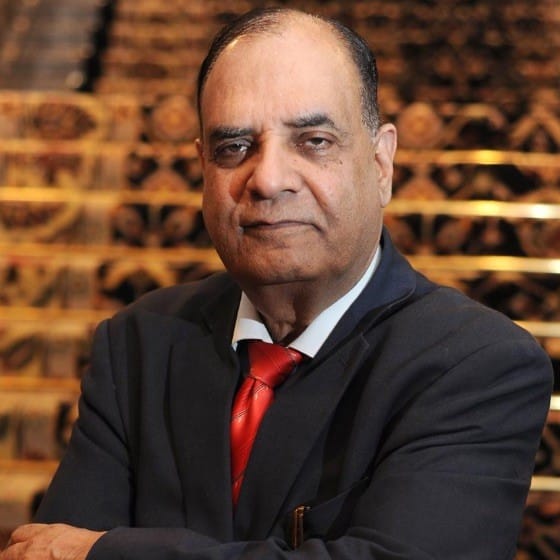
Guest Column: Veteran journalist Alok Mehta explores India’s growing role in global news and the need to uphold truth, credibility and public interest amid rapid technological change
 by
by
Published: Sep 28, 2026 9:38 AM | 7 min read
 Follow Us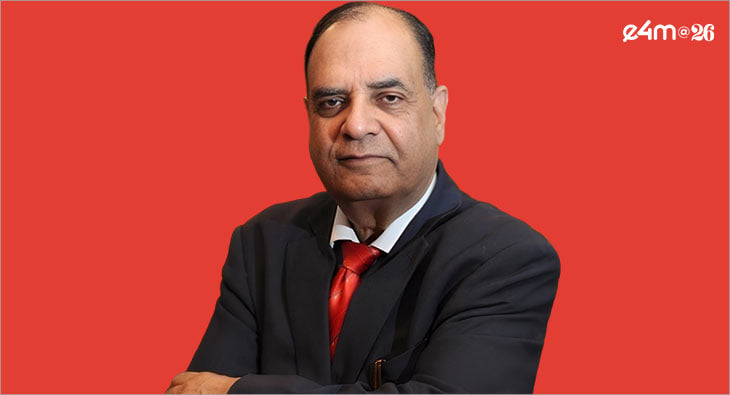

- World News Day serves as a platform to reflect on the evolution of journalism and the changing landscape of news consumption, particularly in India, which has become a significant center for news and information globally.
- The article highlights India's status as the world's largest democracy and an emerging economic power, emphasizing its diverse languages, cultures, and the coexistence of various faiths within a democratic framework.
- While the digital revolution has democratized journalism, it has also led to challenges regarding credibility and the spread of misinformation, necessitating a balance between freedom of expression and responsible journalism.
- The author expresses optimism for the future of journalism in India, noting the potential for growth in news media driven by expanding literacy, internet access, and the demand for information, while underscoring the enduring importance of truth and journalistic integrity.
World News Day is not merely an occasion to celebrate newspapers, television channels, digital platforms or journalists. It is also an opportunity to ask a larger question: where is the world looking for news today, and why? For me, this question has a deeply personal meaning. I entered journalism as a young correspondent in the late 1970s, when news travelled through handwritten notes, typewriters, teleprinters, telephone calls and printed newspapers. More than five decades later, I have witnessed an extraordinary transformation—from the age of the reporter carrying a notebook to the age of a reporter carrying a smartphone with a camera, recorder, editing tools and access to the entire world.
During these decades, India itself has changed dramatically. And in my view, India today is not simply one of the world’s important news markets. India has increasingly become one of the world’s major centres of news and information.
There are many reasons. India is the world’s largest democracy, with an enormous and politically active population. It is an emerging economic power, a nuclear-armed country, a major technology centre and an increasingly important voice in global diplomacy. At the same time, India remains a remarkable civilisation of multiple languages, religions, cultures and traditions. What makes India particularly interesting to the world is that these differences coexist within one constitutional and democratic framework. Hindi, Bengali, Tamil, Telugu, Marathi, Gujarati, Malayalam, Kannada, Punjabi, Urdu and many other languages have their own newspapers, television audiences, literary traditions and digital communities. Hindus, Muslims, Christians, Sikhs, Buddhists, Jains and people of other faiths participate in the same national democratic process. I am always optimistic for the future. In my book ‘Power Press & Politics’ (Published by Bloomsbury India) I have mentioned success and challenges of Indian media. Senior Editors, diplomates, scholars agreed my view points and commented positive.
For an international journalist, this makes India almost an endless source of stories.
India’s economic transformation is another major reason. The world watches India’s growth, infrastructure, manufacturing, technology, start-up ecosystem, digital payments, space programme, defence capabilities, energy transition and efforts towards greater self-reliance. India’s relationship with the United States, Russia, Europe, Japan, the Gulf countries, Africa and the wider Global South generates international news every day.
India’s diplomacy is also attracting growing global attention. At a time when the world is dealing with wars, geopolitical tensions and competition among major powers, India’s stated emphasis on dialogue, strategic autonomy, development and peace gives its foreign policy considerable international interest. Comparisons are naturally made by commentators between different world leaders and their approaches, but India’s own voice has become much more prominent in international affairs.
I remember a time when much of the world’s understanding of India was filtered through a relatively small number of Western news agencies and international publications. Indian journalists and newspapers often depended heavily on Reuters, AP, AFP, UPI and other foreign agencies for international news.
That world has changed.
Indian newspapers, television networks, news agencies, websites and digital platforms now produce enormous quantities of original reporting. Indian journalists are present in almost every major international centre. Indian television channels reach audiences beyond India, while digital platforms allow an Indian story to become a global story within minutes. This is an important change in the balance of information.
India is also one of the world’s largest markets for news media—print, television, radio, websites, mobile platforms and social media. Its huge population, rising literacy, expanding middle class, growing internet penetration and enormous appetite for information provide an unusually large audience.
But the greatest opportunity may still be outside the major metropolitan cities.
India’s rural and semi-urban population represents an enormous and often under-served information market. As literacy, smartphone ownership and internet access continue to expand, people in villages and smaller towns increasingly want information about government schemes, agriculture, education, employment, health, courts, police, prices, local administration and national politics.
The hunger for information is not declining. It is expanding.
Yet this expansion has also created a serious challenge: credibility.
The same digital revolution that has democratised journalism has also made it possible for misinformation, manipulated videos, fabricated quotations, anonymous propaganda and sensational claims to travel faster than verified news. Social media has given everyone the ability to publish, but publication and journalism are not necessarily the same thing.This is where the future of journalism will be decided.
The answer cannot simply be more restrictions. Nor can journalism operate without any standards of responsibility. The essential requirement is a combination of professional self-regulation, strong journalistic ethics, transparency, accountability and sensible laws that protect citizens without unnecessarily weakening legitimate freedom of expression.
Journalists must accept that credibility is their greatest capital. Once readers and viewers stop believing a news organisation, its technology, reach and revenue cannot compensate for the loss.
My own professional journey has given me a ringside view of this transformation.
I began with the basic tools of journalism: a notebook, pen, typewriter, telephone and the discipline of getting facts right. News could take hours to reach another city. Photographs had to be physically transported or transmitted through specialised systems. Editing required physical copies and proof sheets.
Then came computers, satellite television, fax machines, mobile phones, the internet, websites, 24-hour television and eventually social media.
Today, a journalist can report an event from almost anywhere in the world, record video and audio, photograph it, edit the material and publish it globally within minutes.
Technology has changed the speed of journalism. But it has not changed its fundamental responsibility.
A journalist still has to ask: What happened? Who said it? What is the evidence? What is the other side? What do we know—and what do we not know?
That discipline will remain necessary whether the story is printed on paper or watched on a mobile phone.
I have worked through several generations of journalism—from correspondent and reporter to editor and broadcaster—and I have seen both the difficulties and the opportunities of every technological era. I have also seen journalism move from being an elite profession serving a relatively limited audience to becoming a mass, participatory information ecosystem.
I remain optimistic about its future.India’s demographic scale, expanding literacy, enormous rural population, multilingual society, growing economy and continuing appetite for information provide a foundation for a very large news industry. Print will evolve rather than simply disappear. Television will change. Digital journalism will expand. Video and audio will become increasingly important. Artificial intelligence will transform news gathering, translation, research and production. But technology cannot replace trust. On World News Day, therefore, I would celebrate not merely the survival of journalism but its continuing transformation.
From my first days as a young journalist to the present digital age, one lesson has remained constant: the tools of journalism change, but the value of truth does not. India’s importance in the global news landscape will continue to grow because the country itself is changing—and because the world increasingly wants to understand that change. The India I first reported on and the India I report on today are vastly different. Yet the basic responsibility of the journalist remains exactly the same: to observe carefully, verify honestly, question fearlessly and communicate responsibly. That is why, after more than five decades in journalism, I remain convinced that the future of news in India is not only alive—it is extraordinarily promising. The challenge before the next generation is to make sure that the enormous power of new technology serves truth, public interest and informed citizens, rather than merely speed, sensation and commercial competition. That, perhaps, is the real meaning of World News Day.
Read more news about Digital Media, Television Media, Out of Home Advertising, Print Media, Latest Advertising India
For more updates, be socially connected with us onInstagram, LinkedIn, Twitter, Facebook, YouTube & Google News