India has not become better at debating: Deepak Thimaya
Thimaya discusses the idea behind Verbattle, the need to move beyond binary arguments, the decline in the quality of public discourse
 by
by
Published: Sep 22, 2026 9:48 AM | 7 min read
 Follow Us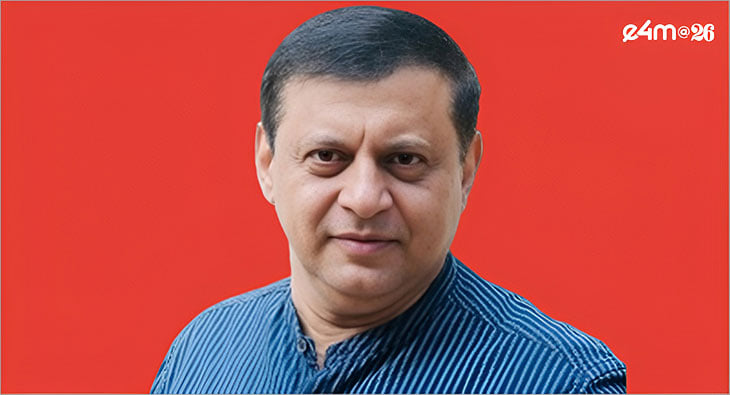

- Deepak Thimaya, a multifaceted professional in television, journalism, filmmaking, and education, emphasizes the importance of living a meaningful life through diverse experiences in his career.
- He founded Verbattle to address the lack of a prominent Indian debate organization and to promote a more nuanced approach to discourse, moving beyond binary arguments prevalent in traditional debate formats.
- Thimaya critiques the decline in the quality of public discourse in India, noting an increase in intolerance toward dissent and a general aversion to logical thinking.
- He highlights the distinction between effective public speaking and genuine thinking, advocating for the importance of emotional intelligence and meaningful communication in engaging audiences.
Deepak Thimaya’s professional journey spans television, journalism, filmmaking, theatre, education, art and political communication. The television presenter, senior journalist, filmmaker and founder of Verbattle believes each of these fields has shaped him differently while reinforcing a common purpose: the pursuit of a meaningful and fruitful life.
In this conversation, Thimaya discusses the idea behind Verbattle, the need to move beyond binary arguments, the decline in the quality of public discourse and the crucial difference between speaking impressively and thinking deeply.
Excerpts:
You have worked across journalism, television, films, theatre and politics. Which of these has shaped you the most?
I have also worked extensively in education. I have been an artist—more specifically, a painter—as well as a teacher and consultant. I have done many different things, and I believe each one has played a distinct role in shaping me.
Teaching taught me something that theatre could not, while politics taught me things that television did not. At the same time, there was something common to all these experiences. They taught me that whatever you do, you do it because you want to make your life meaningful and live a fruitful life.
It is not about giving yourself a certificate on the final day of your life. It is about evaluating, every day, how you are living. Ultimately, you are here to live.
What gap did you see in 2005 that made you start Verbattle?
I did not suddenly discover the gap in 2005. I had been working in television and conducting political interviews even before that. From around 2003, I was also looking for an organisation with which I could collaborate because I had started a small school.
I wanted to connect with an international organisation that could bring a different perspective to education. I had a distinct vision for the school and was searching for an organisation that could either support that vision or connect schools through new ideas.
During that search, I discovered several debate organisations. At the time, debate organisations were more visible across the region than they are today. Bangladesh had large debate organisations, as did Pakistan. However, despite Google being quite active by then, I could not find a similarly large Indian debate organisation.
When I began researching the existing debate formats, I found that most followed Western structures based on binary logic: true or false, good or bad, right or wrong, correct or incorrect. I had always believed that India traditionally had greater respect for the greys than merely for the blacks and whites. That made me feel it was time to create something around debating that reflected this broader approach.
Initially, I was only thinking of organising a debate competition. I wanted to take debating into schools. Having dealt with politicians for a long time, I had noticed a significant gap in their ability to communicate. Many politicians could not speak effectively, logically or persuasively. There were certainly some very good speakers, but they were few and far between.
At the same time, before criticising politicians, we needed to recognise that many of them came from simple or humble backgrounds. Several had not attended international or upmarket schools, while others came from backgrounds that were considered disadvantaged within the prevailing social structure.
I wanted to do something that could help future leaders emerging from every kind of school—not only elite institutions—to speak better, reason more logically, become more inclusive and understand the importance of dissent and democracy.
Many people believed, and some continue to believe, that democracy is only about securing votes in your favour. Democracy is much more than that. It concerns your choices, your right to dissent, your right to protest and your ability to evaluate yourself within a social setting. It also allows you to place your convictions before others and invite them to examine or ratify those beliefs.
That was the larger thinking behind the debate initiative. I received some support, and that is how Verbattle began.
From the very first competition, we introduced a different format: two speakers for a proposition and one against it, or two against and one in favour. My team and I continued fine-tuning the structure. Today, I believe we have developed an almost near-perfect format based on what we call Indian logic or multi-valued logic.
In this format, logic is not restricted to choosing between this or that. It allows different approaches to the truth. To an extent, it draws on Socratic logic and ideas associated with thinkers such as Karl Popper—approaches that have been readily adopted in the Western world.
Verbattle should undoubtedly have grown much bigger than it eventually did. However, I also held it very close to my heart. It had its own identity, brand and format, and I did not want people to dilute it.
Many people began copying the format, profiting from it and, in some cases, vulgarising it. We kept Verbattle relatively small partly because we did not have the resources or the wherewithal to scale it substantially. That is how Verbattle originated and grew during its initial years.
Has India become better at debating, or have we simply become louder at arguing?
India has not become better at debating. If anything, the quality of public discourse has deteriorated. After a certain point, people became increasingly intolerant of dissent. They no longer wanted to listen to one another.
Some people seem to revel in being illogical. Intelligence is sometimes despised, while knowledgeable and discerning people—or those with an inquiring mind—are looked down upon. Scientific temperament has become one of the biggest casualties.
I do not believe the world has necessarily become better in this respect, and India has certainly not. However, India is an enormous and diverse country, so we must be careful about making sweeping generalisations.
India continues to have all kinds of people. There are still many who recognise the importance of debating, scientific temperament, inquiry, logical thinking and rationality. Verbattle will, therefore, always find people willing to support it.
What we need is a society that does not look only at material or economic development but also values intellectual development. Intellectual development is not merely about speaking of history and what happened 5,000 years ago. It is equally about examining what we are doing today and thinking seriously about what we will do in the future.
What separates a good public speaker from a genuinely good thinker?
Some people are considered good public speakers simply because they speak quickly and effortlessly, almost from the tip of their tongue. However, I have also encountered extraordinary speakers who may not use perfect grammar, syntax or structure but know what to say, how to communicate it and how to connect with people.
Sometimes, one powerful line is enough to make people willing to listen to the next thousand lines because you have opened the door to their hearts.
Intelligence, therefore, should also include social and emotional intelligence. A person may be a great thinker, but people could still refuse to think along with them or accept what they are saying. You must first know how to reach people and make them willing to listen. Once that connection is established, everything else can fall into place.
A good speaker can otherwise be like an empty box making noise—even if it is sometimes a beautiful noise. A piano can produce beautiful sounds when its notes are played individually, but somebody must know what to play and when to play it. That is what separates mere speaking ability from meaningful communication and thought.
In the age of social media, are young people thinking more critically or reacting more quickly?
I am not sure how people are thinking because many seem to find thinking itself increasingly difficult. Forget critical, analytical or logical thinking—some people ask me how they should think at all.
When the brain enters a sustained thinking mode, it can be a tiring experience. Many people do not want to undertake that effort. When you make them think, they can become irritated. Some may even feel sleepy because the mind becomes tired while going through the process.
Thinking is a highly complex activity, and it must be practised every day so that the process gradually becomes easier and more natural.
Unfortunately, schools are not doing enough to teach children how to think. As children grow into young people and eventually become adults, society is also not doing enough to support their intellectual development. That is deeply unfortunate.
Read more news about Television Media, Digital Media, Advertising India, Marketing News, PR and Corporate Communication News
For more updates, be socially connected with us onInstagram, LinkedIn, Twitter, Facebook YouTube & Google News