‘Understanding culture is key to doing business globally’
Janhavi Pawar, Director, Sakal Media Group, discusses the relevance of soft power in forging lasting global trade relations
 by
by
Published: Aug 25, 2026 12:56 PM | 7 min read
 Follow Us

- The second edition of the Global Impact Forum (GIF) will take place in Mumbai on September 5-6, focusing on BRICS nations and the cultural forces influencing international collaboration, beyond mere trade.
- Janhavi Pawar, Director of Sakal Media Group, emphasizes the importance of soft power and cultural understanding in fostering relationships and business success in new markets.
- The forum aims to facilitate meaningful dialogue among diverse leaders and experts, promoting collaboration over competition, and showcasing the intersection of arts and commerce.
- GIF 2 will feature partnerships with early-stage Indian start-ups and performances aimed at engaging younger audiences, while encouraging participants to connect and share insights for mutual growth.
As the second edition of the Global Impact Forum (GIF)—a platform bringing together leaders from business, policy, academia, media and culture to explore global collaboration and shared opportunities—approaches, the conversation is moving beyond trade to the cultural forces shaping how countries interact. Scheduled in Mumbai on September 5 and 6, the forum will focus on the BRICS while upholding the theme of civilisation and legacy.
Speaking to IMPACT Magazine, Janhavi Pawar, Director, Sakal Media Group, elaborates on the thought behind the second edition of GIF, the growing relevance of soft power, the role of culture in global commerce, and how media can steer meaningful dialogue.
Excerpts from the conversation:
What was the thought behind GIF, and how has that vision evolved from its inaugural edition to its second edition, with a focus on BRICS?
We launched GIF this year in Zurich and Davos with Maharashtra Chief Minister Devendra Fadnavis, bringing together around 80 Indian business leaders, Swiss government representatives and experts from policy, government and business. The aim was to create a platform for meaningful international connections, one that explores how profit and purpose can inform wider impact. The inaugural edition was rooted in connecting India with the world; the second edition, with its BRICS focus, takes that vision further by looking at what these nations have in common. As India hosts the BRICS summit, we wanted to delve into the soft power ties that can foster greater understanding and collaboration.
India and Brazil share a deep passion for sport, as well as connections in dance and beauty. With Russia, the links extend to literature, cinema and classical music. India and South Africa share the legacy of Mahatma Gandhi and their freedom struggles, along with a rich connection to wildlife and tribal traditions. With China, there are parallels in ancient medicine, through Ayurveda and traditional Chinese medicine, as well as martial arts and calligraphy. The question is: how can we show collaboration rather than competition? Culture offers a powerful way to understand the psychology of a nation. Greater understanding can, in turn, forge stronger relationships.
As the BRICS Summit gains economic significance, why is it important to look beyond trade to the civilisations that shape these nations?
BRICS has emerged as an important trade bloc. China, for example, accounts for about 60 per cent+ of the bloc’s GDP, while India is its fastest-growing major economy. But if the conversation is limited to growth rates, we overlook how each civilisation has arrived at its current position over decades, shaped by its people, culture and socio-economic realities. This is why the theme was important to us; it honours India’s role as this year’s BRICS host. We also scheduled the forum a week before the official summit, allowing delegations and businesses from around the world to participate.
How does cultural understanding influence businesses entering new markets?
If I’m entering a new country, be it Germany, Singapore or some other place, I should understand what marketing will work there and the dos and don’ts of that culture. We’ve seen some really tone-deaf marketing from companies over the years, often because of a lack of cultural understanding.
It’s not just marketing. HR is also important. When you’re hiring people, it’s important to remember that different societies respond to hierarchy differently. In Israel, hierarchy is relatively low, and you’re allowed to challenge anyone. Bring that culture into Japan or East Asia, and you’re going to be ostracised. For any business to flourish internationally, you must understand the psyche of the people you’re going to be dealing with.
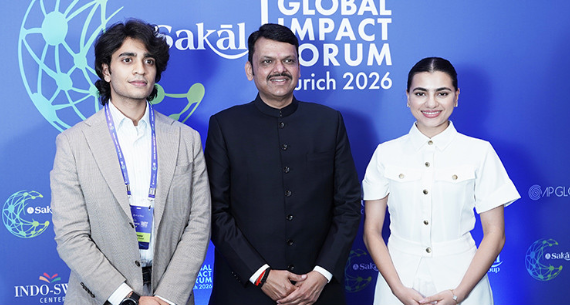
Janhavi Pawar at Global Impact Forum 1
The forum brings together people from different fields. What kind of conversations are you hoping will emerge?
I strongly believe in collaboration over competition. As arts and commerce increasingly intersect, there is an opportunity to bring these worlds together rather than view them in silos. That is why we are inviting media houses to the event; to showcase collaboration. Hard power may get you a seat at the table, but soft power determines whether people want to sit beside you. We wanted to bring together experts from diverse fields to share perspectives on where the world is headed over the next 10 to 15 years. Pairing Gen Z voices with seasoned leaders from academia, research and business can create a richer, more nuanced understanding than the conventional conference format.
How can a country’s culture and stories translate into tangible global influence?
Soft power has a significant impact on nations. During periods of geopolitical tension, it can help retain trade, investment and talent. Ultimately, stories shape how countries and companies are perceived, and how they present themselves to global audiences. South Korea’s Hallyu wave is a powerful example. K-dramas and K-pop have taken its influence far beyond entertainment, from the growing interest in learning Korean to the rise of some 20 Korean restaurants in cities such as Pune. That is the power of culture: presenting traditions and aesthetics in ways that feel relevant to modern audiences without losing their traditional core.
How do you see Sakal’s role evolving from a media organisation to a platform that facilitates meaningful conversations and cross-cultural dialogue?
Sakal has a strong legacy here in Maharashtra. We’ve been active for about 94 years. One of our focus areas over the decades has been ensuring positive mass impact, whether through charities, CSR or events and initiatives that help the population.
Sakal, in a sense, is a relationship vehicle for creating positive impact. I don’t want to compete with people; I would rather collaborate and help. If it’s going to help change 10 million or 100 million lives, wouldn’t I rather choose a greater number to impact positively, as opposed to a smaller number that I could reach just by myself? It’s also about AP Globale, which we’re now consciously pushing forward because we want to promote the use of both Eastern and Western philosophies in the modern world. Sakal is a medium that is part of that change, but AP Globale is the more international brand that we’re taking forward.
What’s different about the second edition of GIF?
GIF 1 was a valuable first experiment as it taught us a great deal about engaging global audiences and hosting international events. GIF 2 is several steps ahead of the first edition. We have partnered with Venture Catalyst and VC Grid to source Indian early-stage start-ups, giving industry leaders, investors and family offices an opportunity to discover the innovation India has to offer the world. We also have performers such as Shikhar Naad, Zakir Hussain’s nephew, who brings traditional and classical music to younger audiences, offering a Gen Z lens on tradition. We have multiple chief ministers confirmed, along with seven to eight Union Ministers, ministers from BRICS nations, as well as leaders from companies and banks. We’re trying to ensure that every participant has the opportunity to meet at least three or four people who can meaningfully contribute to their business or personal journey.
What is the one idea you would like people to take away from the Global Impact Forum?
The one idea I’d like people to take away is that economic ambition and civilisational depth are not in tension—they’re the same story told at different scales. The countries and communities that will shape the next few decades are those that hold on to what makes them distinct while continuing to build outwards.
The growth of a tree depends on the depth of its roots, not in spite of them. The same applies to economies: we need to stay connected to our roots while giving ourselves the space to grow. Ultimately, I hope people leave understanding that we’re not so different from each other, and that there is beauty in our differences.
Read more news about Print Media, TV Media, Advertising India, Digital Media, Marketing
For more updates, be socially connected with us onInstagram, LinkedIn, Twitter, Facebook, YouTube & Google News
