World News Day: Why journalism must rediscover its nerve
Suhel Seth, columnist, author, marketing consultant and management guru, writes credibility is the one currency that journalism today finds itself desperately short of
 by
by
Published: Sep 28, 2026 9:57 AM | 5 min read
 Follow Us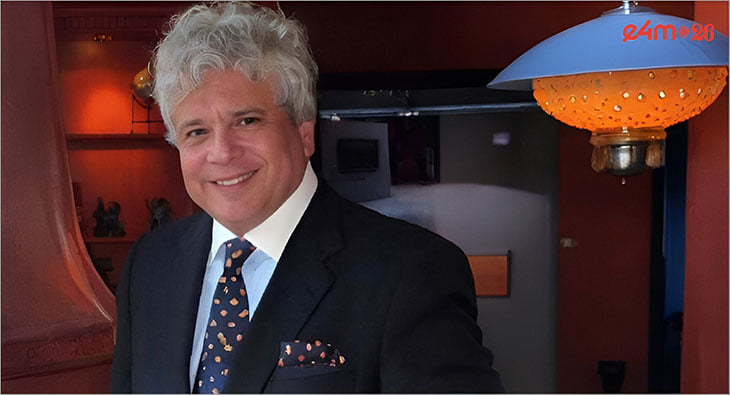

- World News Day serves as both a celebration and a critique of journalism, highlighting concerns about its declining credibility and relevance in the modern media landscape.
- The article argues that journalism has strayed from its original purpose of holding power accountable, prioritizing speed and virality over depth and accuracy, leading to a credibility crisis.
- Despite challenges posed by disinformation and the rise of AI-generated content, there is optimism for journalism's transformation through independent digital newsrooms and new formats like podcasts that prioritize investigative work and reader engagement.
- The author emphasizes the need for journalism to reclaim its commitment to truth, invest in rigorous fact-checking, and for audiences to support quality journalism financially, asserting that the future of journalism depends on its ability to deliver courageous and truthful reporting.
There is a particular irony in writing about journalism on the very day the world pauses to celebrate it. World News Day, you see, is not merely a commemoration: it is, in many ways, an indictment. We celebrate journalism the way we celebrate an ageing relative whose best years we suspect are behind them: with affection, with nostalgia, and with a quiet, unspoken anxiety about what comes next.
I have spent the better part of four decades in rooms where journalists were made and unmade in newsrooms, in green rooms, in the corridors of power where reporters once held court not because they were invited, but because they were feared. That fear was not born of malice. It was born of credibility. And credibility, I'm afraid, is the one currency that journalism today finds itself desperately short of.
The Purpose We Have Forgotten
Journalism was never meant to be comfortable. It was meant to be the conscience of a society too busy to examine itself. It asked questions that governments didn't want asked, held up mirrors that corporations didn't want held, and told stories that the powerful would have preferred remained untold. That was its purpose: not to entertain, not to please, and certainly not to perform.
Somewhere between the advent of 24-hour news cycles and the tyranny of the algorithm, we confused visibility with value. We began measuring journalism not by the depth of its inquiry but by the velocity of its virality. A story that takes six months to investigate now competes, in the same attention economy, with a fifteen-second reel of a minister falling off a stage. Guess which one wins?
Credibility: The Casualty of Convenience
Let me be direct, because subtlety is wasted on a subject this urgent: journalism's credibility crisis is self-inflicted as much as it is externally imposed. Yes, disinformation campaigns, hyper-partisan ownership structures, and the algorithmic amplification of outrage have all conspired against the profession. But so, too, has journalism's own retreat from rigour. When breaking news becomes more important than accurate news, when a scoop is valued over a story, when anchors audition for outrage rather than inform with objectivity: the profession does the work of its detractors for them.
I have watched, with some despair, as television debates have become theatre, as primetime has become a gladiatorial arena where decibel levels substitute for depth of analysis. This is not journalism. This is entertainment wearing journalism's clothing, and audiences far more discerning than we give them credit for, have begun to notice the costume doesn't fit.
The Transformation Nobody Asked For, But Everybody Needed
And yet because I am, at heart, an optimist dressed in the cynic's overcoat, I believe transformation, however painful, is not the enemy here. The transformation of journalism from print to digital, from gatekeeper to participant, from monologue to conversation, was inevitable. What was not inevitable, and what remains a matter of choice, is whether that transformation preserves the soul of the enterprise or merely its shell.
Independent digital newsrooms in India : leaner, hungrier, less beholden to legacy power structures, have in recent years done some of the finest investigative work this country has seen. Substack newsletters written by former editors have rediscovered a kind of intimacy with readers that big media lost decades ago. Podcasts, unencumbered by the thirty-second attention span of television, have allowed nuance to breathe again. This is not journalism dying. This is journalism finding new lungs.
The Challenge of Trust in the Age of AI
But let us not romanticise the moment either. We now stand at the threshold of an era where artificial intelligence can generate a thousand plausible-sounding news stories before a single human reporter has finished their morning coffee. The line between the authentic and the synthetic is blurring at a pace regulation cannot match. If journalism's job was always to separate signal from noise, its job today is exponentially harder because the noise now wears the signal's face.
This is precisely why the human journalist with judgment, with context, with the courage to say "I don't know yet, let me find out" becomes more valuable, not less. Technology can generate content. It cannot generate conscience. It cannot walk into a flood-hit village and choose, out of instinct and empathy, which story needs telling first. That remains, stubbornly and thankfully, a human act.
What Must Be Done
If I may presume to prescribe, having spent a lifetime observing rather than reporting: journalism must reclaim its appetite for inconvenient truths. It must resist the pressure : commercial, political, algorithmic to flatten complexity into slogans. Newsrooms must invest again in the unglamorous disciplines of fact-checking, sourcing, and patience. And readers, for their part, must be willing to pay, literally for quality, because nothing that is free remains uncompromised for long.
Media owners must remember that trust, once spent, is the hardest currency to earn back. Editors must remember that courage is not a personality trait reserved for war correspondents; it is a daily requirement for anyone reporting on power. And journalists themselves, the best of whom I have had the privilege of calling friends, must remember why they entered this profession in the first place. It was rarely for the money. It was almost always for the truth.
A Closing Thought
World News Day should not be an occasion for self-congratulation. It should be a mirror: uncomfortable, unflattering, necessary. Journalism's future will not be determined by the platforms it inhabits or the technologies it wields, but by whether it can rediscover the nerve that once made it indispensable. The world does not need more news. It needs more truth, told with courage, curated with integrity, and delivered without fear or favour.
That, and only that, will determine whether journalism remains the fourth estate or becomes merely the fourth entertainment.
Disclaimer: The views expressed here are solely those of the author and do not in any way represent the views of exchange4media.com.
Read more news about Digital Media, Television Media, Out of Home Advertising, Print Media, Latest Advertising India
For more updates, be socially connected with us onInstagram, LinkedIn, Twitter, Facebook, YouTube & Google News