When Raaj Kumar said no to an ad: How the business of Bollywood endorsements has changed
On Raaj Kumar’s birth anniversary, his reported Charminar endorsement refusal highlights how stars once weighed brand associations against their public image
 by
by
Published: Oct 8, 2026 9:04 AM | 5 min read
 Follow Us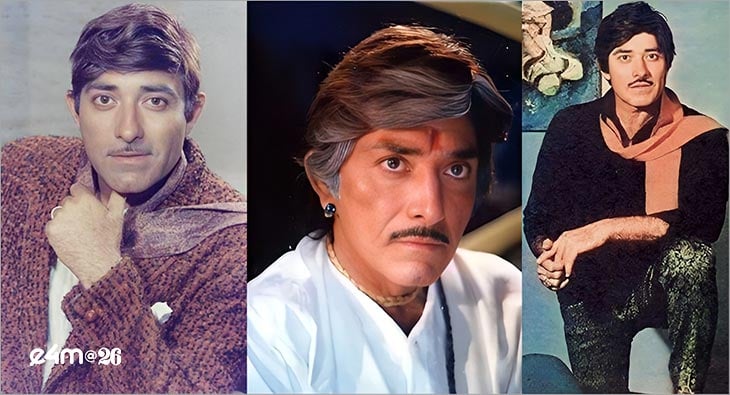

- The evolution of celebrity endorsements in Bollywood has transformed from a focus on film roles to a sophisticated business model involving extensive negotiation and management teams for actors.
- Historical examples, such as Raaj Kumar's rejection of a lucrative cigarette endorsement, highlight a time when actors prioritized their public image over financial gain, contrasting with today's commercialized approach.
- Modern endorsements involve complex contracts that account for various media platforms, with actors like Shah Rukh Khan and Ranbir Kapoor employing professional teams to maximize their brand value and revenue.
- The current celebrity ecosystem integrates films, advertising, social media, and brand partnerships, making an actor's image a significant asset that can be monetized across multiple channels.
There was a time when a Bollywood star’s value was measured largely by the films made and characters portrayed. Brand endorsements existed, but they had not yet evolved into the sophisticated business machinery they are today. For some actors, saying no to a commercial was not about the money on offer, but about what they wanted their public image to stand for.
On Raaj Kumar’s birth anniversary, a widely circulated account recalls one such example. The actor was reportedly approached by cigarette brand Charminar for an endorsement. The offer was reportedly higher than what Raaj Kumar was earning for a film, but the actor turned it down.
The contrast becomes interesting when viewed against the way celebrity advertising works today. An actor is no longer simply lending a face to a brand. Endorsements have become a significant revenue stream, supported by managers, agencies, lawyers and business teams that negotiate everything from the talent fee and duration of the association to where and how the content can be used.
Kushal Sanghvi, Advisor and Director, Animmoov Digital Media, told e4m the commercialisation of celebrity endorsements is not entirely a new phenomenon. “Even in the 1950s and 60s, there used to be a certain A-level of certain actors,” he said, pointing to the likes of Raj Kapoor, Dev Anand and Rajesh Khanna, who were also seen endorsing brands.
The difference, according to Sanghvi, is the scale and sophistication of the business around a celebrity today.
“Today the stars understand, and they are actually thoughtful of even breaking up the money,” he said, explaining how modern endorsement contracts can separately account for television, digital, YouTube and other platforms. “They are very, very commercial.”
Celebrity advertising itself is not new to India. From the early decades of Hindi cinema, actors appeared in advertisements and became associated with consumer brands.
Dilip Kumar, Raj Kapoor, Dev Anand, Hema Malini, Rekha and later Amitabh Bachchan were among the stars whose popularity spilled beyond cinema into advertising. In different eras, film personalities endorsed everything from consumer goods and automobiles to cosmetics and household products.
The difference was that advertising was not necessarily the defining commercial engine of a star's career. Cinema remained the centre of the equation.
The Charminar story sits within that older culture of celebrity endorsement. In the account surrounding Raaj Kumar, the cigarette company was looking for a star who could embody a certain image of masculinity and screen authority. Kumar, known for his commanding presence and distinctive dialogue delivery, was reportedly approached after Jackie Shroff had appeared in Charminar advertising in the 1980s.
Raaj Kumar till then had already established himself as one of the most recognisable actors of his generation. His filmography included Mother India, one of the landmark films of Indian cinema and India's first submission for the Academy Award for Best Foreign Language Film, as well as films such as Waqt, Hamraaz, Heer Raanjha, Pakeezah, Lal Patthar, Bulandi and Tiranga.
Mother India in particular places Kumar within a very different chapter of Hindi cinema. The Mehboob Khan-directed film went on to receive an Academy Award nomination, becoming the first Indian film to achieve that distinction. Kumar was part of a cast that included Nargis, Sunil Dutt and Rajendra Kumar.
His fame, therefore, was not dependent on being visible in every commercial space. His identity was built primarily through cinema.
That equation has changed dramatically.
For today's A-list actors, endorsements are a carefully managed part of the celebrity business. A campaign can involve a multi-crore talent fee, exclusivity clauses, category restrictions, social media deliverables, appearance rights, digital usage, television rights and the duration for which the campaign can remain live.
Sanghvi revealed celebrity teams have become far more sophisticated in negotiating these deals.
“Today the people are going to ask you, what is it that I separately will put line items in, if I have to use the same commercial on digital, if you use the same commercial on YouTube,” he said.
The star, in other words, is no longer just selling a day's presence on a set. The business team is negotiating the value of the celebrity's image across multiple pieces of media.
That is also why the old comparison between a film shoot and an advertisement can be misleading. An actor may be able to shoot an ad in a day or two, but the commercial value of that association can extend across months, platforms and markets.
For brands, the attraction is obvious. A celebrity can provide instant recognition, credibility and cultural visibility. For actors, endorsements offer another revenue stream that does not require the months of shooting, promotion and uncertainty associated with a feature film.
Sanghvi said this shift has also changed the way actors approach their own brand value.
“Their agreements are also so watertight, that they know exactly what they should get as their fee,” he says. “They are very, very thoughtful. They are employing the right people in their team to be their managers.”
He pointed to today's biggest stars, including Shah Rukh Khan and Ranbir Kapoor, as examples of celebrities who have large business teams managing their commercial associations.
“They understand that they should do this for 6 crore and not 4 crore,” Sanghvi said. “This is a big revenue stream for them.”
So, would Raaj Kumar have done an ad today?
That is perhaps the more interesting question to consider on his birth anniversary.
It would be too simplistic to argue that actors of the past worked only for art while today’s actors work only for money. Advertising has long been part of the film industry’s commercial ecosystem, with actors across generations endorsing brands.
What has changed is the scale.
Today, an actor operates in an ecosystem where films, streaming, advertising, social media, appearances and brand partnerships are all part of the same celebrity economy. A star’s image itself has become an asset that can be monetised across multiple platforms.
Read more news about Digital Media, Television Media, Out of Home Advertising, Print Media, Latest Advertising India
For more updates, be socially connected with us onInstagram, LinkedIn, Twitter, Facebook, YouTube & Google News
