Anant Nath features on inaugural TIME100 Next India list
TIME highlighted Nath’s contribution to long-form journalism and press freedom, noting The Caravan’s reputation for investigative reporting
 by
Published: Nov 21, 2026 1:43 PM | 2 min read
 Follow Us
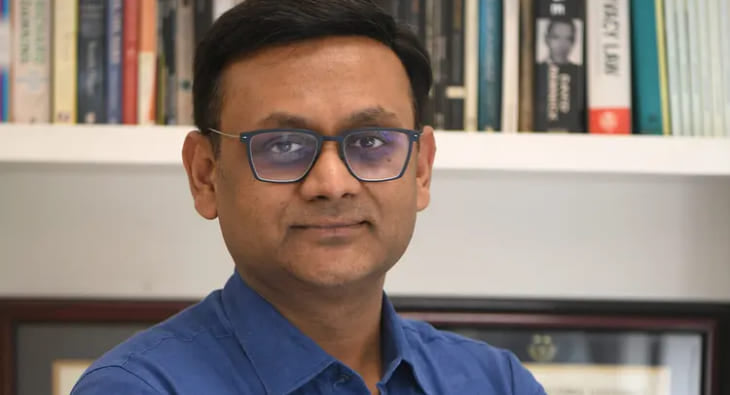

- Anant Nath, Editor of The Caravan and executive publisher of Delhi Press, has been included in the inaugural TIME100 Next India 2026 list, recognizing emerging leaders in various sectors.
- TIME praised Nath for his contributions to long-form journalism and press freedom, highlighting The Caravan's investigative reporting and his leadership at Delhi Press, which manages 31 magazines in nine languages.
- In response to the recognition, Nath dedicated the honor to the journalists who have contributed to The Caravan, emphasizing the challenges faced by independent journalism in recent years.
- He noted that The Caravan's subscription model has become a primary funding source, reducing reliance on advertising, and acknowledged the historical legacy of Delhi Press and its commitment to questioning authority.
Anant Nath, Editor of The Caravan and executive publisher of Delhi Press, has been named in the inaugural TIME100 Next India 2026 list, which recognises emerging leaders across sectors.
TIME highlighted Nath’s contribution to long-form journalism and press freedom, noting The Caravan’s reputation for investigative reporting. It also pointed to his role at Delhi Press, which oversees 31 magazines across nine languages.
Responding to the recognition, Nath dedicated the honour to the journalists who have worked at the magazine over the years.
“This honour is for all the journalists, past and present, at the Caravan. Thank you for years of hard work and journalism that has stood the test of time,” he said.
Nath said the space for independent journalism had shrunk in recent years, both politically and financially. Long-form investigative reporting, he added, requires reporters and editors to spend months on a single story, making it expensive and difficult to finance through conventional publishing models.
He said The Caravan’s subscription model had matured in recent years and that reader revenue now funds much of its operations, with little support from advertising.
“For the first decade, the magazine was possible only because of the backing of the larger publishing house, Delhi Press,” he said.
Nath also acknowledged the journalists who joined The Caravan after its relaunch in 2010, choosing to work in a newsroom with a limited budget. He said their work was made possible by financial and intellectual backing and a continued commitment to independent journalism.
The editor described the recognition as a tribute to the legacy of Delhi Press and its magazines, including Sarita. He said the original Caravan, started in 1940 by his grandfather and Delhi Press founder Vishwanath Nath, and Sarita, launched in 1945, helped establish a publishing house committed to questioning authority.
He also credited his father, Paresh Nath, and his uncles with expanding Delhi Press into a national publishing house while remaining committed to those values.
“This honour therefore belongs to everyone who has shaped the publishing house over the decades, and to the collective strength of all its magazines,” Nath said.
Read more news about Digital Media, Television Media, Out of Home Advertising, Print Media, Latest Advertising India
For more updates, be socially connected with us onInstagram, LinkedIn, Twitter, Facebook, YouTube & Google News