What corporate leaders can learn from Sir Garry Sobers
Guest Column: Ganapathy Viswanathan, Communication Consultant & Author, shares how Sir Garry Sobers’ influence flowed naturally from competence, integrity, courage and an unwavering love for the game
 by
by
Published: Jul 20, 2026 8:25 AM | 7 min read
 Follow Us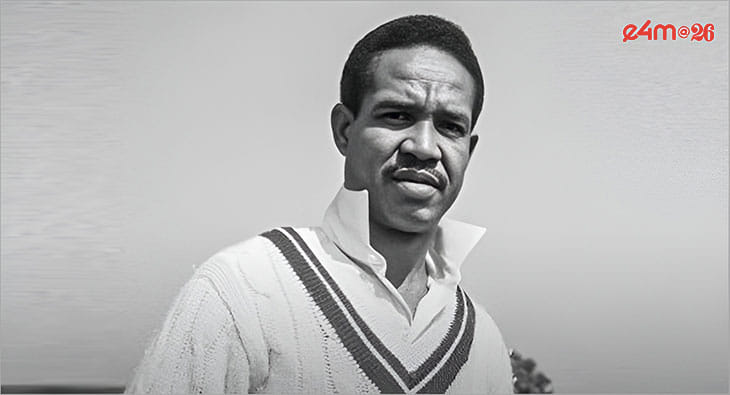

- Sir Garry Sobers is celebrated not only as cricket's greatest all-rounder but also as a leader who earned trust and inspired confidence without demanding attention.
- His leadership qualities, such as credibility, calmness under pressure, and the ability to adapt, are relevant lessons for modern corporate leaders facing disruption and change.
- Sobers demonstrated that effective leadership involves trusting and empowering team members, accepting responsibility in defeat, and maintaining authenticity rather than relying on performative tactics.
- His enduring legacy lies in his ability to inspire others and elevate those around him, emphasizing that true leadership is measured by the impact on individuals and teams rather than just statistics.
"Leadership is not about commanding authority. It is about earning trust." Few sporting icons exemplify this better than Sir Garry Sobers.
For those of us who have followed cricket for over half a century, Sobers was much more than the greatest all-rounder the game has ever seen. He was the complete cricketer and a master batsman, an exceptional bowler in three distinct styles, a magnificent close-in fielder and, above all, a leader who inspired confidence without ever demanding attention.
I still vividly remember India's historic tour of the West Indies in 1971 under Ajit Wadekar. It was a watershed moment in Indian cricket as we defeated a formidable West Indies side led by Garry Sobers. While Indian fans celebrated an unforgettable triumph, what stayed with me equally was Sobers himself. Even in defeat, he displayed grace, dignity and respect for the opposition. That, perhaps, was the first lesson in leadership.
Today, in an era where organisations grapple with disruption, uncertainty and relentless change, Sobers' leadership remains surprisingly relevant. His career offers lessons that every CEO, entrepreneur and manager would do well to reflect upon.
Leadership Begins with Credibility
In business, leadership often arrives with a designation. In sport, it must first be earned.
Sobers commanded respect long before he wore the captain's blazer. His extraordinary skills gave his teammates confidence that, whatever the situation, he would shoulder responsibility.
Whether rescuing an innings, breaking a crucial partnership or taking a breathtaking catch, he consistently demonstrated that he was willing to do what he expected of others.
Corporate leaders face the same challenge. Employees rarely follow a title; they follow credibility. Leaders who understand their business, make informed decisions and are prepared to step forward during difficult times inspire commitment rather than mere compliance.
Competence is the foundation upon which enduring leadership is built.
Pressure Reveals the Leader
Every generation has defining performances. One of Sobers' finest came in the famous Brisbane Tied Test of 1960.
His brilliant 132 against an attack featuring Alan Davidson, Richie Benaud and Ian Meckiff, was not merely an innings of stroke-making; it was an exhibition of courage. Some of the shots remain etched in the memory of cricket lovers even today. One can still recall the extraordinary cover drive where both his feet appeared momentarily airborne, and the audacious back-foot drive off Benaud after being beaten on the front foot the previous ball. It was genius expressed with absolute conviction.
Business leaders experience their own versions of the tied Test—financial crises, market disruptions, technological upheavals or intense competitive pressure.
Those moments reveal whether a leader retreats into caution or steps forward with clarity and confidence.
The finest leaders do not wait for pressure to disappear. They perform despite it.
Versatility Is the New Leadership Currency
Sobers' versatility remains unmatched.
He could bowl fast-medium with the new ball, switch effortlessly to left-arm orthodox spin or wrist spin depending on conditions, dominate attacks with the bat and field with astonishing brilliance.
In today's corporate environment, such adaptability has become indispensable.
The modern leader must understand technology as well as people, strategy as well as execution, innovation as well as governance. Functional expertise alone is no longer sufficient.
The organisations that succeed are led by individuals who can adapt without losing direction.
Sobers mastered every dimension of his craft. Corporate leaders must strive to do the same.
Trust People to Perform
One of Sobers' understated strengths as captain was his ability to back his players.
He recognised that talented individuals flourish when trusted rather than controlled.
This remains one of the biggest challenges in organisations today.
Micromanagement may produce compliance, but it rarely produces excellence. High-performing teams emerge when leaders create an environment where capable people are encouraged to make decisions, accept responsibility and learn from mistakes.
Leadership is not about controlling every move.
It is about creating the confidence that allows others to excel.
Calmness Is Contagious
There was an effortless composure about Sobers.
Whether facing hostile fast bowling or leading his side in difficult situations, he rarely appeared flustered. His calmness reassured teammates and unsettled opponents.
The same principle applies in business.
Markets fluctuate. Customers change. Competitors innovate. Unexpected crises emerge without warning.
During such moments, organisations instinctively take emotional cues from their leaders.
A leader who remains composed creates confidence.
A leader who panics spreads uncertainty.
Emotional stability is often a greater competitive advantage than technical brilliance.
Innovation Demands Courage
Sobers never played cricket by the textbook alone.
His stroke-play reflected imagination, confidence and an instinctive willingness to challenge convention.
The world's most successful organisations are built on exactly that mindset.
Innovation requires leaders who are prepared to question accepted practices, encourage experimentation and occasionally fail in pursuit of something better.
Playing safe may preserve the present.
Only courage creates the future.
Character Matters Most in Defeat
Victories attract headlines.
Defeats reveal character.
After India's historic series victory in 1971, Sobers accepted the result with dignity. There was no public display of bitterness, no excuses and no attempt to diminish India's achievement.
That quality is increasingly rare—not only in sport but also in business.
Projects fail. Markets turn. Acquisitions disappoint. Strategies prove ineffective.
Leaders who accept responsibility, learn from setbacks and move forward with humility earn lasting respect.
Grace under pressure is admirable.
Grace in defeat is unforgettable.
Authenticity Cannot Be Manufactured
One image of Sobers has remained with cricket lovers for decades.
He often walked onto the field with only a couple of shirt buttons fastened, relaxed and completely comfortable in his own skin. It was never an attempt to cultivate an image; it simply reflected who he was.
That authenticity became part of his legend.
Corporate leadership has become increasingly performative. Executives are coached on communication, body language and executive presence.
While these have their place, people ultimately trust leaders who are genuine.
Authenticity builds credibility.
Pretence eventually erodes it.
The Legacy Beyond Statistics
Every era produces extraordinary performers.
Very few produce enduring leaders.
Sobers' records were remarkable, but records are eventually surpassed.
His influence, however, endures because it extended beyond numbers.
He inspired teammates, respected opponents, embraced responsibility, displayed extraordinary versatility and carried greatness with effortless humility.
That is precisely how leadership should be measured in organisations.
Long after quarterly profits have been forgotten and annual reports archived, people remember how a leader made them feel, how much confidence they inspired and whether they helped others become better versions of themselves.
Those are the legacies that truly matter.
A Final Reflection
Sir Garry Sobers belonged to an era when leadership was demonstrated rather than proclaimed.
He never relied on motivational slogans or carefully crafted personal branding. His influence flowed naturally from competence, integrity, courage and an unwavering love for the game.
Corporate leaders today operate in a vastly different environment, yet the essentials remain unchanged.
People still seek leaders they can trust. Teams still rally behind those who remain calm under pressure. Organisations still flourish under individuals who empower others instead of controlling them.
Perhaps that is why, more than sixty years after the Brisbane Tied Test and over five decades after India's memorable victory under Ajit Wadekar, Garry Sobers continues to inspire.
He reminds us that greatness is not simply about extraordinary performance.
It is about elevating everyone around you.
And that, in sport as in business, is the very essence of leadership.
Read more news about Digital Media, Television Media, Out of Home Advertising, Print Media, Latest Advertising India
For more updates, be socially connected with us onInstagram, LinkedIn, Twitter, Facebook, YouTube & Google News