Brands don't compete for market share anymore. They compete for mental shelf space
Guest Column: Gargi Sarkar, Founder & MD of RA Brand Consultant, examines why brand recall has become more critical than market competition
.jpg) by
by
Published: Jun 23, 2026 2:04 PM | 3 min read
 Follow Us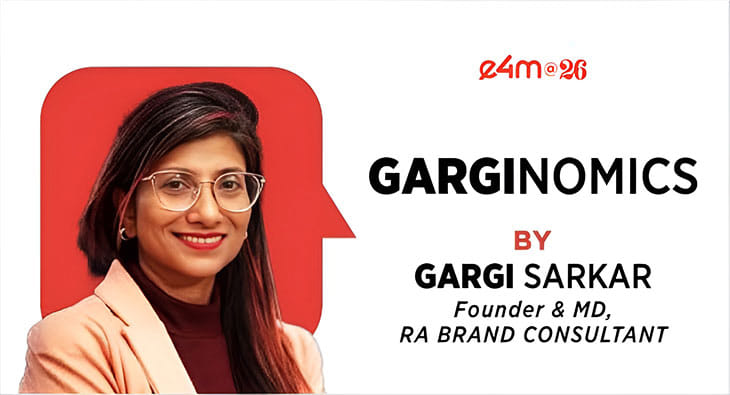

- The primary challenge for brands today is securing "Mental Shelf Space" in consumers' memories rather than competing with other brands or products.
- Successful brands, such as LEGO, Airbnb, and Red Bull, focus on owning specific ideas or emotions rather than just their product categories.
- Indian brands like Amul, Fevicol, and Tata exemplify this concept by associating themselves with trust, strong bonds, and reliability, respectively.
- Modern branding emphasizes the deliberate creation of memorable experiences across all customer interactions, shifting the focus from traditional branding elements like logos and advertising.
As a founder, I have started believing that the biggest challenge for brands today is not competition.
It is memory.
Every category is crowded.
Every product claims to be better.
Every company is advertising.
Yet only a handful of brands occupy a permanent space in our minds.
I call this Mental Shelf Space.
Years ago, businesses fought for shelf space in retail stores.
Today, they fight for space inside human memory.
The brands that win are not always the largest.
They are the ones that become impossible to forget.
The Brands That Own Ideas
When people think about creativity, they think of LEGO.
It does not merely sell toys.
It owns imagination.
When people think about belonging, they think of Airbnb.
It does not simply provide accommodation.
It owns the feeling of living anywhere in the world.
When people think about adventure and pushing limits, they think of Red Bull.
It sells energy drinks, but it owns courage, performance, and human potential.
These brands do not own categories.
They own ideas.
Indian Brands Have Mastered This Too
India has produced some of the strongest examples of mental shelf space.
Amul owns trust.
For decades, it has become part of everyday Indian life.
Fevicol owns the idea of strong bonds.
The brand became so powerful that its name itself became a metaphor.
Asian Paints owns home transformation.
It moved beyond paints and became part of the emotions attached to homes.
Tata owns trust and reliability.
People often choose the brand before choosing the product.
Zomato transformed food delivery into a daily habit.
boAt built itself around aspiration, youth, and lifestyle rather than electronics alone.
These brands remind us that customers remember emotions before they remember features.
The New Definition of Branding
Branding is no longer about logos.
It is not colors.
It is not typography.
It is not advertising campaigns.
Branding today is the deliberate creation of memory.
Every customer interaction either strengthens that memory or weakens it.
Packaging.
Content.
Service.
Leadership.
Culture.
Every touchpoint becomes a shelf inside the customer's mind.
The Question Every Founder Should Ask
Founders often ask:
How do we become bigger?
I believe the better question is:
What thought do we want to own?
Because competitors can copy products.
They can copy pricing.
They can copy features.
But they cannot easily copy a place inside people's minds.
The future belongs to brands that become ideas.
Because in a world overflowing with choices, the most valuable shelf is no longer inside a supermarket.
It exists inside human memory.
As founders, we are not simply building companies.
We are building permanent spaces in people's minds.
And the brands that win tomorrow will not be the loudest.
They will be the ones people remember first.
Read more news about Marketing News, Advertising News, PR and Corporate Communication News, Digital News, People Movement News
For more updates, be socially connected with us onInstagram, LinkedIn, Twitter, Facebook, YouTube & Google News
