Hungama Digital’s Neeraj Roy gets IAA Hall of Fame honour
Neeraj Roy is Managing Director and CEO of Hungama Digital Media Entertainment
.png) by
by
Published: Aug 8, 2026 10:38 AM | 4 min read
 Follow Us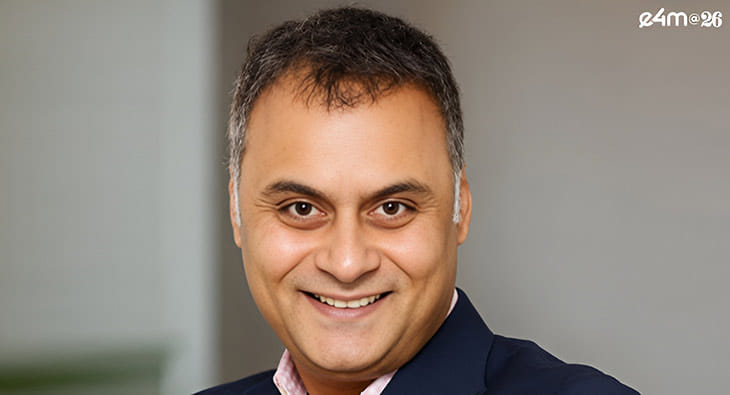

- Neeraj Roy, CEO of Hungama Digital Media Entertainment, was inducted into the IAA Hall of Fame during the 13th IAA India Chapter Leadership Awards in Mumbai on August 7, 2026, recognizing his contributions to the corporate and digital landscape over two decades.
- In his acceptance speech, Roy reflected on the rapid technological changes since the early 2000s, emphasizing the importance of leaders adapting to digital disruption and the evolution of digital advertising and content.
- He highlighted Hungama's role in promoting Indian content on global platforms, particularly with Apple, and discussed the interconnected nature of entertainment across various mediums, including music, gaming, and video.
- Roy expressed optimism about the transformative potential of artificial intelligence, particularly in enhancing storytelling and bridging linguistic divides in India, while advocating for continuous adaptation and curiosity in leadership.
Neeraj Roy, Managing Director and CEO of Hungama Digital Media Entertainment, was inducted into the prestigious IAA Hall of Fame at the 13th edition of the IAA India Chapter Leadership Awards, held in Mumbai on August 7, 2026.
Held around the theme ‘The Power of Balance’, the awards recognised leaders who have shaped the corporate, marketing, advertising and business landscape. For Roy, the Hall of Fame honour marked a moment to reflect on more than two decades spent navigating—and often anticipating—the next wave of digital disruption.
Taking the stage to accept the honour, Roy began by acknowledging the people and institutions that had shaped his journey. But his speech soon became a reflection on the extraordinary pace of technological change and the need for leaders to continually reinvent themselves.
Recalling the early 2000s, Roy said his first five years were spent working with brands at a time when India had only around a million people online. Digital advertising itself was in its infancy. Yahoo’s homepage, he recalled, was just 8KB, while a typical banner was around 2KB.
For Roy, the limitations of the medium presented an opportunity. His focus on making digital communication more interactive eventually led to thousands of digital promotions and work for thousands of brands.
As technology and connectivity evolved, so did Roy’s ambitions. He identified music as an early opportunity in the emerging mobile internet ecosystem, given its relatively light digital footprint. That eventually led Hungama deeper into entertainment and digital content.
One of the stories he recalled from that period was Hungama’s efforts to get Indian content recognised separately on Apple’s platform. Roy said he travelled three times to Cupertino, arguing that Indian content deserved its own space rather than being categorised simply as ‘world’ content.
His argument was straightforward: India was a country of more than a billion people, producing around 1,500 films a year, with Indian cinema being watched across 127 countries and dubbed into 35 languages. The persistence eventually paid off, with Hungama becoming Apple’s partner for seven years.
The next phase of digital evolution took Roy into gaming and video, as data became increasingly accessible. He began viewing entertainment as an interconnected ecosystem spanning audio, video, gaming, live and immersive experiences.
But it is artificial intelligence that Roy believes could represent the most transformative chapter yet.
Reflecting on the past 18 months, he said he had ‘never felt more energised’ by the opportunities emerging around technology. While acknowledging the concerns around AI—from jobs to ethics—he argued that every major technological evolution has brought its own challenges and resistance.
For India, he sees a particularly compelling opportunity in language.
With the country’s vast linguistic and cultural diversity, Roy believes AI could help bridge some of those divides. He imagined a future where a sentence could contain words from Bengali, Tamil, Kannada and Hindi and still be understood seamlessly—turning technology into a tool for greater connection.
His optimism extends beyond entertainment. Recalling a conversation around the growth of GPU computing capacity, Roy pointed to the potential of AI to transform areas such as drug discovery and solve problems that have remained difficult for humanity to address.
For the media and advertising industry, however, Roy sees the biggest opportunity in storytelling.
He believes the industry is moving towards what he calls ‘hyperpersonalised storytelling’—a future where communication and entertainment can be tailored to individuals at an unprecedented scale.
Roy drew a parallel with advances in medicine, where technology is increasingly enabling solutions tailored to an individual’s biology. In the same way, he believes storytelling could evolve from communicating with millions at once to creating experiences designed for each individual.
The idea also encapsulates Roy’s own approach to leadership. Reflecting on his career, he recalled a line he had shared with his team more than two decades ago: if you do not become “three years younger” every three years, you risk becoming redundant.
That mindset of staying curious and adapting became a personal mantra. Roy likened his career to playing Mario — moving from one level to another and catching the next wave before it passed.
From the early internet to digital advertising, music and video, gaming and now AI, Roy’s career has closely followed the evolution of India’s digital ecosystem.
And as he accepted the Hall of Fame honour, his gaze remained firmly on what lies ahead.
“We are sitting at the cusp of something really remarkable,” Roy said, describing AI and the next phase of technology as one of the most promising moments he has witnessed.
For a leader who has spent more than two decades adapting to disruption, perhaps the most fitting way to mark his induction into the IAA Hall of Fame was not by looking back—but by asking what comes next.
Read more news about Internet Advertising India, Marketing News, PR and Corporate Communication News, Digital Media News, Television Media News
For more updates, be socially connected with us onInstagram, LinkedIn, Twitter, Facebook YouTube & Google News