Tuhin Kanta Pandey's SEBI Revolution: Taming Jane Street, rebuilding trust
Pandey spoke to Dr Annurag Batra, Chairman & Editor-in-Chief of BW Businessworld & Founder e4m, and BW Businessworld Managing Editor Palak Shah on his vision to restore trust and enhance transparency
Published: Jul 30, 2025 10:33 AM | 7 min read
 Follow Us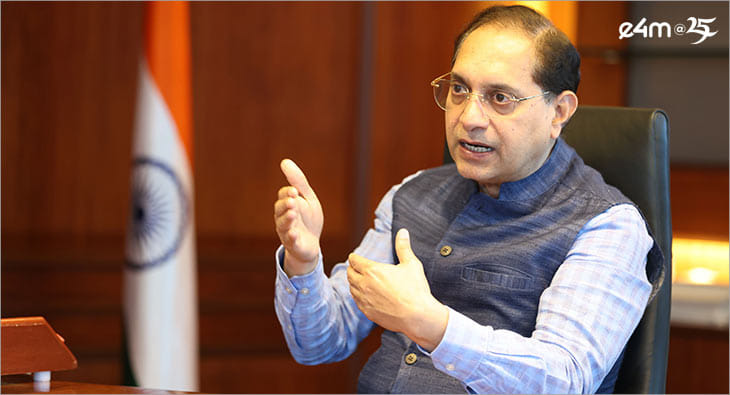

In a landmark moment for India’s financial markets, Tuhin Kanta Pandey, the newly appointed Chairman of the Securities and Exchange Board of India (SEBI), delivered his first major interview since the regulatory crackdown on the explosive Jane Street scandal that has rattled investors and sparked intense scrutiny of market integrity.
Speaking with Dr Annurag Batra, Chairman & Editor-in-Chief of BW Businessworld Media Group and Founder of exchange4media and BW Businessworld’s Palak Shah, Pandey outlined a bold vision to restore trust, enhance transparency, and fortify India’s capital markets against manipulative practices like those alleged against Jane Street.
His resolute stance and detailed insights signal a new era of decisive, technology-driven regulation under his leadership.
The Jane Street Scandal: A Regulatory Wake-Up Call
The Jane Street case, which saw SEBI secure an unprecedented $597 million in just ten days, has become a defining moment for India’s financial markets. The U.S.-based high-frequency trading (HFT) giant was accused of manipulating key Indian indices, including the Nifty and Bank Nifty, through sophisticated strategies like intra-day index manipulation and extended marking-the-close. SEBI’s interim order on July 3, 2025, barred Jane Street from trading and impounded ₹4,843 crore in alleged unlawful gains, marking one of the regulator’s most stringent actions to date.
Pandey defended SEBI’s decision to allow Jane Street to resume trading under strict conditions, emphasizing the importance of due process. “The Jane Street case is an interim order, not a final judgment. Our legal framework, rooted in natural justice, requires us to hear the other side before permanent penalties,” he stated. He clarified that Jane Street’s return to trading was contingent on a ban on manipulative activities, with heightened surveillance ensuring compliance. “This isn’t leniency—it’s about balancing firmness with fairness while protecting the market,” Pandey asserted, addressing concerns about setting a risky precedent.
The scandal, initially uncovered through a Manhattan court filing rather than SEBI’s surveillance, raised questions about the regulator’s detection capabilities. Pandey candidly acknowledged the challenge, noting, “Technology is evolving at a breakneck pace, and no regulator can claim to be superhuman.” However, he emphasized that SEBI’s own data analysis revealed the manipulation patterns, and the regulator is now upgrading its surveillance systems with AI-driven tools to detect anomalies in futures and options (F&O) trading, such as unusual delta exposures and out-of-money option spikes. “We’ve introduced new parameters and are exploring external expertise to stay ahead of sophisticated players,” he added, citing global interest in SEBI’s supervisory technology (SupTech) initiatives from regulators in Malaysia and Switzerland.
Addressing Market Manipulation and Investor Protection
Pandey’s interview underscored SEBI’s zero-tolerance stance on market manipulation, particularly in the derivatives segment, where retail participation has surged from 2% in 2018 to over 40% in 2025. The Jane Street case highlighted vulnerabilities in India’s options market, with SEBI alleging that the firm’s synchronized trades across entities were designed to distort indices for massive profits, costing retail investors dearly. A SEBI study revealed that 91% of retail equity derivative traders lost money last year, underscoring the urgency of reform.
To address these issues, Pandey outlined a multi-pronged strategy. SEBI is enhancing surveillance with delta-based monitoring and tighter position limits to curb manipulative strategies. “We’re not just reacting to risks; we’re anticipating them,” he said, signaling a proactive approach to regulating high-frequency trading (HFT). He also dismissed speculation about widespread malpractice by other HFT firms, stating, “There may not be many more cases like Jane Street,” but affirmed that SEBI’s review of market behavior on expiry days would continue.
On investor protection, Pandey emphasized empowering retail investors with better information and transparency. Addressing concerns about high-PE IPOs like Paytm, which have led to significant retail losses, he cautioned against overgeneralization. “IPOs are about future potential, not just current assets,” he said, citing Nvidia’s rise from a startup to a trillion-dollar company. SEBI is strengthening disclosures and surveillance to ensure fair processes without stifling market dynamics, enabling investors to make informed decisions.
A Vision Rooted in Four Pillars: Trust, Transparency, Teamwork, Technology
Pandey articulated a clear vision for SEBI, built on four pillars: trust, transparency, teamwork, and technology. “We’re simplifying regulations, upgrading surveillance, and ensuring disclosures empower investors,” he said. His tenure began amid market turbulence, with foreign portfolio investors (FPIs) withdrawing over ₹1 trillion since January 2025, driven by global uncertainties like U.S. tariff policies. Despite these challenges, Pandey expressed confidence in SEBI’s robust foundation, built over decades, and its role in fostering capital formation and investor confidence.
One of Pandey’s key initiatives is reducing the compliance burden for listed companies while maintaining effective regulation. He highlighted SEBI’s use of SupTech and encouragement of RegTech adoption by regulated entities to streamline processes. For instance, SEBI recently introduced a Common Contract Note (CCN) providing a single volume-weighted average price across exchanges, reducing administrative overheads for brokers and investors. “We’re focusing on high-risk areas rather than routine tasks,” Pandey explained, citing the suspension of requirements for splitting businesses into separate entities to allow shared resources with clear transparency.
Balancing reduced compliance with investor protection and market growth is central to Pandey’s strategy. By leveraging AI for tasks like analyzing IPO documents, SEBI aims to enhance efficiency and target bad actors through risk-based regulation. “This approach minimizes burdens, fosters capital formation, and protects minority shareholders,” he said, aligning with SEBI’s goal of a dynamic, investor-friendly market.
Tackling Transparency and Governance Challenges
Pandey addressed concerns about related-party transactions, particularly royalty payments for trademarks held by promoters’ private entities. SEBI’s new circular, effective September 1, mandates standardized disclosures to provide shareholders and independent directors with clearer visibility. “This empowers them to question disproportionate charges,” he said, noting that proxy advisors and shareholders can now reject or approve such transactions, ensuring accountability without overburdening businesses.
On the NSE IPO, Pandey dispelled rumors of internal SEBI factions, emphasizing rigorous due diligence to ensure compliance and governance. “The NOC should be finalized soon—potentially within months,” he said, signaling progress toward resolving long-standing delays.
Regarding holding company valuation discounts due to opaque subsidiary governance, Pandey acknowledged the issue and noted that the KK Mistry committee is studying demerger norms. “We’ll consider frameworks that enhance visibility and accountability without stifling efficiency,” he promised, indicating ongoing work to address structural challenges.
Restoring Morale and Building a Smarter SEBI
Pandey also addressed reports of low employee morale under his predecessor, Madhabi Puri Buch, whose tenure ended amid controversies, including allegations of conflict of interest. Without commenting on the past, he emphasized SEBI’s current high morale and investment in human capital. “Our people are our greatest asset. We’re leveraging AI for smarter regulation and fostering a culture of professionalism,” he said, positioning SEBI to lead India’s capital markets globally.
A Defining Moment for India’s Capital Markets
Pandey’s first major interview since the Jane Street scandal underscores his commitment to transforming SEBI into a dynamic, technology-driven regulator. By securing $597 million, halting manipulative trades, and introducing reforms like AI-powered surveillance and streamlined compliance, he is sending a clear message: SEBI will not tolerate market manipulation, but it will act with fairness and transparency. His vision of trust, transparency, teamwork, and technology positions SEBI to restore retail investor confidence and cement India’s capital markets as a global benchmark.
As India navigates market volatility and global uncertainties, Pandey’s leadership offers a beacon of stability and reform. With initiatives to protect retail investors, enhance market integrity, and foster growth, SEBI is poised to turn the Jane Street scandal into a catalyst for a stronger, more resilient financial ecosystem.
Read more news about Digital Media, Television Media, Out of Home Advertising, Print Media, Latest Advertising India
For more updates, be socially connected with us onInstagram, LinkedIn, Twitter, Facebook, YouTube & Google News