Showcasing The Indian Narrative – Discovery’s Declassified: Operation Sindoor
Guest Column: Bhuvan Lall traces Discovery’s India journey and highlights how filmmakers Prabhu and Manika Asgaonkar are bringing India’s military stories to global audiences
 by
by
Published: Aug 24, 2026 8:58 AM | 7 min read
 Follow Us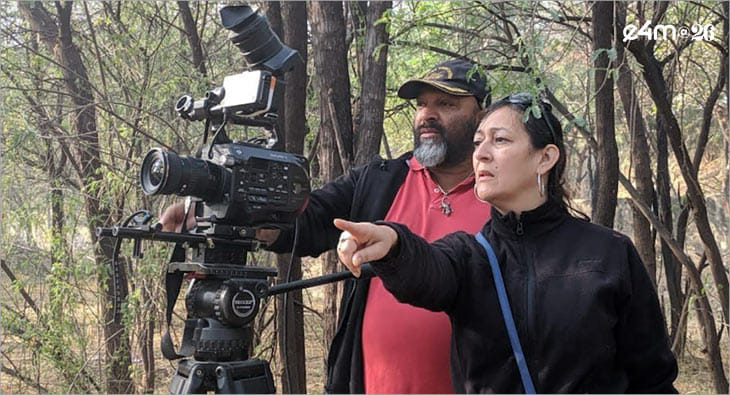

- The Discovery Channel entered the Indian broadcasting market on August 15, 1995, after a successful pitch by a documentary filmmaker to the company's executives, highlighting India's potential for international television content.
- Following its launch, Discovery quickly gained popularity, reaching 3 million homes and offering programming in multiple Indian languages, marking a significant milestone in the country's media landscape.
- Filmmakers Prabhu and Manika Asgaonkar, through their production house Sparklework Films, have focused on military-themed documentaries that honor India's armed forces, gaining recognition for their authentic storytelling and access-driven content.
- Their latest docuseries, "Declassified: Operation Sindoor," premiered on India's Independence Day, showcasing recent military history and strategic leadership, and exemplifying the commitment to documenting the human stories behind military service.
On the chilly April 12th morning in 1995, I walked into the boardroom of Discovery Channel’s headquarters on Wisconsin Avenue in Bethesda, Maryland. These were the early days of cable and satellite TV in India. Besides the 4-channel Star TV network, CNN, BBC World, MTV, and a handful of local homegrown channels, the private broadcasting business had yet to bloom as it did a few years later. Several international TV networks had business plans to enter the television-starved Indian market. They were quietly negotiating for transponders with PanAmSat, Intelsat, and even Russian satellites to beam their programming and content into India.
Having started my career as a documentary filmmaker, I saw tremendous potential in India for John Hendrick’s documentary and non-fiction network, The Discovery Channel. My objective was to interest the American TV channel in the Indian broadcasting industry. Facing me was the entire top brass of the company headed by Ajit Dalvi, a board member at Discovery and a former top executive at Coca-Cola. Joining him were Dom Fioravanti, veteran television executive and President International of Discovery Network; Rex Recka, the head of programming; Kevin McIntyre, former diplomat and Star TV executive who headed Discovery Asia; and Mark Hollinger, Vice President, International Business Development, and later the President and CEO of Discovery Networks.
With calm conviction and carefully prepared slides, I made the case for bringing the network to India. The senior executives listened intently, posed searching questions, debated the pros and cons about doing business in India, and were ultimately moved by the optimism I carried. They agreed that India would be their next market. A due diligence team comprising senior Discovery Channel executives, Charles Humbard, Neal Kirsh, and Zarmineh Rab was dispatched to India. In the summer months of 1995, I escorted them through the offices of potential partners and collaborators. They formulated a launch and business strategy after studying the nascent market in detail. The stage was set, and magic was about to happen.
In the months that followed, the Discovery Channel arrived in India under the thoughtful leadership of Kiran Karnik, a protégé of the visionary Vikram Sarabhai. It launched its services in India on August 15, 1995, followed by celebrations at the grounds of the American Embassy in New Delhi. Within months, Discovery reached 3 million homes in India and was available in multiple Indian languages. At that time, I could not have imagined how far the journey would travel, as the network expanded its operations in the decades that followed, nor that one day Narendra Modi, Prime Minister of India, would walk into the frame of one of its most compelling programs, joining Bear Grylls in an unforgettable adventure that marked a quiet landmark in broadcasting history. Discovery and Discovery+ continue to deepen their engagement with India’s story. Exactly thirty-one years after launching in India, their latest factual docuseries Declassified: Operation Sindoor, made by Prabhu Asgaonkar and Manika Berry, premiered on India’s Independence Day this year.
Today in the crowded landscape of Indian television and streaming documentary production, most of the biggest names never appear on screen. They work behind the camera, behind the edit suite, and behind the pitch decks that convince international broadcasters to commission another season of a series most viewers will never connect to a specific creator. Prabhu Asgaonkar and Manika Berry Asgaonkar belong to that category of filmmakers. A husband-and-wife team, they set out, decades ago, to tell stories that mattered, stories of duty, discipline, and the quiet heroism of those who serve. Prabhu and Manika, both children of Armed Forces personnel, carry within them a legacy older than their craft. Theirs is not simply a production house; it is a homecoming, a return, again and again, to the world that raised them. Through their Gurgaon-based production house Sparklework Films, they have been building a body of work centred on India's military, walking alongside India's soldiers, sailors, and air warriors, not as outsiders looking in, but as kindred spirits granted rare and precious access. Through documentaries that honour truth as much as artistry, they have brought to life the training grounds, the battlefields, and the unseen sacrifices that shape the nation's guardians.
Their storytelling found its earliest resonance in Special Operations India, created for the History Channel, a landmark series that dared, for the first time, to recreate India's most daring Special Forces missions for the world to witness. The Surgical Strikes. Myanmar. Pathankot. Each episode, a testament to courage rendered with dignity and care. They rode further into history with 61st Cavalry, India's Horse Warriors, a tribute to the last mounted cavalry regiment of the Indian Army, and paused in solemn remembrance with Kargil, Valour and Victory, a film that carried the weight of 1999 into the hearts of a new generation when it premiered on Republic Day, 2021.
With Discovery Channel, their lens turned toward transformation itself, the making of a soldier. Breaking Point took audiences into the crucible of Belgaum Commando School and the frozen heights of the High Altitude Warfare School, the latter earning the Best Documentary Series honour at the Indian Telly Awards 2019. India's Paratroopers, Earning the Badge followed, unveiling the extraordinary discipline behind India's airborne elite. Then came Ladakh Warriors, Sons of the Soil, a moving portrait of endurance amid the world's most unforgiving terrain, and a third chapter of Breaking Point, voyaging through artillery, aviation, armour, and the storied Shatrujeet Brigade. Even beyond the battlefield, their storytelling reached toward human ingenuity, as seen in Modern Marvels, The Atal Tunnel, a celebration of engineering as an act of national will.
Discovery’s Declassified: Operation Sindoor, the two-part series, offers an in-depth examination of recent military history and strategic leadership, featuring first-hand accounts from top security leaders, including National Security Advisor Ajit Doval, Army Chief General Upendra Dwivedi, Navy Chief Admiral Dinesh K. Tripathi and Air Chief Marshal A. P. Singh, along with former Chief of Defence Staff General Anil Chauhan and other officials, The much-acclaimed documentary that has the feel of a thriller fits the profile of the two filmmakers who specialize in exactly this kind of rugged, access-driven nonfiction: getting cameras into limited-access offices and military personnel who are otherwise closed to civilian film crews. This polished retelling of the 88-hour confrontation of May 7–10, 2025, has earned appreciation from viewers and critics alike.
What the consistent creative partnership of filmmakers Prabhu and Manika through their military-themed factual programming offers the world is not merely documentation, but devotion, an unwavering commitment to authenticity, artistry, and the honour of those who serve. What's notable about the Asgaonkars, in contrast to filmmakers who cultivate a public persona around their name, is how little exists in the way of conventional press coverage, interviews, or social media profiles. Their low-profile presence presents a quite patriotic legacy built on trust earned over generations, on stories told not from a distance, but from within. They believe, “Behind every uniform is a human story, of grit, of sacrifice, of quiet, unshakable courage.” And it is this truth that Sparklework Films continues, faithfully, to tell.
From a single presentation over three decades ago in a boardroom in distant Maryland to documentaries and series that now capture both the nation’s highest leadership and its most closely held security narratives, Discovery’s presence in India has become a lasting chapter in the country’s media and strategic storytelling.
Bhuvan Lall is the former Secretary General of Indian Broadcasting Foundation, an award-winning filmmaker, author and biographer. He can be reached at [email protected].
Read more news about Digital Media, Television Media, Out of Home Advertising, Print Media, Latest Advertising India
For more updates, be socially connected with us onInstagram, LinkedIn, Twitter, Facebook, YouTube & Google News
