National Press Day special: Challenges and opportunities in Indian journalism
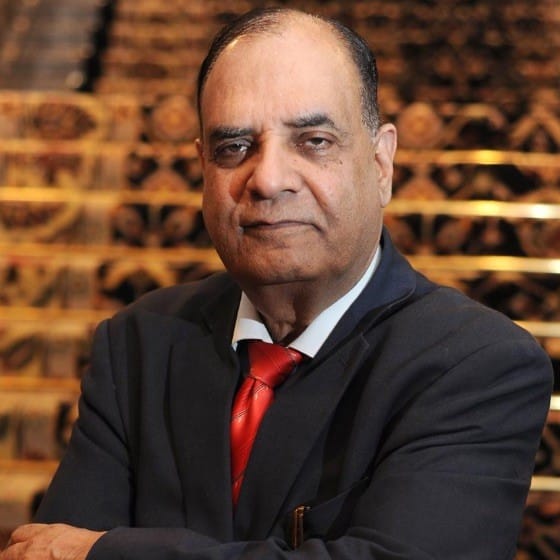
Guest Column: On the occasion of National Press Day (16 November), veteran journalist Alok Mehta notes that Hindi journalism has undergone significant changes over time
 by
by
Published: Nov 17, 2025 10:45 AM | 5 min read
 Follow Us

- On National Press Day, discussions highlighted the evolving landscape of Hindi journalism, emphasizing that the rise of electronic and social media has not diminished the demand for print news, particularly in rural areas.
- Historical figures in Hindi journalism, such as Rajendra Mathur and Agyeya, played pivotal roles in expanding the reach and influence of Hindi newspapers across various states, contributing to a robust readership.
- Despite challenges like rising operational costs and the influence of corporate interests, Hindi newspapers have maintained their relevance, especially in smaller towns and villages where reading habits persist.
- The future of Hindi and regional newspapers hinges on their ability to provide quality content that meets the needs of readers, alongside adapting to digital platforms to engage younger audiences.
On National Press Day, the challenges and achievements of journalism in India have been widely discussed. It is a misconception that the advent of electronic media has posed serious problems for Hindi journalism. The truth is that different media formats often complement each other. From Hindi-speaking cities to villages across India, the demand for reading, listening to, and watching news and information has not decreased; rather, it has grown.
It is not just electronic media; social media has also become widely popular among the public. Over time, Hindi journalism has undergone several transformations. The journalism of the Tilak and Ganesh Shankar Vidyarthi era cannot be directly compared to today’s context. However, since the 1970s, editors and journalists in modern Hindi journalism have played a significant role in raising social, political, and cultural awareness.
Editors like Satchidanand Hiranand Vatsyayan aka ‘Agyeya’, Manohar Shyam Joshi, and Rajendra Mathur influenced not just the readers of Hindi newspapers but also the broader social and political environment. Newspapers like Navbharat Times, Hindustan, Nai Duniya, Dainik Bhaskar, Rajasthan Patrika, and Prabhat Khabar extended their reach from Delhi to Hindi-speaking regions across the country, leaving a lasting impact.
When Rajendra Mathur became editor of Navbharat Times in 1982, he stated at a ceremony that a Hindi newspaper cannot be called ‘national’ merely by being published from Delhi or Mumbai. A newspaper can only be truly national if it has editions in multiple states. Similarly, when Agyeya became editor in 1977, he expressed the desire to launch editions in cities like Patna, in addition to Delhi and Mumbai, but his short tenure of two years prevented the realization of this plan. After Mathur took over, editions were launched in Lucknow, Jaipur, and Patna.
When I had the opportunity to become editor of Dainik Hindustan, management agreed to publish editions in Lucknow and Patna. Likewise, Harivansh Ji, after taking over Prabhat Khabar, established it as a reputable newspaper in Jharkhand and Bihar. Jansatta was published from Delhi as well as Mumbai and Kolkata. Interestingly, newspapers like Rajasthan Patrika in Jaipur launched editions in cities such as Hyderabad and Bangalore to reach Hindi readers.
In this context, Hindi journalism earned a wide readership and established its identity through quality content. Therefore, the progress of Hindi newspapers before the arrival of electronic media can be considered an achievement.
Contrary to popular belief, the advent of electronic media and television news channels did not reduce the circulation of Hindi newspapers; official figures also show that readership increased. I believe that after watching news on radio or television, the general public often turns to newspapers or magazines for detailed coverage and analysis.
Even before electronic media, newspapers began experimenting with colored photographs and modern designs. Before the 1970s, even newspapers in India and Western countries like the UK rarely featured colored photos. The arrival of electronic media further encouraged the use of colored photos in Hindi newspapers and enhanced the presentation of supplements, partially compensating for magazine content.
The real challenges, however, arise from rising costs of modern technology, printing, and newsprint. Large newspapers began focusing more on profits and losses, with some influence from political powers. The Times Group, for instance, prioritized profit over content, encouraging sensational, translated material, which influenced other Hindi newspapers. Smaller regional newspapers, however, remained less commercial and sustained themselves through local news and relevant content for readers.
It is true that a large urban and younger population has shown decreasing interest in newspapers after the arrival of electronic and social media. Yet, in small towns and villages, the habit of reading newspapers persists. Increasing literacy in rural and tribal areas shows that newspapers still have potential. Governments and bureaucrats often assume that people no longer read newspapers, magazines, or books. They overlook the fact that even in developed countries like the USA and Japan, newspaper circulation remains strong.
Ultimately, it depends on publishers and editors to provide content that is not dictated solely by market trends - content that cannot be found even on television. Like in Western countries, some specialized tabloids emerged in India, but many newspapers lowered standards by focusing on sensationalism. At the same time, expenses for machines, printing, and distribution rose, while investment in dedicated journalists and quality reporting lagged, affecting overall content quality.
Currently, the power and autonomy of media continue to be questioned. Whether print, electronic, or social media, the significant influence of media attracts billions in investment, and governments try to leverage it for their advantage. Foreign powers also invest directly or indirectly to influence Indian media. While corporate influence receives much attention, we often forget that as late as the 1980s, media institutions in Delhi, Mumbai, and Kolkata were already influenced by corporate houses like Birla, Dalmia, and Tata. Governments and political power have always affected journalism. I have documented these issues in my books: Power, Press and Politics, Kalam ke Senapati, Bharat Mein Patrakarita, and Indian Journalism: Keeping it Clean.
Political influence has historically shaped journalism, and continues to do so today. For media to maintain credibility, reporting cannot merely serve the interests of the Prime Minister, Chief Ministers, or specific parties. Investigative reporting requires substantial institutional funding. To engage new generations, media houses can make their content available on websites and social media, efforts that are already underway. In this sense, Hindi and other regional newspapers continue to have a future in rural areas. The same principle applies to alternative media, including social media: those who provide quality content will have a secure future.
Institutions will need to invest more in investigative reporting. To engage the younger generation, media organizations can make their websites and published content accessible on social media - a practice that is already happening to some extent. From this perspective, Hindi and other regional language newspapers will continue to have a strong presence in rural areas. The same principle applies to alternative media, including social media: those who provide quality content will secure their future.
Read more news about Digital Media, Television Media, Out of Home Advertising, Print Media, Latest Advertising India
For more updates, be socially connected with us onInstagram, LinkedIn, Twitter, Facebook, YouTube & Google News