Why building a community could be a brand’s best marketing investment
The idea is simple yet powerful: give your consumers something to belong to, not just something to buy
 by
by
Published: Jul 24, 2025 9:16 AM | 10 min read
 Follow Us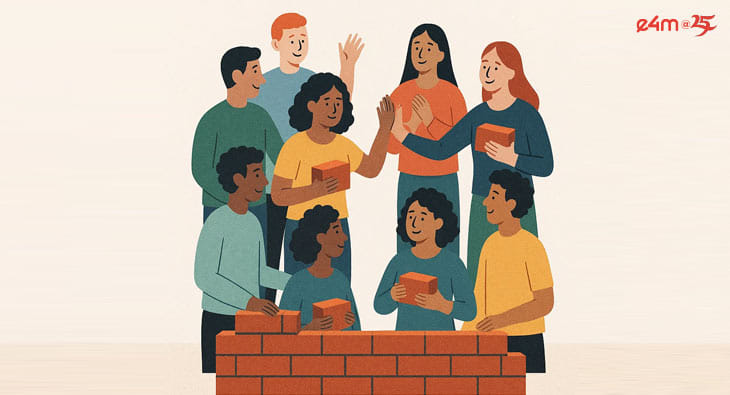

In an era where algorithmic feeds dominate attention and trust in traditional advertising continues to dwindle, brands in India are recalibrating their marketing playbooks. The new north star? Community. Not just as a feel-good add-on but as a strategic growth lever that delivers long-term loyalty, user-generated content, and earned media at scale.
The idea is simple yet powerful: give your consumers something to belong to, not just something to buy.
From fitness, gaming to fintech, brands are increasingly turning customers into communities. Cult.fit has built deep-rooted tribes through programs like cult Champions and large-scale events like Yogathon, making fitness social and accessible. Travel brands like The Hosteller and Zostel are replacing transactional stays with immersive, community-first experiences, where curated meetups, creator residencies, and organic storytelling drive both bookings and loyalty.
Gaming brands, too, are at the forefront. For KRAFTON India, publisher of Battlegrounds Mobile India (BGMI), community isn’t just part of the strategy, it is the strategy.
“At our scale, 200 million users - Total Addressable Market (TAM) expansion can effectively happen only through community building,” said Srinjoy Das, Associate Director and Lead – Marketing, KRAFTON India. “Today’s Gen Z audience demands transparency and relatability. Community-led marketing makes brands churn-proof by fostering tighter feedback loops and authentic connections.”
boAt’s “boAtheads” tribe has become a youth culture staple, leveraging music and influencer communities. Blinkit’s quirky Twitter banter has built a digital fandom, while The Whole Truth and Minimalist foster trust through education, transparency, and UGC-fueled storytelling. Even in fintech, Zerodha has nurtured an investor community through learning platforms like Varsity and Rainmatter, showing that belonging, not just branding is the new growth driver.
Across the board, brands are strategically shifting significant portions of their marketing budgets toward community-led initiatives. Cult.fit now allocates over 40% of its brand marketing budget to community-building, spanning offline events like cult Unbound, ambassador programs like cult Champions, and grassroots activations, believing this delivers a deeper impact than traditional paid media.
The Hosteller has redirected the majority of its marketing spend to community-first efforts such as curated meetups, creator residencies, and long-form social storytelling, seeing stronger engagement than from paid channels.
Zostel goes a step further, operating with near-zero spend on paid media each quarter, instead focusing on high-impact, organic strategies rooted in creativity, user-generated content, and authentic engagement, proving that a meaningful community can outperform even the most polished ads.
KRAFTON India follows a similar mindset. A very large portion of its budget is community-first, with a strong focus on content, community building, and esports events, areas that have delivered longevity metrics far beyond what traditional methods can offer, especially with younger audiences. One of its videos was shared over 5.8 lakh times, while the BGMI Ki Boli campaign inspired 53,000 fan-made videos, all publicly available on YouTube.
“Consumers are increasingly seeking to belong to an identity, rather than just looking for discounts,” said Bala Kumaran, Founder & Director, BrandStory. “In a crowded ad space, communities rely on authentic connection and trust to cut through the clutter—points that traditional ads cannot replicate. Communities drive 3-5 times the lifetime value with UGC by people, a decrease in CAC, and synthetic reach.”
For example, founder-led brands such as Zomato (Deepinder Goyal) and CRED (Kunal Shah) use their leaders’ voices to humanise the narratives, turning customers into advocates 110.
For KRAFTON India, this organic engine is already in motion. Das shared that BGMI content routinely sees 25 lakh organic views per video, with one campaign peaking at 3.4 crore views. Each content piece typically garners 2,500 comments and up to 5 lakh shares. “Roughly 40% of our Instagram followers engage with our campaigns,” he added.
India’s consumers are more digitally savvy than ever, armed with ad blockers and a general immunity to the 4,000–8,000 marketing messages they see daily. The result? A crisis of attention.
“Performance marketing isn't enough to foster long-term love,” said Senthil Kumar Hariram, Founder & MD of FTA Global. “This is where community building comes into play. Think Instagram comment threads, WhatsApp groups, creator shoutouts, or even memes that feel authentically in-tune with the audience. It is not just to send offers anymore. It’s to create conversations and make someone feel like they are part of something.”
Brands, especially in categories like D2C, wellness, travel, and fintech, are pivoting away from short-term performance metrics toward deeper emotional resonance. This means fostering a sense of belonging that’s often grounded in shared identity, cultural codes, or common causes.
“People do not connect with a brand's community because of a past purchase,” added Senthil. “They connect because they see some reflection of their beliefs, values, and aspirations in that community.”
Community as a Scalable Growth Engine
Take Cult.fit, for example. The fitness brand has made a conscious shift from purely transactional marketing to nurturing what they call ‘superusers.’
“We’re here to spark a fitness revolution in India. And a cultural shift of that scale can’t be driven by transactional marketing alone; it needs people, passion, and a strong sense of community,” said Siva Kumar Pedhapati, Head of Brand Marketing, Curefit.
He added, “With only 0.6% of Indians actively engaged in fitness compared to 20–30% in developed countries, the challenge isn’t just access, it’s also adoption. That’s why we’ve doubled down on building community: creating spaces where fitness feels fun, social, and less intimidating.”
Curefit’s Cult Champions program has led to a 2.2X increase in activity levels and a 75% jump in Net Promoter Score (NPS) among participants, signaling deeper engagement and advocacy.
Meanwhile, KRAFTON India has doubled down on community-led content and experiences. Its long-form shows, India Ki Heartbeat, Boom Bam Bois, and Bolti Bandh, have collectively crossed 800 million views, while the Diwali special DoomTroopers drew 1 crore views on YouTube alone.
Offline, the impact is just as large. The BMPS 2025 finals in Delhi drew over 10,000 fans; the BGIS 2025 finale in Kolkata saw 15,000 attendees, with prize pools of ₹4 crore and ₹3.2 crore, respectively. The 2024 finals in Kochi hit 500,000 peak concurrent viewers and 11.15 million watch hours, streamed in nine regional languages.
Their Discord community of 2.49 lakh members acts as a real-time feedback engine, keeping the brand responsive and rooted in user input.
Community isn’t just reshaping how fitness is marketed. It’s also redefining travel. For Zostel, community is core to both the product and the brand.
Pranavi Chhikniwala, Marketing Lead at Zostel, said, “Whether it’s during a stay at one of our hostels or on a Zo Trip, what truly defines a Zostel experience is the people you meet, the conversations shared, and the moments of spontaneous connection.”
From late-night jam sessions to dorm-room chats and group hikes, Zostel creates shared experiences that often become the highlight of a traveller’s stay. According to Chhikniwala, these moments are why today’s travellers increasingly prefer social, immersive getaways over transactional hotel bookings.
Zostel’s community-driven approach has helped them organically reach 25M+ users every month with a near-zero paid media budget. Content creators, long-form storytelling, and destination shoots have all become effective touchpoints.
“We focus on high-impact, low-cost strategies that are rooted in creativity, authenticity, and engagement,” Chhikniwala added.
For KRAFTON India, community-led efforts have significantly improved efficiency, lowering acquisition costs and boosting retention. While influencers remain part of the mix, their own platforms drive virality at scale.
This organic flywheel of trust and advocacy isn’t exclusive to Zostel or KRAFTON. Pranav Dangi, CEO & Founder of The Hosteller, shared similar results.
“Community-building allows us to create real, lasting emotional connections with our guests. Over the last year alone, we've seen a 4X in bookings from community members,” said Dangi.
His brand’s engagement rates from community-driven platforms have outperformed traditional paid media, with marketing budgets now prioritizing curated meetups, creator residencies, and niche travel storytelling.
Community building v/s performance marketing
Brands are reallocating media budgets once reserved for celebrity TV spots toward micro-influencers, community managers, and experiential formats.
“User-generated content is fast becoming the new currency. Brands, that would previously juggle ₹50 lakh on a single celebrity-led TV commercial, are now diversifying that spend across micro-influencers, creator-led content, community engagement teams, and community activations in exchange for engagement, storytelling and authenticity over advertising.” added Hariram, noting that D2C, fintech, edtech, and lifestyle brands are leading the charge as Gen Z and millennials demand authenticity over ads.
However, can community-led marketing also reduce spends on performance marketing and influencer spends?
Brands say that it has. “While every channel, including influencer marketing, plays a valuable role in our mix, community-led marketing has organically reduced our reliance on external influencers,” said Pedhapati.
Zostel echoes this shift. The brand has never relied on performance marketing for conversions, consistently launching new properties and trips with strong traction through organic social media. Nearly all of its influencer collaborations are barter-based, driven by community strength rather than paid promotions.
Meanwhile, Kumaran highlighted that the key is integration, not trade-offs. “Performance marketing grabs attention; community nurtures it,” he said.
He further cited examples like Myntra’s ‘Glam Clan’ creators and predictive WhatsApp flows that serve both conversion and engagement goals.
Community Formats & Shared Values
The infrastructure enabling this shift is also evolving. Brands are investing in community-centric platforms like Discord, WhatsApp, and Instagram, not just for promotions, but for meaningful engagement.
Zostel is building content creation programs for travel influencers, Cult.fit is curating knife painting and fitness challenges, KRAFTON is producing long-form YouTube series and esports tournaments, and fintech platforms like Zerodha run forums that double as education and brand affinity engines.
At the heart of sticky communities lies a powerful commonality, shared values. This can be regional pride, hustle culture, nostalgia, or even transparency in product sourcing.
“When shared meaning is established, communities form and endure,” said Hariram. “When a brand speaks the same language as a consumer and imagines a similar lifestyle, it becomes part of their identity. Elements like regional pride, family values, hustle culture and nostalgia can build greater emotional resonance.”
This is evident in skincare brands celebrating Indian skin tones, or finance platforms demystifying investing for first-timers. These aren’t just customers, they’re believers.
“This transformation occurs as customers develop a shared perception of what a brand represents,” Kumaran explained. “It’s a bond that transcends mere preference, often bordering on love or even obsession, where the brand's shared identity and values perfectly mirror the aspirations and lifestyle of its followers. This deep resonance fosters a strong sense of community and belonging, making members feel understood and accepted.”
D2C, fitness, travel, beauty, fintech, and even EVs are leading the community-led shift in India. From Zomato’s founder-led storytelling to Cred’s cult-like user base, these brands prove that the strongest influence today comes from within.
And in today’s crowded, fleeting, ad-saturated world, that sense of belonging may just be the strongest currency a brand can build.
Read more news about Marketing News, Advertising News, PR and Corporate Communication News, Digital News, People Movement News
For more updates, be socially connected with us onInstagram, LinkedIn, Twitter, Facebook, YouTube & Google News
