The Air India Building: A masterclass in brand visibility before the digital age
Guest Column: Communication Consultant Ganapathy Viswanathan writes how the Air India building at Mumbai’s Nariman Point has been for generations a reference point in everyday conversations
 by
by
Published: Jun 6, 2026 11:55 AM | 4 min read
 Follow Us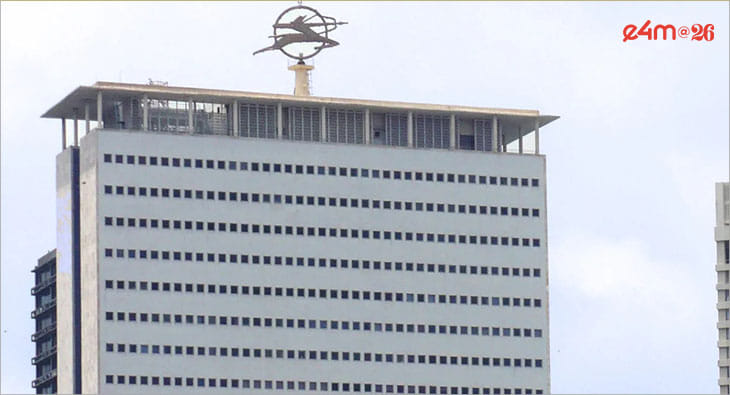

- The Air India Building in Mumbai has lost its iconic red signage after being handed over to the Government of Maharashtra, marking a significant change for the city's skyline and identity.
- For decades, the building served as a key reference point in everyday conversations, becoming a part of Mumbai's mental map and a symbol of corporate India.
- The Air India Building was associated with prestige and stability, influencing perceptions of businesses operating from its location, especially during a time when international travel was rare.
- Despite the removal of the signage and change in ownership, many Mumbaikars will continue to refer to the building by its original name, reflecting its lasting cultural significance.
The red Air India signage is no longer there.
For many people in Mumbai, that feels like the end of something familiar.
With the building at Nariman Point now handed over to the Government of Maharashtra, one of the city's most recognizable corporate landmarks has entered a new chapter. The structure remains, but a part of its identity has disappeared.
For decades, the Air India Building was a fixture on Mumbai's skyline. Anyone travelling along Marine Drive, heading into Nariman Point or looking across Back Bay could spot it almost instantly. Long before Mumbai's skyline became crowded with high-rises, it stood out.
What made the building special, though, was not its height or design.
It was the way people used it.
For generations, the Air India Building served as a reference point in everyday conversations. Directions often included it.
"Meet me near Air India."
"Take a left after the Air India Building."
"It's opposite Air India."
People mentioned the name constantly, often without giving much thought to the airline itself. They were simply describing a location. Yet in doing so, they kept the Air India name alive in the daily vocabulary of the city.
That is not something most companies achieve.
Today, brands spend enormous amounts of money trying to stay visible. They compete for attention on television, social media, websites and mobile screens. The Air India Building achieved something similar in a far simpler way. It became part of Mumbai's mental map.
Even people who had never flown with Air India knew exactly where the building was.
The timing of its rise also mattered.
Nariman Point was developing into India's premier business district. Having a presence there carried weight. The area attracted major corporations, financial institutions and professional firms. Against that backdrop, the Air India Building became one of the locations people associated with corporate India.
For many Indians, Air India itself occupied a special place during those years. International travel was still relatively uncommon, and the airline represented India's connection with the wider world. The building reflected that image. It stood prominently on one of the most valuable stretches of real estate in the country, overlooking the Arabian Sea.
There was also a certain prestige attached to the address.
Businesses operating from the building benefited from that perception. An office there suggested stability and standing. Clients noticed it. Employees were proud of it. In Mumbai's business circles, the address carried its own reputation and status.
Many people also remember the famous hoarding near the building that frequently featured Air India's advertising. New campaigns often became talking points, especially when they included the airline's well-known Maharaja mascot.
The Maharaja was already a familiar figure to generations of Indians. Seeing him against the backdrop of Nariman Point only strengthened the connection between the airline and the city.
Over the years, the Air India Building witnessed enormous change around it. Mumbai expanded. New business districts emerged. Glass towers altered the skyline. Corporate headquarters shifted to different parts of the city.
Yet the Air India Building remained a constant.
That may be why the removal of the signage has attracted so much attention. The building was not just another commercial property. It was part of the visual identity of South Mumbai for decades.
Buildings rarely become part of a city's everyday language. Fewer still remain relevant across generations.
The Air India Building managed to do both.
The sign may have come down, and the ownership may have changed, but for many Mumbaikars it will continue to be known by the same name. Some places become so closely linked with an institution that the association survives long after the official connection ends.
The Air India Building is one of those places.
And for countless people who grew up seeing it, passing it or giving directions because of it, it will always remain a small but memorable part of Mumbai's story.
Disclaimer: The views expressed here are solely those of the author and do not in any way represent the views of exchange4media.com.
Read more news about Marketing News, Advertising News, PR and Corporate Communication News, Digital News, People Movement News
For more updates, be socially connected with us onInstagram, LinkedIn, Twitter, Facebook, YouTube & Google News