Can ambition buy Madison World?
Guest Column: Veteran adman Prabhakar Mundkur reflects on the reported Wondrlab-Madison World deal
 by
by
Published: Mar 3, 2026 2:34 PM | 4 min read
 Follow Us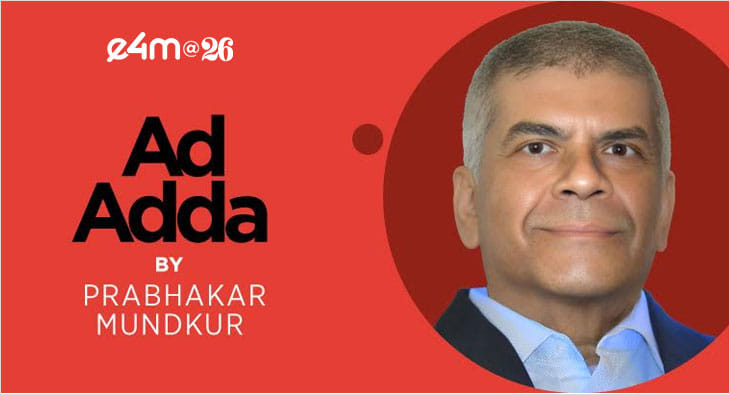

The Indian advertising industry thrives on news. Wins, losses, alignments, exits, mergers, momentum is currency. But occasionally, the acquisition story itself begins to overshadow commercial logic.
The recent reports of Wondrlab nearing a deal to acquire Madison World have raised more eyebrows than applause.
Let us step back.
Madison is not a boutique digital shop looking for scale. It is one of India’s most respected independent agency institutions, founded and built over decades by Sam Balsara. It has weathered global competition, digital disruption, procurement pressure, and industry fragmentation and emerged as a credible, profitable, proudly independent entity.
Wondrlab, on the other hand, is a relatively young ambitious network, positioning itself as a modern marketing and technology platform. There is nothing inherently implausible about ambition. But scale matters in acquisitions. Financial muscle matters. Cultural gravity matters.
Which raises the obvious question: Does this pairing make structural sense?
If Madison were to seek an exit, one would logically expect a buyer with deep capital reserves, global distribution, and institutional continuity perhaps a holding group such as Havas, backed by the Bolloré family’s long-term control structure. Such a transition would ensure international alignment, financial stability, and a legacy framework strong enough to protect what has been built over 35+ years. It is also worth remembering that Madison World has not operated in isolation. Over the years, global networks including the likes of WPP have evaluated or engaged with independent Indian agencies as part of their expansion strategies. Conversations with global suitors are not new to legacy institutions of this scale. In that context, any potential transition would logically invite interest from established international networks such as Havas itself in a phase of global consolidation and strategic repositioning. When institutions of Madison’s stature consider succession, the pool of potential custodians is typically measured not just in ambition, but in balance sheet depth, global footprint, and long-term governance stability.
The industry has a short memory. There was a time when talk circulated of Sandeep Goyal acquiring Dentsu globally, a headline-grabbing rumour that made for lively debate but little structural sense. Such moments remind us how easily acquisition narratives can become performance theatre.
Because this is not merely a transaction. It is a legacy.
When founders build institutions over decades, the exit if and when it comes is rarely just about valuation. It is about stewardship. It is about continuity of culture. It is about whether the name on the door survives with dignity.
So why does this reported deal feel incongruous?
Perhaps because in today’s ecosystem, acquisition talk has itself become a positioning tool. In a capital-hungry, narrative-driven industry, being seen as “in talks” signals momentum. It attracts talent. It reassures investors. It creates perception.
And perception, as we know in advertising, can sometimes travel faster than balance sheets.
The hunt for acquisition, the rush to aggregate capabilities, bolt on revenue, build instant scale occasionally begins to approach the theatrical. Consolidation is fashionable. Independence is unfashionable. “Platform” is the new buzzword. “Legacy” is the old one.
But institutions are not Lego blocks.
There is a difference between building a network and inheriting a culture. Between acquiring billings and absorbing ethos. Between ambition and readiness.
Perhaps the deal will materialise. Perhaps it will not. But before we celebrate or dismiss it, we must ask the harder question: Are we witnessing strategic consolidation or the inflation of narrative capital?
In an industry that manufactures perception for a living, we must be careful not to consume our own storytelling uncritically.
Because sometimes, the acquisition story is just that; a story.
Those of us who have watched this industry evolve over four decades know that real scale is built patiently and legacies are transferred carefully, not theatrically.
Disclaimer: The views expressed here are solely those of the author and do not in any way represent the views of exchange4media.com.
Read more news about Internet Advertising India, Marketing News, PR and Corporate Communication News, Digital Media News, Television Media News
For more updates, be socially connected with us onInstagram, LinkedIn, Twitter, Facebook YouTube & Google News