Digital will be the key influencer in jewellery purchases: Prashant Awasthi, KISNA
Prashant Awasthi, CMO at Kisna Diamond & Gold Jewellery, says the brand’s media split is roughly 70% traditional and 30% digital, social, influencer, and AI-led platforms
 by
by
Published: Mar 3, 2026 8:33 AM | 5 min read
 Follow Us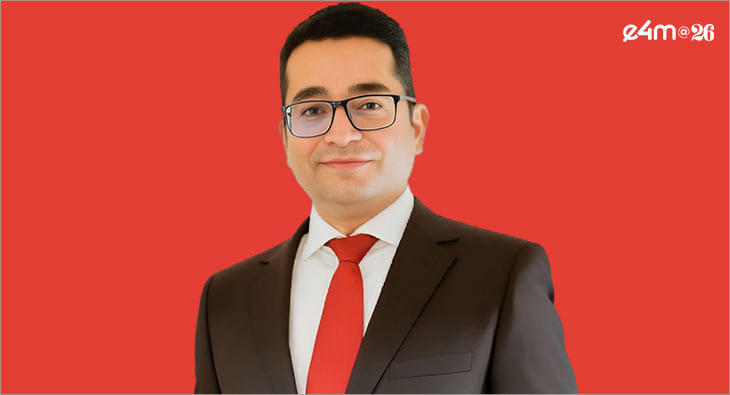

Kisna Diamond & Gold Jewellery (KISNA) is increasing its marketing investment this year as it shifts from event-led communication to a structured, full-funnel brand strategy, according to Prashant Awasthi, Chief Marketing Officer.
Awasthi said the brand’s overall marketing spends will increase significantly compared to previous years, driven by a shift towards sustained 360-degree communication.
“Compared to previous years, the spend will be much higher this year because we are opting for 360-degree communication,” he said, adding that the budget will be ‘multiplied’.
Historically, KISNA’s communication was largely ATL-focused and sales-driven, activated around specific occasions. “Earlier, it was more sporadic and event-based. Now it is more structured, systematic and strategic - a combination of brand and sales,” Awasthi said.
Currently, the brand’s media split stands at roughly 70% traditional or established media and 30% modern formats such as digital, social media, influencers and AI-led platforms.
While television, print and cinema continue to anchor reach, digital is increasingly being used for engagement and precision targeting. Connected TV, he noted, operates as a bridge between traditional TV and digital but is largely treated as part of digital inventory.
The shift comes alongside the rollout of KISNA’s brand campaign, ‘Khushi Ke Har Pal Ke Liye Kisna’, which aims to position the brand as relevant beyond wedding-led purchases and across everyday milestones.
Emotional storytelling remains core
For Awasthi, heritage and modern marketing are not opposing forces in the Indian jewellery landscape.
“In India, we cherish our culture and tradition. Tradition is part of modernization; it is evolving,” he said. Even as media formats evolve, he emphasised that emotional storytelling continues to anchor the brand’s communication. “The core will remain the same. Emotional storytelling so that you connect tradition with modernization.”
While earlier campaigns leaned more heavily towards consumers in tier 3 towns, the brand is now also addressing urban working consumers seeking self-expression, without losing its cultural grounding.
Influencers and AI in the mix
As part of its evolving media playbook, KISNA is deploying influencers selectively, particularly to communicate product attributes and trade-related USPs. Awasthi said influencers help communicate product attributes and USPs to relevant audience segments, adding that while the brand is not heavily reliant on influencer-led marketing at present, their role is expected to expand gradually.
Beyond communication, technology is being integrated into the consumer journey. AI is currently being used to enhance the e-commerce experience, including 360-degree product rendering and tools that help customers visualise how jewellery may look based on their preferences.
The company is also leveraging marketing automation and analytics tools to track behaviour, trends and purchase patterns.
Premiumisation or polarisation?
Awasthi sees the current jewellery market as moving along two parallel tracks: value-seeking and premium consumption.
With gold prices rising sharply, middle-income consumers are becoming increasingly value-conscious.
“If someone had a budget of Rs 1 lakh earlier, and gold prices double, the budget does not automatically become Rs 2.5 lakh,” he said, noting that such consumers look for designs that appear substantial but remain accessible. Awasthi also pointed to sharp commodity appreciation to explain shifting consumer behaviour. He noted that while gold prices have nearly doubled and silver prices have risen by as much as 250%, consumer budgets do not increase proportionately, making value engineering critical for middle-income buyers.
At the same time, consumers with higher purchasing power continue to seek exclusive and premium offerings. Awasthi described the market as operating on both ends of the spectrum, with one segment being value-driven and another leaning towards premium consumption.
Lab-grown diamonds
Lab-grown diamonds are steadily entering the market, and Awasthi acknowledged their growing visibility.
“The popularity of lab-grown diamonds is inevitable. It will happen,” he said.
However, he maintained that natural diamonds continue to carry deeper emotional and cultural significance in India, particularly given their association with rarity and tradition.
While lab-grown diamonds may gain share, he expects demand for natural diamonds to remain resilient due to their symbolic value.
Offline retail remains critical
Despite the expansion of digital channels, Awasthi underscored the continued importance of physical retail in the jewellery category. Consumers increasingly expect omnichannel flexibility - the ability to browse online and transact either digitally or in-store. However, for high-value purchases, brick-and-mortar outlets continue to anchor trust and experiential engagement.
Given that a significant portion of India’s population resides in tier 3, 4 and 5 towns, expansion into smaller cities remains central to the brand’s strategy.
“These towns are evolving. Household incomes are increasing and purchasing power is improving,” Awasthi said.
Gen Z and self-expression
Younger consumers, according to Awasthi, are not fundamentally different from older cohorts but approach jewellery with a distinct mindset.
“They may not see jewellery purely as an investment. For them, it is about self-expression,” he said.
This cohort gravitates towards contemporary, value-driven designs that are lighter on the pocket. Reaching them requires a strong presence across mobile-first digital platforms, OTT and social media ecosystems. “Digital will be the key influencer in jewellery purchases,” he added.
Awasthi remarked that the term “Gen Z” is often overused, adding that younger consumers are not fundamentally different from the rest of society. According to him, they share the same cultural roots and preferences, but differ in how they express themselves and the mediums through which they engage.
Growth levers for the next decade
Projecting the industry’s trajectory over the coming years, Awasthi pointed to improving household incomes, greater financial independence among women and the growing influence of digital platforms as fundamental growth drivers shaping the jewellery market.
He also pointed to emerging formats such as 9K gold as potential options for consumers seeking affordability amid sustained gold price inflation.
As prices rise, marketing narratives may need recalibration.
“Marketing has to wear different hats,” he said, adding that while investment value remains relevant, emotional storytelling and self-expression continue to play central roles. “Buying gold or diamond is not just about investment, nor just about self-expression. It is an amalgamation of both.”
Read more news about Marketing News, Advertising News, PR and Corporate Communication News, Digital News, People Movement News
For more updates, be socially connected with us onInstagram, LinkedIn, Twitter, Facebook, YouTube & Google News