No matter how old a brand is, it has to evolve as consumers evolve: Manav Sahni, Nestle
At Pitch BrandTalk 2025, Manav Sahni, Business Head of Nestle India’s Dairy business, talked about the need for companies to keep evolving
 by
by
Published: Nov 24, 2025 7:20 PM | 5 min read
 Follow Us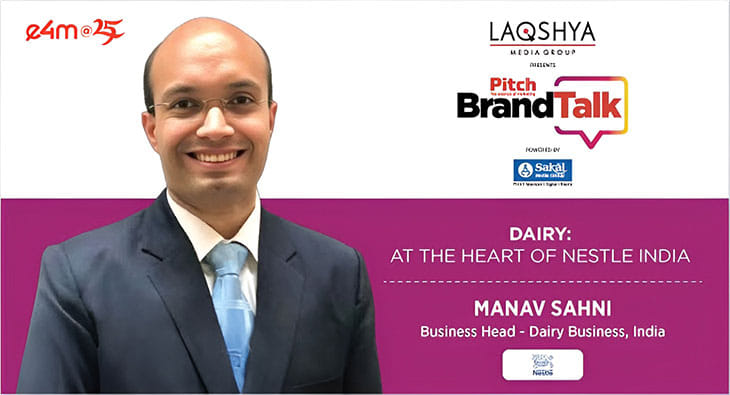

When Nestle took the spotlight at Pitch BrandTalk 2025, it wasn’t with a new product teaser or a marketing reveal it was with something far more nostalgic. Milkmaid. A brand that has sweetened Indian kitchens for more than a century, and interestingly, the very first product Nestlé ever launched in India.
But beneath that sense of nostalgia, the session with Manav Sahni, Business Head of Nestle India’s Dairy business, and Simran Sabherwal- Associate Editor at Exchange4media revealed a company rapidly reinventing itself in an ecosystem defined by digital consumption, shifting dietary habits, premium aspirations, and a booming quick-commerce landscape.
A Legacy Rooted in Indian Kitchens
Nestle’s dairy journey in India began with Milkmaid, and the Pitch BrandTalk session unfolded like a reminder of how deeply the brand is woven into Indian culinary memory. What began as a milk substitute more than a century ago transformed after the White Revolution, and Manav captured this evolution simply: “No matter how old a brand is, a brand has to evolve as the consumers evolve.”
Milkmaid’s shift from substitute to staple dessert companion reflects Nestlé’s ongoing commitment to stay tuned to India’s changing habits and taste moments, he shared.
Capturing the Digital Recipe Revolution
The pandemic sparked a massive baking wave, and Milkmaid naturally rode that resurgence. But as life returned to normal, the brand had to rethink relevance. Manav explained how the six-inch mobile screen became the new cooking companion. “An Indian spends around six hours on that screen. So our content is tailored for that screen, short, sharp, and on trend,” said Sahni. The strategy goes beyond videos: regional creators and nano influencers help translate recipes into the local palate. “Trends are not the same everywhere,” he added. “What works in Chennai won’t always work in Indore.”
Milkmaid Mini: Innovation Born from Friction
One of the most compelling moments in the conversation came when Manav spoke about Milkmaid Mini a solution crafted directly from consumer pain points. Non-users and lapsed users confessed they didn’t know where to store a tin, how to preserve it, or what to do with 380 grams. “They didn’t know what to do once the can was open,” he said. “And they didn’t know what to do with 380 grams of it.” The smaller, resealable pack with a 15-day usable life solved quantity, convenience, and price in one go. The result? “In one year, the number of transactions we saw with the new pack was 2x of the previous three years combined,” he shared with obvious pride.
From Milk to Cold Coffee: Cracking the Aspiration Code
Moving into Nestlé’s larger dairy ecosystem, Manav clarified that the strategy is not about premiumisation but perceived value. “More than premiumisation, it is about understanding what need you are solving,” he said. Nescafé’s café-style cold coffee is a perfect example redesigned to match the consumer’s desire for indulgent, creamy, café-like experiences. “What they tell you is, ‘café jaisa cold coffee peena hai,’” he laughed. Nestlé priced it at an accessible ₹50, and the drink quickly became a favourite in metros and small towns alike.
Quick commerce amplified that success. “We sold more than 50,000 cans in a single day during the India–Pakistan T20 match,” Manav revealed. The category thrives on impulse, and Nestlé mastered the trifecta: right moment, right platform, right product.
Lactose-Free Dairy: Solving an Unspoken Problem
When Simran raised the subject of lactose intolerance, the mood turned reflective. Manav explained how widespread yet unrecognized the issue is: “As we age, our ability to digest lactose naturally goes down. Most people don’t realize their discomfort is actually lactose intolerance.” Nestle responded with lactose-free curd and is exploring similar innovations for milk. It’s not just product innovation, it's category building. Alongside this, offerings like Greek yogurt bridge health, indulgence, and global inspiration.Despite competition from strong, hyper-local regional players, Manav remained optimistic. “The market is so big, the opportunity is huge,” he said. “If you have the right product with the right proposition, it’s open for everyone.” Nestle’s confidence stems from its ability to decode consumer needs and respond with precise propositions whether convenience, affordability, or indulgence.
Sustainability from Farm to Bottle
The conversation deepened when sustainability entered the frame. Manav was clear that this isn’t a surface-level effort. Nestlé works directly with over 80,000 dairy farmers across the country, focusing on better feed, biogas digesters, and responsible packaging. “We ensure that right from the time we source to the time the consumer consumes, greenhouse gas emissions are taken care of,” he said. For a younger audience increasingly conscious about impact, this approach reflects both responsibility and foresight. Looking ahead, Nestlé is betting big on cold coffee. Global flavours and formats may soon make their way into India from high-caffeine Nescafé Intense to zero-sugar options popular in Southeast Asia. “Our focus is on building the cold coffee category,” Manav hinted. As India’s palate globalizes, Nestlé sees clear headroom for experimentation and excitement.
Read more news about Marketing News, Advertising News, PR and Corporate Communication News, Digital News, People Movement News
For more updates, be socially connected with us onInstagram, LinkedIn, Twitter, Facebook, YouTube & Google News