When Giants Collide: What the Omnicom–IPG merger could mean for the future of advertising
Guest Column: Veteran adman Prabhakar Mundkur writes on the Omnicom–IPG merger buzz, a move poised to redraw power lines across the advertising landscape
 by
by
Published: Nov 24, 2025 3:41 PM | 5 min read
 Follow Us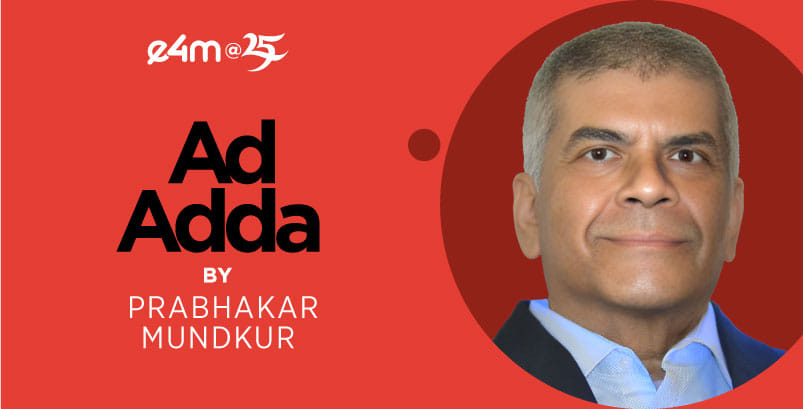

Speculation is rife about what will happen when Omnicom and IPG finally announce their merger — perhaps just hours from now, or possibly even before this article goes to print. In an industry where rumours often move as quickly as markets, this one has generated a rare cocktail of excitement, anxiety, and existential questioning. The prospect of two of the world’s biggest holding companies joining forces feels less like a simple corporate deal and more like a tectonic shift, a celestial event in the advertising universe.
For Omnicom, the investor climate has been steadily warming. Analysts see the possibility of scale efficiencies, stronger global integration, and a chance to redefine the competitive landscape in a market that is increasingly unforgiving of inefficiency. For IPG, however, the emotional landscape is different. Inside their offices, the mood is closer to trepidation than triumph. If history is any indication, the employees of the acquired entity or the presumed “smaller” partner are often the first to fear redundancies, restructuring, or cultural erosion. And this time, the fear feels particularly acute.
This merger, if it materialises, signifies more than two giants combining balance sheets. It signals the changing of the old guard. As Omnicom and IPG prepare to redraw the map, WPP, once the most aggressive and expansive of the holding company empires continues to shrink, pivot, and recalibrate. Its current strategy seems shaky, outsourced even, leaning heavily on external advice from the McKinseys of the world. The confidence and swagger that defined WPP’s zenith have been replaced by something more tentative. In contrast, the Omnicom–IPG union feels like a statement, a reassertion of dominance in an ecosystem that has been drifting without a central gravitational force.
But the question on everyone’s mind is: Will this merger crush the small agency?
The knee-jerk assumption is yes. A giant merging with a giant should logically create an even bigger, more resource-rich, more competitive giant — one that can swallow clients, talent, and market share more easily than ever before. With combined media muscle, production capabilities, data platforms, and geographic reach, the new entity could become the industry’s equivalent of a supermassive black hole, distorting the competitive landscape around it.
However, this assumes that clients want only size. The last decade has shown the opposite.
The Rise of the Small, Sharp, Restless Agency
While holding companies have been consolidating, clients have quietly shifted their preferences. Many no longer want the bloat that comes with large networks. They don’t want ten layers of account management, global fee structures, or creative offices scattered across continents with no clear ownership. They want agility. They want senior talent actually working on their business. They want simplicity. They want ideas not process.
And this is where the small agency has been quietly, steadily winning.
Startups, mid-sized brands, challenger categories, and even giant multinationals have increasingly thrown business to independent creatives and boutiques. The reasons are practical: smaller agencies are faster, less bureaucratic, more culturally tuned-in, and often more accountable. They don’t need twelve stakeholders to sign off on a headline. They don’t need internal townhalls, global capability decks, or committees to pitch. They simply do the work.
The bigger question is whether the Omnicom–IPG merger will accelerate this trend. My prognosis: yes, it absolutely will.
When two giants merge, the first casualty is often agility. Integration takes time. Cultures clash. Politics intensify. Decision-making slows, sometimes to a crawl. While the holding companies focus inward realigning P&Ls, merging systems, rationalising talent, and reassigning responsibilities the small agencies remain outward, focused entirely on clients and creative output.
This creates opportunity. Often, enormous opportunity.
Why the Small Agency Will Only Get Stronger
The new Omnicom–IPG super-entity may be large, powerful, and unstoppable in some ways, but it also becomes vulnerable in others. Here’s why the small agency won’t just survive but it will thrive:
- Clients hate disruption.
A merger of this size creates uncertainty: Will my agency change leadership? Will my creative team be moved? Will my business be reassigned to another office? Uncertainty drives clients away usually to independents who can promise stability and attention. - Talent flight is inevitable.
Whenever giants merge, the best people leave. Not because they dislike the merger, but because integration is tedious. The small agency becomes the natural landing ground for fugitives from the consolidation machine turning boutiques into powerhouses overnight. - Creative autonomy becomes the new luxury.
As big networks centralise and streamline, small agencies double down on creative independence. In a world where creativity has become commoditised by AI, this autonomy becomes priceless. - Speed wins in modern marketing.
No matter how efficiently the merged entity reorganises itself, it will never move as quickly as a 20-person shop with a flat hierarchy. And speed is the currency of today’s brand wars. - Fragmented media has democratised access.
You don’t need a giant to buy digital media. You don’t need global clusters to make content. Technology has unbundled everything. Scale matters for logistics not for ideas.
The Age of Giants Isn’t Ending — But It’s Changing
The Omnicom–IPG merger will certainly reshape the industry. It will trigger further consolidation, redefine global client rosters, and create an entity of unprecedented combined capabilities. But it will also open up cracks; cracks through which smart, hungry, entrepreneurial agencies will flourish.
Every time giants collide, they create debris. And in that debris, new stars form.
In the end, mergers don’t kill small agencies. Complacency does. And if anything, this moment will energize the independents.
The giants may merge.
But the small agency?
It will keep chipping away and it will keep winning.
Read more news about Internet Advertising India, Marketing News, PR and Corporate Communication News, Digital Media News, Television Media News
For more updates, be socially connected with us onInstagram, LinkedIn, Twitter, Facebook YouTube & Google News
