Jack Dorsey’s Block Unveils Dessa, AI That Talks Like Humans Without Text
Jack Dorsey's Block unveils Dessa, a speech-to-speech AI model trained on human conversations that can listen, interrupt and respond to emotions in real time.
 by
Published: Oct 24, 2026 1:12 PM | 3 min read
 Follow Us
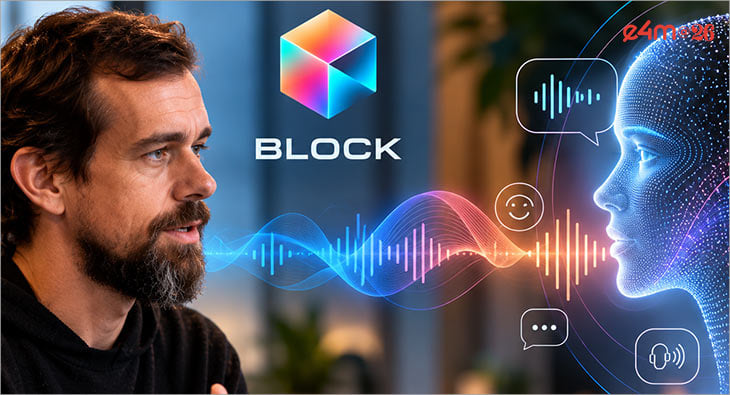

- Block has introduced Dessa, a new speech-to-speech AI model that can engage in real-time conversations by processing audio directly, without relying on text or pre-trained language models.
- Dessa is designed to mimic human conversational behavior, allowing for natural interruptions, emotional responses, and simultaneous listening and speaking, which could enhance customer interactions in various industries.
- Developed by a team led by Ragavan Thurairatnam, Dessa operates locally on certain hardware and has been trained with fewer words than traditional models, although specific technical details remain undisclosed.
- Currently an experimental project, Dessa is not yet available as a commercial solution, and its performance in real-world applications, including accuracy and multilingual capabilities, is still under evaluation.
This story was originally published on MartechAI.com.
Trained entirely on human conversations, the new speech-to-speech AI model can listen, interrupt, laugh and respond to emotions in real time, potentially reshaping voice AI and customer experience.
Jack Dorsey’s fintech company Block has unveiled Dessa, an experimental artificial intelligence model capable of holding real-time conversations after being trained entirely on human speech, without relying on written text or pretrained language models.
Announced on October 23, 2026, the model represents a departure from conventional voice AI systems, which typically convert speech into text, process it through a language model and generate a spoken response.
Instead, Dessa processes conversations directly through audio, learning language, conversational behaviour and elements of world knowledge from recordings of human interactions.
An AI That Learns by Listening
Dessa’s development is based on a fundamental observation: humans learn to speak before learning to read or write. Block’s researchers explored whether artificial intelligence could develop similar capabilities without depending on text-based training.
The result is a speech-to-speech model supporting full-duplex communication, allowing it to listen and speak simultaneously.
Unlike conventional voice assistants, Dessa can interrupt naturally, acknowledge speakers while they are talking, complete unfinished sentences and respond to changes in conversational tone.
The model can also produce laughter and react to emotional cues, including hesitation, excitement and surprise.
Block has released demonstrations showcasing these capabilities, including an interaction with OpenAI’s GPT-Live-1 voice model. However, the recordings are company-selected demonstrations rather than independently verified performance tests.
The Technology Behind Dessa
The model was developed by a research team within Block, led by Ragavan Thurairatnam, whose background includes the Toronto-based AI startup Dessa, acquired by Square, now Block, in 2020.
According to Block, the model was trained using a single NVIDIA GB200 NVL72 system and learned language from substantially fewer words than conventional large language models.
The company also claims Dessa can operate locally on a MacBook Pro equipped with Apple’s M4 Max chip or better, running faster than real time.
However, details concerning its parameter count, training dataset and independently comparable benchmarks remain undisclosed.
What It Means for Marketing and Customer Experience
For the MarTech and customer experience industries, Dessa could signal a shift towards AI interactions that are more conversational, context-aware and emotionally responsive.
Many automated customer service systems struggle with interruptions, frustration and subtle changes in customer sentiment.
Speech-native AI could potentially address these limitations by interpreting not just what customers say, but how they say it.
For brands, such capabilities could eventually transform contact centres, voice commerce, conversational marketing and automated customer support.
AI agents might become better equipped to recognise hesitation during purchases, respond to frustration during complaints and adjust their conversational approach based on emotional signals.
However, Dessa has not been launched as a commercial customer experience solution, and its enterprise capabilities remain untested.
A Research Preview With Bigger Implications
Dessa remains an experimental research project, with Block initially offering access to selected AI safety researchers and announcing a broader public waitlist.
Questions remain about factual accuracy, multilingual performance, reliability and deployment in real-world environments.
Nevertheless, the development highlights a potential turning point in conversational AI.
As brands increasingly deploy autonomous agents across customer journeys, the next competitive advantage may lie not simply in AI systems that understand instructions, but in those capable of navigating the timing, emotion and complexity of human conversation.
Read more news about Marketing News, Advertising News, PR and Corporate Communication News, Digital News, People Movement News
For more updates, be socially connected with us onInstagram, LinkedIn, Twitter, Facebook, YouTube & Google News