As D2C brands go offline, can omnichannel growth stay profitable?
The challenge is that omnichannel growth is expensive on both ends, say industry players but they also note the need to invest in exclusive stores, shop-in-shops, and large-format retail partnerships
 by
by
Published: May 13, 2026 8:55 AM | 7 min read
 Follow Us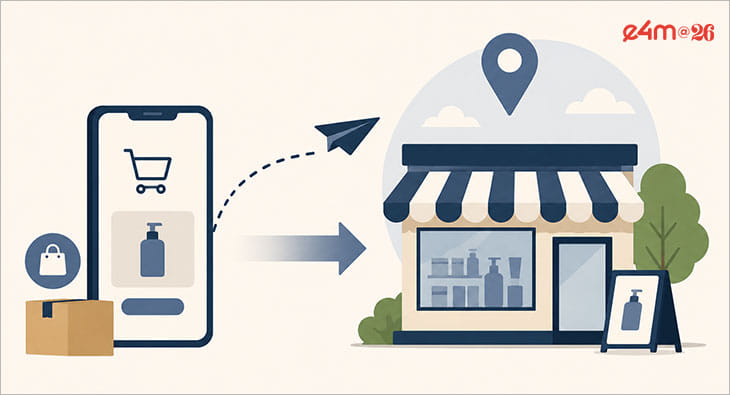

- Direct-to-consumer (D2C) brands in India are increasingly expanding into offline retail to meet consumer demand for physical experiences, while also facing rising customer acquisition costs in digital marketing.
- Brands like Traya Health, Pee Safe, and Recode Studios are investing in exclusive stores and retail partnerships, balancing their digital advertising expenditures with the costs associated with physical expansion.
- Industry experts highlight that omnichannel growth is costly, requiring significant investment in logistics, staffing, and marketing, while emphasizing the importance of integrating online and offline strategies for sustainable growth.
- The focus for many D2C brands is shifting from immediate sales to long-term brand building, with an emphasis on customer trust, retention, and creating seamless shopping experiences across both digital and physical channels.
As India’s direct-to-consumer brands race to build an offline presence, a new financial tension is beginning to emerge: can brands sustain the cost of physical retail expansion while continuing to spend aggressively on digital marketing to drive visibility and demand?
For years, D2C brands relied heavily on Meta ads, influencer marketing, and performance campaigns to scale online. But with customer acquisition costs rising, digital growth plateauing, and consumers increasingly seeking touch-and-feel experiences, many brands are now investing in exclusive stores, shop-in-shops, and large-format retail partnerships. The shift is especially visible across beauty, wellness, fashion, luggage, and personal care categories.
Brands such as Traya Health, Pee Safe, Recode Studios and EUME are among the growing list of digital-first companies now scaling offline through retail stores and distribution networks, while simultaneously maintaining strong spends across digital advertising and creator-led campaigns.
D2C brands experiment with creator deals. Read more
Industry observers say the challenge is that omnichannel growth is expensive on both ends. Offline expansion demands high rentals, staffing, inventory management, visual merchandising, and backend logistics. At the same time, digital marketing remains non-negotiable because consumer demand is still largely being created online.
Aakash Goplani, Vice President - Business, SoCheers said, “On-ground marketing is becoming a significantly larger part of the overall spend because even small offline activations require substantial operational effort and investment.”
He added that while brands with a smaller offline footprint can still balance digital and physical marketing effectively, rapid expansion across multiple stores and cities is increasingly forcing brands to choose between maintaining high digital spends and investing in offline visibility and retail growth.
MARS Cosmetics’s Vice President Marketing Anmol Sahai Mathur said offline success extends beyond immediate sales, compounding through visibility, trust, accessibility and repeat behaviour. The brand currently has 51+ exclusive outlets, 280+ modern trade touchpoints and a growing 3,000+ general trade presence across India.
“As we expand, we look at metrics like repeat walk-ins, regional demand lift, assisted conversions, and overall brand recall. We also see strong cross-channel impact, where offline visibility improves online conversion and vice versa. The focus is on sustainable retail productivity and long-term consumer retention rather than short-term expansion,” he said.
Mathur added that the brand's digital strategy is focused on driving overall brand discovery and purchase intent across channels, rather than just online conversions. He noted that beauty consumers today move fluidly between creator content, retail experiences, marketplace reviews and quick-commerce reorders, making it essential to build a connected omnichannel ecosystem across D2C, marketplaces, retail and quick commerce. Mathur added that alongside offline expansion, the brand is strengthening its marketplace presence and leveraging rising demand on quick-commerce platforms, particularly for convenience-led beauty purchases.
D2C brands rewriting influencer rules?
Brands navigating this transition say the challenge is no longer just about expanding distribution, but about redefining how digital and offline channels work together.
According to Saloni Anand, Co-Founder, Traya Health, the brand views offline less as a revenue-per-square-foot business and more as a trust-building channel. She said customers acquired through physical centres tend to engage more deeply, stay longer on treatment plans, and drive stronger referrals, making offline a long-term investment in category trust.
“Being digital-first gives us an advantage here. We didn't build offline and then figure out digital. We built digital first, and offline became a natural extension of an audience that already existed,” Yadav said.
Anand said the company entered Pune offline after seeing strong digital traction from the city, making the move more about serving an existing customer base than creating demand from scratch. According to her, digital drives awareness while offline deepens trust through face-to-face consultations and scalp analysis, with customers moving seamlessly between both touchpoints.
Ajit Sen, Vice President of Sales at Pee Safe, said the brand views offline expansion as a mix of distribution, visibility, and habit formation, with a focus on strengthening retail presence and deepening penetration across existing markets.
“This entails monitoring factors such as shelf exposure, category sales, and regional expansion, particularly in Tier 2 and Tier 3 cities. At the same time, there is an analysis of repeat purchase behaviour and product-level adoption to gauge consumer habits,” he said, adding that demand trends are also reflected through quick commerce and institutional partnerships, while offline success is measured through revenue growth, stronger brand awareness, and the creation of long-term hygiene habits among consumers.
Sen further noted that Pee Safe has evolved its digital strategy from a purely D2C model to an omnichannel approach where online platforms actively drive offline discovery and engagement. He said the brand uses content, influencer collaborations, pharmacy chain partnerships, and quick commerce presence to build awareness and improve point-of-purchase visibility, while digital insights also help identify demand clusters for retail expansion.
Other brands are also rethinking omnichannel success beyond pure sales metrics.
For Recode Studios, offline expansion has shifted the focus beyond digital metrics toward operational efficiency, inventory turnover, sustainable unit economics, and long-term regional brand loyalty. The brand is also betting on its MBO network to drive both retail expansion and local entrepreneurship. Its digital strategy, meanwhile, has evolved into an omnichannel discovery model using hyperlocal targeting, influencers, and community engagement to drive store visits and connect online discovery with offline purchases.
Similarly, EUME said offline success is now measured not just through sales metrics, but also through brand discovery, recall, and long-term customer value. The brand has expanded its digital strategy beyond performance marketing to drive in-store engagement through local SEO, geo-targeted campaigns, and content focused on real-world product experiences, strengthening its online-to-offline customer journey.
Offline v/s online
Expanding on this approach, Dheeraj Bansal-Director of Recode Studios said, “In this phase, Recode Studios focuses on establishing a seamless omnichannel ecosystem that leverages its digital prowess while also scaling up in the offline world at an equally fast pace.” He noted that the brand is scaling its MBO and franchise network to expand across Tier II and Tier III markets more cost-effectively, while continuing to invest in digital channels through apps, marketplaces, and influencer marketing.
Meanwhile, Naina Parekh, Co-Founder of EUME, said the brand views omnichannel growth as creating a seamless experience across every touchpoint, with a focus on inventory visibility, consistent messaging, and unified customer journeys. She added that EUME’s offline stores are designed as experience-led spaces rather than just sales outlets.
“Alongside this, strong CRM and retention strategies help us build lasting relationships. Ultimately, EUME’s approach ensures scalable, connected retail growth across all channels,” Parekh said.
For brands operating in trust-driven and habit-led categories, omnichannel growth is increasingly being viewed as a long-term brand-building exercise rather than just a distribution play.
According to Traya Health, the brand views omnichannel less as expanding touchpoints and more as building trust through physical consultation centres. The company said its offline strategy focuses on expanding in markets with strong digital traction, maintaining a seamless customer journey across channels, and using offline spaces to build conviction in a category often marked by trust deficits.
Meanwhile, Pee Safe said its omnichannel approach is centred on balancing digital scale with deeper offline penetration. The brand is strengthening retail and pharmacy partnerships, investing in offline-first packaging and BTL activations, while continuing to use quick commerce, category expansion, and data-led insights to drive discovery, engagement, and long-term consumer trust.
How can D2C brands keep operations sustainable?
As operational costs rise, agencies say the focus is shifting toward making omnichannel expansion more efficient rather than simply expanding presence.
“Right now, phygital marketing models offer the most effective balance. A focused offline activity, when amplified smartly through multiple digital legs, can significantly improve both reach and efficiency,” Goplani explained.
He added that brands integrating offline and digital strategically are better positioned to optimise costs while maintaining visibility and consumer engagement. According to him, the key focus today is driving online discovery that translates into offline purchases through social content, creators, performance marketing, regional targeting, and community-led campaigns that create a seamless path from digital engagement to in-store action.
Thus, as D2C brands push deeper into omnichannel retail, the challenge is no longer just acquiring customers, but sustaining growth across both digital and physical ecosystems. For many brands, the next phase of scale will depend on how efficiently they can turn online discovery into offline trust, without putting pressure on long-term profitability.
Read more news about Marketing News, Advertising News, PR and Corporate Communication News, Digital News, People Movement News
For more updates, be socially connected with us onInstagram, LinkedIn, Twitter, Facebook, YouTube & Google News