Cannes 2026: How brands are expanding beyond celebrities to include creators
Cannes 2026 reflects a shift in brand strategy, with creators playing a central role in shaping how campaigns are seen, experienced and interpreted by audiences
 by
by
Published: May 15, 2026 9:20 AM | 9 min read
 Follow Us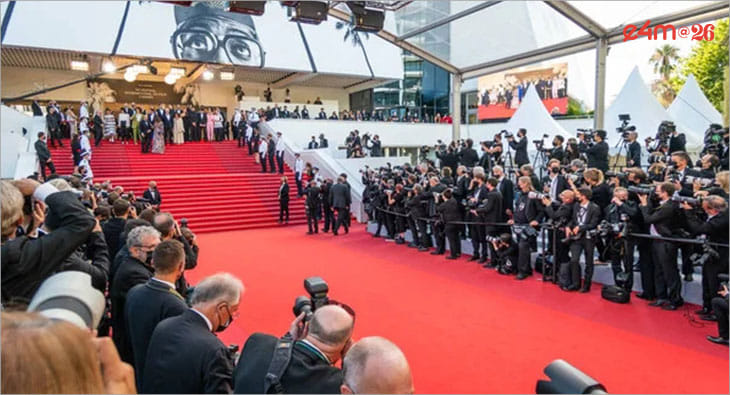

- The 79th Cannes Film Festival saw a shift in Indian brands' marketing strategies, focusing on creator-led content rather than traditional celebrity endorsements, with brands like L'Oréal partnering with digital creators instead of established ambassadors like Aishwarya Rai Bachchan.
- Creators are increasingly viewed as media companies, with audiences trusting their authentic narratives and unfiltered content over polished celebrity presentations, leading brands to prioritize meaningful engagement over mere aesthetics.
- Activations at Cannes emphasized cultural storytelling and personal identity, as creators like Ishita Mangal showcased Indian craftsmanship and regional narratives, while brands like Samsung integrated their products into the creators' experiences rather than using them as mere props.
- Successful brand activations were characterized by collaboration with creators who already had established voices and audiences, demonstrating that the context of the creator's influence is crucial for resonating brand messages.
Brands have been sending people to Cannes for decades. What changed this year is who they sent, why they sent them, and what they actually expected back.
The 79th Cannes Film Festival saw Indian brands arrive with a sharper brief than the festival has typically seen from this market. Instead of flying someone out to stand on the red carpet and post a photograph, the brands that stood out this year built activations around what their creators already stood for. The results were visible in the content that came out of the Croisette, and more importantly, in the conversations it started back home.
The Brief Has Changed
Aishwarya Rai Bachchan has been the face of L’Oréal Paris at Cannes for over two decades, a consistent presence that has earned her the unofficial title of “Queen of Cannes”. This year, however, she was absent from the Croisette. In her place, L’Oréal took a different approach. The brand partnered with three Indian digital creators – Rida Tharana, Ishita Mangal and Sufi Motiwala – to represent its Cannes presence. The shift reflects a broader move from legacy ambassador marketing towards creator-led content strategies, signalling how influence is increasingly being defined in 2026.
L'Oreal was not alone in making this shift. Across the festival, Indian brands from jewellery labels to consumer electronics arrived with creators rather than celebrities, and with content strategies rather than photo opportunities.
The more important story behind these activations is not which brands showed up with which creators, but why this moment has happened at all, and what it signals for how influence is evolving going forward.
View this post on Instagram
Ishita Mangal, a fashion and culture storyteller whose entire identity is built around Indian craft, regional identity and a sharp brand of humour read on the shift. "Creators stopped being seen as people who just post online and somewhere they became media companies of their own," she said. "Audiences today trust creators because they follow their personality, their lives and their point of view over years. It is a lot more unfiltered than other people. Brands see results faster when they work with creators than when they use traditional media practices."
The unfiltered quality she described is not just a content style. It is an audience relationship that took years to build and cannot be replicated by placing a product in a more polished context. "One reel can go viral overnight," she said. "Earlier, these global events were only celebrity or magazine controlled. Now creators have started shaping these conversations. Audiences enjoy Cannes through creators because it is not just the glamour but also the chaos behind it that creators choose to share."
For brands deciding where to spend on global event activations, that chaos is now part of the value proposition. The behind-the-scenes content, the real reactions, the moments that did not go as planned, these are what audiences watch and share. A magazine spread from Cannes has a lifespan of one news cycle. A creator's ten-day content run lives in an algorithm.
Mangal also made a point that the advertising industry tends to talk around rather than say directly. "People do not want just aesthetics anymore. They want meaning with entertainment," she said. Her own career turned on exactly this insight. Her States of India series, which documented the crafts, cultures and stories of India's regions, was what transformed her from a fashion and comedy creator into someone with a following that trusts her on questions of cultural identity. "People initially came for fashion and comedy but because of States of India they felt connected. They wanted to know about the stories and crafts of India and the stories of people who made it," she said. "All the humour, sarcasm, chaos, culture, storytelling, all of these factors have contributed to becoming my voice."
She is not a conventional beauty creator. L’Oréal still brought her to Cannes, with a brief to create ten days of content across ten looks, each built around a distinct concept.
Her opening look set the tone. Mangal wore a gown made from a handcrafted Ajrakh saree sourced from Kutch, Gujarat, repurposed into a modern fluid silhouette with an open back and soft draping. The idea came from a gap she noticed while putting the look together.
"Cannes is a lot of visual storytelling. There is fashion, cinema, beauty, culture, and personally, what excites me the most is that India is finally entering all of these spaces with global impact," Mangal said. "Earlier, we would go there trying to fit into global luxury. People always wore the global designers. But now we are going there carrying our own identity and you can see that shift."
The advertising logic behind choosing her is worth unpacking. A beauty brand did not necessarily need a fashion creator to speak about its products in a conventional way. Instead, it needed her credibility within spaces like Cannes, fashion, and cultural storytelling, areas where the brand wanted to be present but could not credibly access without a voice already rooted there. The beauty brief became secondary to the cultural placement brief. This marks a shift from how brands have traditionally used Cannes, as a platform for product launches, red-carpet moments tied to collections, and celebrity ambassadors whose glamour reflected brand aspiration.
Mangal was direct about why the relationship works from her end. "They have shown faith in me, my work, my personality and the kind of fashion I exhibit to get me to Cannes and deliver all the content as a Cannes insider," she said. "I would say yes to L'Oreal every single time they come."
She was equally direct about what would end any brand conversation regardless of the size of the cheque. "If a brand wants to completely erase my identity and make me more globally appealing, that would make me turn down the cheque," she said. "My entire appeal is about wearing Indian craft, supporting India, representing India. I wear Indian, I joke Indian, I put India on the map proudly on my page. If they want a watered-down version of myself for international validation, that is a no."
That boundary explains something important about how creators are approaching brand negotiations at this level.
The Product as Part of the Story
Not every brand at Cannes this year was playing the cultural narrative game. Some used creators in a more direct way: to place the product within the content itself, rather than alongside it.
View this post on Instagram
Samsung sent Ishani Mitra, a creator known for makeup, fitness and fashion content, to Cannes as a representative for the Galaxy S26 Ultra, and the activation was built entirely around the device as a travel companion and creative tool.
Mitra shot her entire Cannes experience on the phone, held it as an accessory in her content, and used it to capture the moments that make up a festival appearance, the looks, the locations, and the in-between moments that creators know their audiences actually want to see. The device was not a prop placed beside her for a photograph. It was the instrument through which her entire Cannes presence was documented and shared.
This is a smarter product integration than it might appear. Samsung did not necessarily require Mitra to explain the Galaxy S26 Ultra's camera specifications on a red carpet. They needed her audience to see the quality of what the phone produced in a setting that is genuinely aspirational, across fashion, travel and culture content simultaneously. The Cannes backdrop did the heavy lifting for the brand argument. Mitra did the work of making it feel real rather than staged.
On the jewellery front, Sennes by Senco worked with creator Rida Tharana, dressing her in a custom teardrop solitaire lab-grown diamond necklace designed with cascading motifs and luminous detailing. The collaboration was less about spectacle and more about fit. Tharana's aesthetic, polished but unpretentious, gave the brand a credible international face for the design identity it is building around fluidity and jewellery that reads as personal expression rather than status signalling.
"Rida brings a kind of effortless confidence and modern glamour that fits beautifully into the world we are building at Sennes," said Joita Sen, Head of Marketing and Design at Sennes. "Seeing one of our signature creations at Cannes reflects the direction in which the brand is evolving, globally minded, design-led, and rooted in a modern interpretation of luxury."
View this post on Instagram
The Sennes activation at Cannes was a deliberate piece of brand positioning. Lab-grown diamonds are still building credibility in a fine jewellery market that has historically rewarded the mined stone. Placing the product on a creator with Tharana's following, on a platform with Cannes's visibility, was a way of making the argument that this is where luxury is going rather than what it is leaving behind.
That last point is what ties all of these Cannes activations together. The brands that performed best this year were not the ones that gave creators the largest budgets or the most visible placements. They were the ones that found creators who already had a voice, already had an audience that trusted that voice, and then built a brief around it rather than over it.
The creator is not simply a distribution channel for a brand message; they are the context in which that message either resonates or does not. Cannes 2026 made this more visible in a way that metrics such as reach and impressions do not fully capture.
As Mangal noted when asked about what makes a PR moment work, whether it is a fashion critic’s review or her own comment section lighting up after a Cannes post: "Everything ultimately helps your visibility, your reach. Any PR is good PR. When you are in the industry for some time, you realise that is actually true."
Read more news about Influence Zone, Marketing, PR and Corporate Communication, Internet Advertising, People Movement
For more updates, be socially connected with us onInstagram, LinkedIn, Twitter, Facebook, YouTube & Google News
