500 Mn+ daily views: What India's latest microdrama shows say about binge economy
ShareChat and Moj are scaling the microdrama format rapidly, turning them into high-attention spaces that are increasingly attractive for brands
 by
by
Published: Jun 15, 2026 2:55 PM | 5 min read
 Follow Us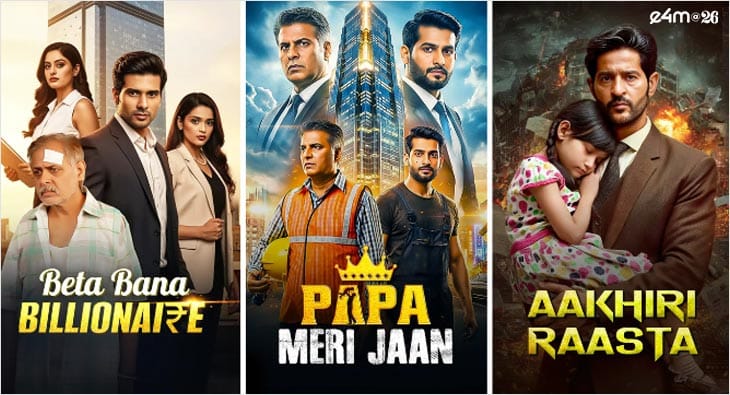

- The microdrama ecosystem in India has evolved from experimentation to a significant trend, with platforms like ShareChat and Moj achieving 100–200 million views per show, indicating strong audience engagement and repeat viewership.
- Titles such as "Mere 3 Shehzaade," "Ghar Wapsi," and "Beta Bana Billionaire" have garnered impressive view counts, reflecting a consistent pattern of emotional investment in serialized storytelling that resonates with mobile audiences.
- The format employs cliffhangers and emotional narratives to maintain viewer curiosity and engagement, transforming casual viewers into loyal fans who return for subsequent episodes.
- For brands, the high view counts and audience investment present unique advertising opportunities, allowing for seamless integration into the narrative rather than traditional ad placements, enhancing brand recall and familiarity.
The microdrama ecosystem in India has moved past its experimental phase and entered a defining moment of scale and consistency. What was once seen as short-form content is now driving engagement, with platforms like ShareChat and Moj crossing 100–200 million views per show. This growth trajectory is a result of audiences returning episode after episode, building repeat engagement around these narratives.
Several titles like Mere 3 Shehzaade have crossed 250 mn+ views, Ghar Wapsi is approaching 192 mn+ views while Beta Bana Billionaire has surpassed 124 mn+ views. These aren't outliers, they represent a consistent pattern of deep, repeat engagement across multiple titles and themes.
The trend signals a deeper behavioural change, pointing to a structural shift in how Indian audiences choose to spend their screen time and what that means for brands looking to reach them.
Microdramas aren’t just short videos, they are serialised stories built for the way people actually watch on their phones. Think of them as a compressed version of India’s long-loved TV dramas, where emotion and conflict are packed into 60–90 second episodes, with cliffhanger endings that drive return viewing. These episodes build the momentum over time, keeping the audience invested in them emotionally.
Emotion is the Algorithm: What the Top Shows Have in Common
Impressive stories like Aakhiri Raasta pull you in from the very first moment, with a father’s grief and anger after losing his daughter, a premise that generates immediate emotional investment and sustains it across episodes. Phir Bhi Tumko Chahunga leans into heartbreak, asking whether love can survive betrayal at its worst while Betaaj Baadshah, which taps into the timeless appeal of palace intrigue and hidden identities, something Indian audiences have always enjoyed.
The emotions here aren’t new, what’s changed is the story format and how the story is being told. Microdramas reshape these themes into quick, vertical episodes made for the mobile-native episodes that can be watched anywhere, without losing the connection.
The ‘What Happens Next’ Economy
At the heart of microdramas is a simple but powerful hook – a cliffhanger, which keeps the curiosity high to know what happens next.
What makes this format especially powerful is how it builds on behaviours audiences already have. Short-form video platforms made mobile entertainment ingrained into daily lives - quick, accessible and easy to consume anytime during the day. Microdramas take that same mobile-first behaviour and layer in serialized storytelling, giving audiences not just snackable content, but an ongoing emotional journey they can keep returning to. Every successful title is built around this idea, ending each episode at a moment allowing viewers to come back for more.
For instance, Betaaj Baadshah, which has been live only since January 2026, has already crossed 5.6 Mn views within 120 days of launch. It’s the mystery around Prince Veerendra’s hidden identity that keeps audiences guessing, pulling them back episode after episode. Similarly, Aakhiri Raasta starring Hiten Tejwani, builds its momentum through Vikram Goyal’s (the protagonist) journey of revenge, with each twist pushing the story forward and keeping viewers invested and thereby building repeat engagement.
The Attention Economy: What View Counts Are Telling Brands
For brands, the scale of these shows is not just a content headline, it is an inventory signal. When a show crosses 200 million+ views, it’s not just being watched, it’s being followed by audiences who return to watch and to find out what happens next. These are audiences who have chosen to come back, episode after episode, because they’re invested in the story, creating a very different environment from the usual scroll-and-skip behaviour of digital platforms.
That kind of stickiness changes how ads are received and has a direct implication for brand recall. In traditional digital formats, users skip or ignore ads because they’re only half-engaged with the content around them. But, microdramas flip that dynamic. An audience mid-arc, emotionally invested in a story, is in a high-attention state. The brand messages placed within that context do not interrupt but land seamlessly into the narrative.
The cliffhanger structure amplifies this further as episodes that end with unresolved tension hold audiences in a state of forward-leaning curiosity right through to the final frame, which is exactly when attention is at its peak.
This is also why episodic advertising, appearing across multiple drops in a series rather than in a single placement, builds brand familiarity in a way isolated ads cannot. As audiences return to the same characters and story arcs over time, brands have the opportunity to become part of that emotional ecosystem - recognised not just as advertisers, but as recurring presences within stories viewers actively choose to follow. Over time, this develops lasting familiarity with both the narrative and the brands associated with it. The question for brands is no longer whether microdramas have scale; the top shows have already answered that. The question is how these brands are showing up inside these high-attention environments.
Conclusion
Microdramas are gaining traction on ShareChat and Moj as these platforms understand that compelling emotional journeys, storytelling and cliffhanger endings keeps audiences engaged and wanting for more. This combination transforms casual viewers into loyal, repeat audiences.
For brands, the success of these shows is a clear strategic opportunity where audiences are not merely consuming content but are emotionally invested in them. In this ecosystem, the most impactful brand integrations will not come from simply advertising alongside the content, but from becoming an organic part of the narrative itself.
Read more news about Industry Briefing, Internet Advertising, Marketing, PR & Corporate Communication, Television Media
For more updates, be socially connected with us onInstagram, LinkedIn, Twitter, Facebook YouTube & Google News