Brands boost vernacular ad spends; Tier-II, III cities power festive growth
Experts say regional ad spends have risen by 4-6 percentage points YoY with brands adopting regional strategies as a growth complement; language, customs, local traditions amplify emotional connect
 by
by
Published: Oct 14, 2025 9:15 AM | 8 min read
 Follow Us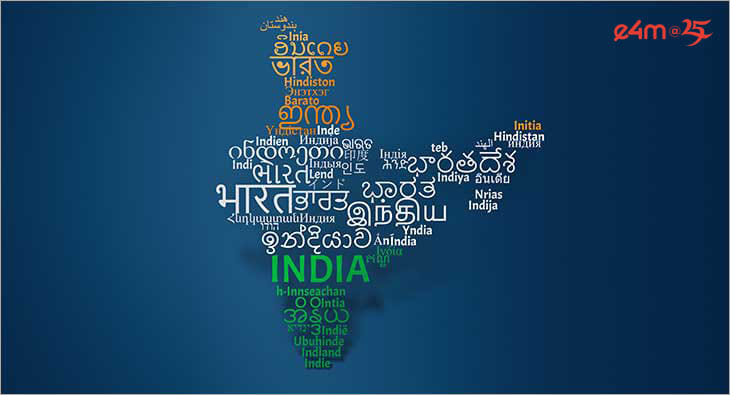

As India readies for its biggest shopping season, a clear shift is taking shape, regional advertising has moved from being a supporting act to taking centre stage in the festive marketing strategies of major brands. Fuelled by strong consumer sentiment in Tier-II and Tier-III cities and growing digital penetration beyond metros, brands are investing heavily in vernacular, hyperlocal, and culturally resonant campaigns.
Affle’s Festive Pulse 2025 report shows 79% of users engage better with ads in their local language, prompting 70% of marketers to roll out state-specific campaigns this year. Experts estimate regional ad spends have risen by 4–6 percentage points YoY, from roughly 20% to 25% of festive budgets. The shift marks a move from testing to fully integrating vernacular into core marketing plans.
Read e4m deep dive on D2C brands doubling regional ad spends
Ad inventories, too, carry a festive premium - influencer rates are up 15–30%, CTV and OTT CPMs have seen double-digit hikes, and regional print is commanding higher premiums in Tier-II and III markets.
Ashish Goupal, CEO – India Core Business, Marico Ltd said, “This festive season, regional marketing is a clear priority for us, as more consumers increasingly connect in their local languages. For Marico, this means engaging with people in a way that feels natural and culturally rooted.”
TTK Prestige, meanwhile, is amplifying its festive outreach this year through its flagship property ‘Shubhutsav 2025’, aimed at driving family-centric engagement and boosting sales across its expanded product range. “Regional relevance has always been central to this initiative. We’ve seen how language, customs, and local traditions amplify the emotional connect consumers have with the brand. For us, regional marketing isn’t an add-on; it’s fundamental to how we build meaningful and lasting relationships across diverse markets,” said Anil Gurnani, Chief Sales and Marketing Officer, TTK Prestige.
For Myntra, regional advertising remains a key growth driver, with a strong focus on connecting more deeply with audiences across markets such as the East, said Kejal Parekh, Director, Brand Marketing, Myntra.
Echoing this trend, Shwetal Basu, Senior Vice President – Brand & Marcom, Polycab India Ltd, said the brand has consciously ramped up regional advertising spends to strengthen local relevance.
Basu said, “Previously, our focus was largely on religious site sponsorships and outdoor visibility in mass markets, but this year we have taken a more integrated and immersive route.” Beyond OOH, the brand activated on-ground initiatives across major festivals, from charging zones and LED tunnels to branded watch towers and upgraded police booths, embedding itself in community celebrations. The Masterbrand TVC echoes this spirit, celebrating multiple Indian festivals across GECs and digital platforms for wider cultural connect and reach.
Monaz Todywalla – CEO, PHD India highlighted, “With investments going deeper into regional markets where consumption is rising and growth potential is still untapped, smarter brands are harnessing regional strategies as a growth complement, mapping media budgets to where distribution depth and demand potential exist.”
Umesh Bopche, CEO, Experience Commerce and CYLNDR India observed, “Across our briefs, the regional line item has grown by roughly 4-6 percentage points year-on-year. Last year, many large categories (FMCG, auto, jewellery, smartphone) were ‘testing vernacular.’ This year they’re committing.” He noted a clear festive premium across regional ad inventories, especially on high-demand formats. Influencer rates in regional languages are up 15–30% from off-season levels, while prime CTV and OTT regional feeds are seeing double-digit CPM hikes as demand surges. Regional print, too, tightens around festive specials, with publishers in Tier-II and III markets commanding higher premiums and fewer discounts on high-impact days.
He attributed the rise in regional spends to digital’s growing dominance and clear evidence that shoppers engage more with multilingual messaging. With digital now making up over 40% of ad spends, brands are channeling part of their 10–20% higher festive budgets into vernacular and hyperlocal campaigns. He added that about 80% of consumers prefer ads in their own language, driving the surge in regional and influencer-led marketing.
Bopche further shared that brands are also now explicitly asking proactively and early asking for Tier 2/3-focused plans. “A lot of media plans now start with ‘Tier-2/3 first’ guardrails: CTV in non-metros, creator lists in regional languages, and retail media that prioritises vernacular search/on-site placements,” he stated.
Bopche noted that with most of India’s active internet users now outside metros and festive shoppers engaging more with multilingual ads, brands are increasingly demanding primary creatives in combinations like “Hindi + one South language” or “Bengali + Odia.”
However, Todywalla shared that the real question isn’t whether brands are asking for Tier 2/3-focused plans — it’s about recognising where the next wave of growth is emerging. “These are cities where consumption curves are rising fastest, but success depends on distribution readiness and ecosystem maturity, not just media presence. Those making the right moves are pairing regional investment with operational depth — using data, local partnerships, and targeted communication to convert visibility into business outcomes,” she stated.
Media Mix
Experts noted that while digital continues to grow rapidly, the reach of traditional media, especially in Tier-II and Tier-III cities remains indispensable. According to Bopche, digital now commands nearly half of marketing budgets, yet traditional media remains vital in Tier-II and Tier-III markets. Full-page Diwali ads, local newspaper launches, and regional radio spots continue to drive strong engagement. Traditional channels still account for 50–60% of spends, with print growing 10–15% on the back of local relevance.
Marico is leveraging a balanced mix of television and digital for reach and consideration, supported by state-specific activations to boost local relevance. It is also collaborating with regional influencers to drive action through authentic storytelling. “These influencers hold genuine trust with their audiences, and we evaluate their impact not only in terms of their reach and engagement but also in how they strengthen brand consideration and conversion. Our focus is on keeping our brands meaningful and relevant during cultural and festive moments,” shared Goupal.
Parekh further underlined the importance of regional influencers for Myntra. “This festive season, we’ve leaned into high-impact platforms such as TV, digital, and influencer marketing to deliver campaigns that feel truly local and culturally resonant. Our collaborations with regional creators have achieved a reach of over 63 million and delivered strong engagement rates underscoring the power of authentic, localised storytelling.”
TTK Prestige has adopted a multi-channel approach this festive season to deepen connections with regional audiences, prioritising television, digital, cinema, influencer marketing, and print, each serving a distinct role within its regional strategy. While TV builds scale and credibility, digital enables state-specific targeting, cinema creates immersive experiences, and print amplifies festive offers across markets. Regional influencers remain central to this mix, with partnerships across food, lifestyle, and culture driving authentic local engagement.
Gurnani further explained how they measure their effectiveness, “Their effectiveness is measured through engagement quality, sentiment, and their contribution to regional campaign performance and festive sales. This approach helps us go beyond visibility, building real affinity and measurable business impact in every market we engage with.”
This festive season, Polycab is focusing on television, digital, and on-ground activations to engage regional audiences. The Masterbrand TVC runs across GECs in regional versions to strengthen cultural connect, while digital platforms enable geo-targeted, dialect-specific messaging. On-ground, the brand is driving visibility through activations at major cultural events, supported by influencer collaborations with locally relevant creators.
However, the brand has consciously stepped away from radio and print. Basu said, “We have consciously not invested in print and radio this year because our media-mix analysis showed that other platforms deliver stronger returns during festivals for our category.”
Todywalla explained this by saying that there is no one-size-fits-all approach here. FMCG brands continue to rely on regional TV for mass reach, while digital is gaining ground for its precision and local storytelling through OTT, short-form, and creator ecosystems. Premium and lifestyle brands are opting for integrated, market-specific plans that blend TV, OOH, and digital.
“It's less digital versus traditional and more about how each medium complements the brand’s penetration and purpose in that market. In essence, brands are designing media plans market-first, not channel-first, ensuring every rupee is spent where it’s most contextually relevant,” she noted.
Brands agreed that festive advertising has evolved into a year-round priority. Basu noted that while festivals drive natural peaks in demand, consumer choices are continually shaped by local culture and language. As the brand expands its FMEG portfolio and Tier-II and III presence, regionalisation will remain central to its communication strategy beyond festive periods.
Goupal put it aptly and concluded, “We believe the future of brand building in India is increasingly regional-first; and we’re committed to leading this shift.”
Read more news about Festive Season, Marketing, PR and Corporate Communication, Internet Advertising, People Movement
For more updates, be socially connected with us onInstagram, LinkedIn, Twitter, Facebook, YouTube & Google News