Why social media giants are suddenly advertising themselves
Snapchat, WhatsApp, YouTube, and Instagram are running high-profile campaigns—ranging from brand films and creator spotlights to experiential events
 by
by
Published: Dec 10, 2025 9:23 AM | 6 min read
 Follow Us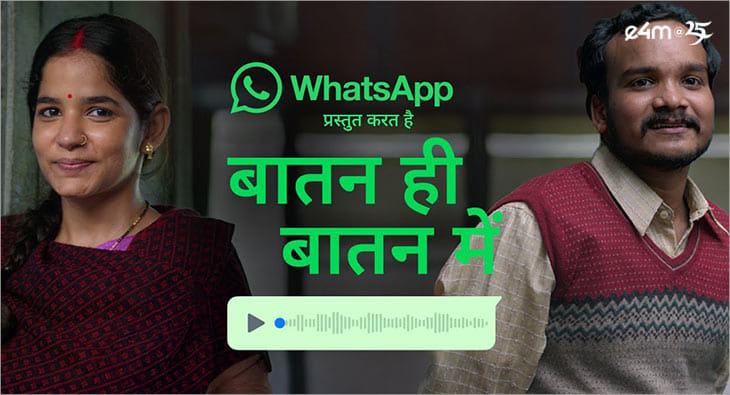

For years, social media platforms created buzz by promoting creators, trends, or campaigns. Now, they are creating buzz for themselves. From Snapchat’s first-ever India campaign to WhatsApp’s nine-minute film and YouTube’s large-format OOH blitz, the world’s biggest platforms are behaving like consumer brands fighting for attention. The question is simple: why now?
The Indian digital space has hit saturation. With more than 800 million internet users and the world’s largest base of Gen Z online, social media platforms are no longer the default destination for daily scrolling. Users are becoming intentional. Industry watchers say the sector is facing a shift where time spent is flattening and fatigue is rising. To counter this slowdown in organic engagement, platforms are now turning to high-decibel self-promotion.
This is the backdrop against which global platforms have begun high-decibel self-promotion campaigns in India.
Snapchat’s Big Bet on Gen Z
Snapchat has rolled out its first brand campaign in the country titled 'Say It In A Snap'. The platform wants to position visual expression as central to how young Indians communicate and form relationships. The campaign speaks to users, creators and advertisers.
Launching the initiative, Ankit Goyle, head of India Marketing, Snap Inc., said: “‘Say It In a Snap’ is a strategic statement about where the future of connections lies, in authentic close-knit communities. At its core, this campaign is about how Gen Z connects, expresses, and builds culture through visuals, not words. Snapchat sits at the heart of this language of communication, where every Snap is real, personal, and deeply expressive. For advertisers, it’s an invitation to be part of these everyday visual conversations and to show up authentically, build relevance, and drive meaningful impact.”
The three-way narrative underlines that real-time, visual interactions are becoming the currency of digital youth culture. The campaign also features Indian Snapchatters across moments that highlight how creators shape new behaviours and how brands can participate in these micro interactions.
WhatsApp Leans Into Emotion and Cinema
WhatsApp, a platform that hardly needs introduction in India, has taken a surprisingly cinematic route. Meta India has released a nine-minute story film titled Baatan Hi Baatan Mein. Set in north-central Madhya Pradesh, the film explores the life of migrant workers and how WhatsApp’s features enable intimacy across distance.
The film is conceptualised by Fundamental and directed by Amit Sharma, known for culturally rooted long-format work. It will travel across rural single-screen cinemas, via mobile cinema vans and will stream on platforms like Zee5 and JioHotstar. The rollout also includes text-free guides for rural audiences, crafted for those who may not read.
Reflecting on the strategy, Neeraj Kanitkar, Co-Founder of Fundamental, said: “For the campaign idea, we arrived at the strategy of pebbling – voice and video notes as simple acts of love whose sum is greater than the parts themselves.”
Brand analyst Karthik Srinivasan called it a charming but striking move.
“Featuring simple people, with all their innocence and goodness. The situations the couple go through offer adequate leeway to showcase WhatsApp's various use-cases. On another note, I do wonder if WhatsApp needs such advertising at all. It is the default messaging service in India. Does it also need to advertise to normal people for basic usage?,” he said.
YouTube Turns Mumbai’s Sea link Into a Billboard
YouTube India is amplifying creators with large-scale OOH on the Bandra-Worli Sea Link. The platform has used digital light projections and sweeping displays to honour creators like Payal Gaming, who shared her gratitude on Instagram after seeing her spotlight moment. A few travel creators including Brinda Sharma also featured in the campaign.
View this post on Instagram
The initiative is aimed at reinforcing YouTube’s role in building India’s creator economy. The company is signalling that the platform remains the most powerful stage for creators even as the market fragments. Industry leaders say the aim is to build understanding between creators and brands and to remind advertisers that YouTube remains the original creator-first ecosystem.
Instagram Doubles Down on Experiential Marketing
Instagram is leaning on large-format experiential events under the House of Meta banner. At a recent event, a Meta spokesperson told e4m that this is their way of giving back to creators and cementing content creation as a respectable profession. The idea, the spokesperson said, is to recognise creators publicly so that other creators see content as a viable livelihood.
https://www.instagram.com/reel/DR9Xpm6DIHr/?utm_source=ig_web_copy_link&igsh=MzRlODBiNWFlZA==
These creator-forward events have become Meta’s answer to the slowdown in daily posts, creator burnout and the broader shift towards "posting zero", a phenomenon defined by reluctance to share personal content because of algorithmic pressure, privacy concerns and the rise of AI-generated feeds.
Why Platforms Suddenly Need Advertising
Industry experts argue this wave of self-advertising is not a coincidence. It is a response to behavioural change.
Krisneil Peres, Co-Founder of Fame Keeda, an influencer marketing agency, said, “Platforms advertising themselves can be seen as a sign of stress among social media giants. The Indian market is at an all-time high of content saturation and users are quietly shifting from ‘leisure scrolling’ to ‘scroll with intention.’ That is why you suddenly see this high-decibel self-promotion.”
Peres added: “Snapchat isn’t just chasing relevance; it is trying to justify why it deserves a place in Gen Z’s shrinking attention window. YouTube is reinforcing the fact that it built the creator economy which India now celebrates. WhatsApp is strengthening emotional equity as communication habits evolve. The bigger signal is this: platforms are now realising that they are competing with people’s desire to log off. In 2025, this wave of self-promotion is less about visibility and more about survival.”
The Battle for the Indian User Is Changing
India is no longer a market that platforms can take for granted. Posting habits are shrinking. Attention spans are becoming selective. Real connections are being weighed against algorithmic noise. Social media giants are responding by turning the spotlight onto themselves, crafting stories, cinema and spectacle to remain relevant.
The competition is no longer between platforms. It is between platforms and the user’s willingness to stay online.
Read more news about Digital Media, Internet Advertising, Marketing News, Television Media, Radio Media
For more updates, be socially connected with us onInstagram, LinkedIn, Twitter, Facebook, YouTube & Google News
