India used to be a guess. Now it's a signal.
Guest Column: Ishank Joshi, Founder, MD & CEO – Mobavenue AI Tech Limited writes that Indian marketing is shifting from mass reach to real-time, data-driven targeting
 by
by
Published: Sep 10, 2026 10:59 AM | 4 min read
 Follow Us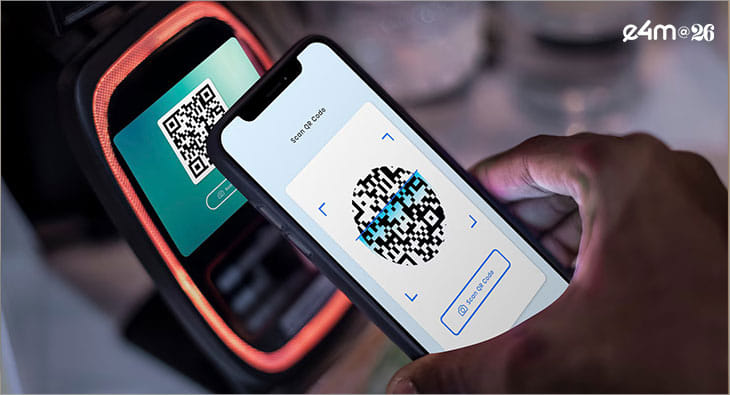

- Indian brands are shifting their marketing strategies from focusing on broad reach to understanding consumer intent and behavior, driven by the rise of digital payments and online interactions.
- As of March 2026, India has over 1.09 billion internet subscribers, primarily using mobile devices, enabling brands to track consumer actions in real time rather than relying on assumptions.
- E-commerce and point-of-sale advertising experienced a 50% growth in 2025, highlighting the increasing importance of measurable consumer engagement over traditional advertising metrics.
- Successful brands are those that prioritize meaningful outcomes and insights over mere data accumulation, adapting to the fast-paced changes in consumer behavior and preferences.
Something has shifted in how Indian brands find their customers, and it has changed so quickly that most marketing teams are still catching up with their new playbooks. A decade of practice taught the industry to chase reach: get in front of as many people as possible and let the odds do the rest. That approach hasn't vanished. It just isn't where the real work happens anymore.
For most of India's life as a market, the transactions that mattered most were the ones nobody could see. A vegetable vendor or a kirana bill settled in cash. Real decisions, made every day by hundreds of millions of people, and almost none of them left a trace a brand could read. We built an entire industry on inference: sample the few, assume the many, hope the assumption holds.
That has changed at exactly the speed India tends to change things, quietly, then all at once. A UPI payment carries a story a cash note never could. A search, a repeat visit, a cart abandoned at night and picked up the next morning: these used to disappear into nothing, a decision made and forgotten. Now they add up to something a brand can actually read.
India crossed 1.09 billion internet subscribers for the quarter ending March 2026, TRAI reported, with most of them on phones. That number is often quoted, usually as proof of scale, which is the least interesting thing about it. A census can tell you how many Indians there are. It can't tell you the small daily habits that actually define them: the same vendor visited every Tuesday, the quiet comparison before a midnight purchase. What's new is that each of those subscribers now leaves behind intent that can be read and acted on within moments, not weeks.
Money notices this kind of thing before strategy does. E-commerce and point-of-sale advertising grew 50% in 2025 to reach ₹22,000 crore, per the FICCI-EY Media and Entertainment Report 2026, outpacing overall digital ad growth. Programmatic buying tells the same story from another angle: 42% of India's digital ad spend, according to the dentsu-e4m Digital Report, is bought in real time against a specific signal rather than in bulk on the hope. The older question was how many people saw something. The question budgets are now built around is what those people did next, and whether a rupee spent can be traced back to a rupee earned.
It's worth being clear about the order in which this happened, because the industry often tells it backwards. Real-time bidding, intent modelling, and automated optimisation: none of them created the market they now serve. The capability arrived because a faster, more trackable consumer had already made the older methods too slow to be useful. Technology followed behaviour. It usually does.
Which brings up the part that gets less airtime. Being able to see a consumer isn't the same as understanding one. A legible market is also a noisy one, and there's a real pull toward optimising for whatever is easiest to count rather than whatever matters most to the business. Attribution can be gamed. A signal can be read with great confidence and still be read wrong. The brands handling this well aren't the ones sitting on the most data. They're the ones who decided in advance which outcomes were worth paying for, and held that line when the dashboard offered something easier.
Brand India is usually discussed in terms of size: how many people, how large the opportunity. The more useful conversation is a much smaller one. It's about the vegetable vendor whose till has become a data point without anyone announcing it, and the second it takes for that payment to clear. Indian consumers have stopped waiting to be reached. They decide on their own terms, quickly and consistently, and they leave a record of having done so. What this industry owes them in return isn't more noise. Its usefulness, at the moment it's wanted, is earned again each time rather than assumed.
Read more news about Digital Media, Internet Advertising, Marketing News, Television Media, Radio Media
For more updates, be socially connected with us onInstagram, LinkedIn, Twitter, Facebook, YouTube & Google News