India is leading the way in CTV adoption and innovation: Teads’ Sam Pattison
Sam Pattison, MD - APAC at Teads, discusses the evolving Connected TV (CTV) landscape in India, the challenges of ROI measurement, and the role of full-funnel digital strategies
 by
by
Published: Aug 27, 2025 1:36 PM | 8 min read
 Follow Us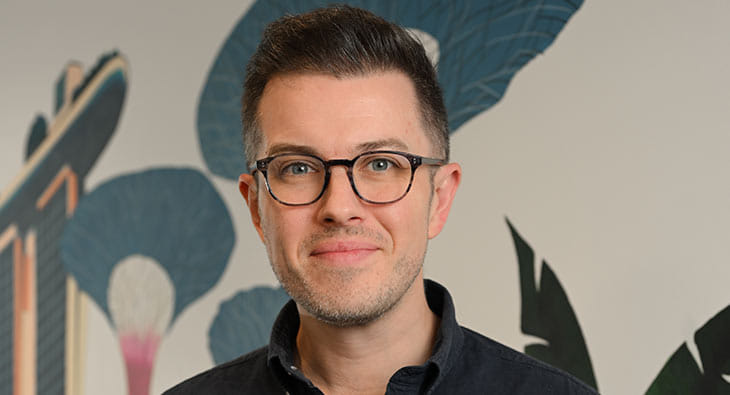

India’s Connected TV (CTV) ecosystem is seeing a surge in adoption, fuelled by the growing accessibility of smart TVs and the proliferation of OTT platforms. But as the market matures, it is also entering a critical phase where deeper engagement, measurement, and integration are becoming necessary.
In a detailed conversation with exchange4media, Sam Pattison, Managing Director - APAC at Teads, shared his observations on how India’s CTV market is evolving, what’s working, and the road ahead. “India is always its own beast…marches to the beat of its own drum a little bit,” Pattison remarked.
“It’s always been mobile-first at scale, but CTV has been exploding for us and for others for the last 12 to 18 months.”
Further, Pattison acknowledged India’s unique media consumption behavior, where affordability and accessibility have played key roles in CTV adoption.
Despite this momentum, the optics of how CTV is viewed in marketing mixes remains a challenge. “We're really, at the minute, getting digital dollars, when really what we should be doing is getting TV dollars,” said Pattison.
A large part of the gap, he argued, lies in the lack of shared language between digital and traditional teams. “Not being able to speak the same language is a challenge.”
CTV: Beyond just a branding tool
Pattison positioned CTV as primarily an upper-funnel tool. “We tend to think of it as similar to digital out-of-home in terms of what you should expect from it, but with the additional benefit that it’s in the home, around content users are used to, and more targetable.”
Currently, ROI measurement is largely confined to brand lift studies. “We are getting challenged on how it’s going to impact ROI,” he said, acknowledging the broader macroeconomic pressures that are pushing agencies and clients to demonstrate returns. “We’re kind of running out of rope a little bit on that front.”
To address this, Teads has been experimenting with QR codes during IPL campaigns to track engagement from TV to mobile, though Pattison admits that has limited impact. “So the next step for us is to think about how you can use CTV for things like mid-funnel traffic acquisition.”
That next step involves leveraging household targeting. “We can target a user based on their IP address that has viewed the ad on the TV and then serve an ad via the mobile device,” he explained, referring to the contextual targeting approach.
Teads is now focusing on unifying ad experiences across screens. “The way I would think about any sort of advertising is like it doesn’t exist as a silo. It’s part of one broad strategy,” Pattison said. “Our absolute north star as a business is to be able to connect up the dots, whether it’s mobile, TV, etc.”
This strategy is supported by Teads' full-funnel tech stack, which includes its own demand-side platform (DSP), supply-side platform (SSP), and first-party data infrastructure. “Very feasibly by the end of this year, we’ll be able to serve across the board and crucially de-duplicate across all these devices as well,” Pattison added.
Battling the attention deficit
With Gen Z often glued to mobile screens while TV plays in the background, Pattison sees attention as a crucial metric. “There’s two solutions: Either improve the ad on TV to make it more immersive, or use household targeting to reach users on both devices,” he suggested.
Teads recently launched an attention-based buying product in other global markets, and though attention as a metric hasn’t gained full traction in India yet, the company is already in advanced discussions. “Some of our clients are using attention-based metrics and reporting. And it’s something that we provide free of charge as well,” he noted.
Teads’ home screen ad format, which Pattison described as “100 percent brand safe by default,” offers a unique edge in ensuring both effectiveness and safety.
One of the key aspects that Pattison highlighted was the engagement potential of home screen advertising on smart TVs. “The user is turning on their TV. They are served a home screen ad. So immediately they see it,” he said.
Noting that users typically spend 20 to 30 seconds or even more, scrolling through tiles to decide what to watch, he emphasised the huge amount of real estate that brands can play with in that space.
For Pattison, this presents a creative challenge for brands and platforms alike. “It’s kind of then on us and brands as well to think creatively and to optimise as such,” he added.
India’s linguistic diversity: Challenge or opportunity?
When asked about the complexities of reaching every household in a country as diverse as India, Pattison acknowledged the challenge. “We often talk about all the different Indias within the business, and the rise of regional content has been like nothing short of incredible,” he noted.
Rather than merely translating ads, he stressed the importance of cultural relevance. “It’s not just about language but about resonance,” Pattison explained. “Is the image correct? Does it use the right clothing or colors?”
To address this at scale, Teads is leaning into AI-driven modular creative strategies. “We have creative teams that are here to do that, but so much of this can be simplified and made much more easy through AI,” he said.
The goal is to build a core creative asset that reflects the brand’s identity, and then work with agencies and internal teams to localise it in a way that resonates with varied regional audiences.
Balancing brand safety and performance
Brand safety is a growing concern for advertisers across platforms, and Pattison stressed that it’s non-negotiable in the CTV environment. “In the home screen there is 100% brand safety,” he stated. He positioned brand safety as “hygiene” in today’s media ecosystem, which is essential given ongoing global instability.
However, the challenge deepens when trying to blend safety with performance marketing. “It becomes a bit murky when it’s performance at all cost and that cost sometimes is brand safety,” he observed.
Teads, he said, works with top-tier verification partners and offers brand safety solutions free of charge to its clients to ensure their ads run in safe environments.
For in-stream video ads, the issue becomes more complex due to the diversity of inventory and the localisation of content. “That requires a level of investment from third parties to ensure that language is being effectively blocked and content is being verified in the right ways,” he added.
What’s Next: Shoppability, Scale, and Creativity
Looking ahead, Pattison outlined three emerging trends in the CTV and media buying space in India: Shoppability, CTV hygiene, Creativity at scale.
Teads is exploring how CTV can be used for mid-funnel actions, with tools like QR codes leading the charge. “The very nature of how e-commerce has shifted… and the way that social platforms are influencing that will definitely have a part to play,” he said.
Additionally, CTV often occupies the “10% shiny object” category in media plans. Pattison believes that needs to change. “CTV needs to become hygiene,” he argued. “Right now it still sits in that 10% but it needs to shift into the 90% that forms the core of a media plan.”
Moreover, as CTV becomes more mass-market, creativity will be tested. While luxury brands are currently leading in high-impact 3D and immersive executions, brands with smaller budgets will need scalable, efficient creative strategies.
“If you’re trying to sell a chocolate bar, it’s a bit different to selling a handbag,” he said.
He also noted the need to optimise for video length and context, explaining that what works may vary by brand and content type.
India’s future in CTV innovation
When asked about India’s future in the CTV space, Pattison was unequivocal in his optimism. “India is leading the way in CTV, there’s no question about it,” he said. Teads sees India setting the agenda, not just in terms of consumer adoption but also as a strategic market for OEMs and tech platforms.
He pointed out that while many OEMs are still building out their CTV sales infrastructure in India, companies like Samsung have made early moves, enabling collaborations and innovation.
Wrapping up the conversation, he signalled both the depth and breadth of the CTV conversation in India, a market that continues to evolve with speed, complexity, and enormous potential.
Read more news about Digital Media, Internet Advertising, Marketing News, Television Media, Radio Media
For more updates, be socially connected with us onInstagram, LinkedIn, Twitter, Facebook, YouTube & Google News
