Hoichoi focuses on regional content; won't be everything to everyone: Vishnu Mohta
From strategic insights to his ambitious plans for AI, Co-founder of Hoichoi, Vishnu Mohta sheds light on the evolving dynamics of the OTT industry, the importance of storytelling, and much more
 by
by
Published: Jan 20, 2025 9:31 AM | 8 min read
 Follow Us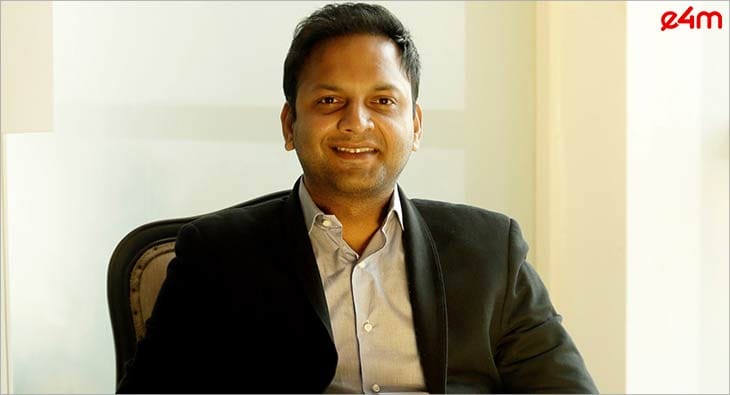

With over 13 million subscribers spanning 100+ countries, Hoichoi is a premier Bengali OTT platform, seamlessly combining innovation with a commitment to its core market, the Bangla-speaking community. At the same time, it is broadening its reach by syndicating content in multiple languages on prominent streaming platforms like JioCinema.
At the helm of this regional powerhouse is Vishnu Mohta, Co-founder of Hoichoi and Executive Director of Sri Venkatesh Films (SVF), the parent entity of Hoichoi.
When asked about what lies ahead in 2025, particularly amidst the ongoing churn in the streaming industry, Mohta shares his optimism, “What lies ahead is far more intriguing than the past. The emergence of new leadership across media channels and the development of clearer strategies for integrating films into content plans truly excites me. While there’s still some uncertainty, it’s undoubtedly positive.”
The country’s OTT market is currently undergoing a consolidation phase. Two major m From strategic insights to his ambitious plans for AI, Co-founder of Hoichoi, Vishnu Mohta sheds light on the evolving dynamics of the OTT industry, the importance of storytelling, and much more: edia giants, Disney Star and Viacom18, have announced a merger, bringing new leadership to helm the unified entity. However, it remains uncertain whether their respective OTT platforms, JioCinema and Hotstar, will operate independently or merge into a single platform.
Simultaneously, Sony Entertainment and Zee Entertainment have experienced significant leadership changes following the collapse of their merger deal. Adding to the industry’s shake-up, Amazon Prime Video has acquired another prominent platform, MX Player, further reshaping the competitive landscape.
"The rules of the game will be decided by the economics at play. People drive to where the money flows, and ultimately, the market responds to demand. Last year, there were significant corporate moves, many of which have come to fruition, setting the stage for an interesting strategic phase in the new year. As leadership changes across companies, it’ll be fascinating to see how the industry evolves.”
Managing inflationary pressures
Mohta admits there’s been a noticeable increase in production costs overall, and many production houses are facing pressures. “However, we’ve been able to manage inflationary pressures strategically. We’ve been around for over 20 years, and our backward integration—owning post-production facilities in-house—has allowed us to better control creative processes and speed. This gives us a unique advantage, allowing us to value-engineer projects more effectively, even in times of rising costs,” he shares.
He adds that SVF’s relationships with partners also help predict and manage costs, allowing the firm to maintain creative control without sacrificing the quality of its content. “The growth in Bengal hasn't been particularly romantic, but it’s part of a steady progression that we budget for every year. This is a normal, inflationary aspect of any ecosystem.”
Beyond content, getting the unit economics right is crucial in the OTT space. Hoichoi is considered the largest language-focused OTT platform when it comes to pure-play business economics, says Mohta. He credits failure as a crucial teacher. “We’ve learned a lot from our early years,” he admits. This resilience mirrors the broader entertainment industry, where risk-taking and adaptability are essential.
RG Kar incident & Bangladesh unrest
While reports suggest a slowdown in OTT growth post-COVID, Mohta presents a nuanced view. “OTT relates to how content consumption is delivered, leveraging technology. The real disruption is in content creation,” he clarifies, predicting significant changes from 2025 onward. From production to dubbing and localisation, the industry is entering uncharted territory.
As for OTT, Hoichoi hasn’t seen alarming growth declines. “While there have been mergers and acquisitions in the space, we’ve remained independent,” he shares. However, 2024 presented its challenges, he admits,
“Early in the year, we had general elections, followed by the RG Kar rape and murder case. During this time, content creation slowed down because artists were involved in social media movements, and many people weren’t in the right mindset to consume entertainment. It was a sensitive time.”
Then there have been other challenges as well, such as a political coup in Bangladesh, the neighboring country where Hoichoi has an office and a production house. The ongoing protests and unrest in the country has impacted the consumption of the streaming services.
“We’ve been actively invested in Bangladesh for almost five years, where we set up a local office with a team focused on creating content locally. We’ve never been just an exporter of content. We operate as a local entity, much like a Bangladeshi company, with deep investments and a focused strategy.”
Despite political turmoil in Bangladesh, Hoichoi remains committed to its long-term vision. “We continue to release content, partnering with major telecom providers and companies there. We’ve produced around five to six originals annually for the past few years, and we already have plans for the upcoming year.”
Regional focus
The lockdown gave a significant boost to OTT viewership overall. However, streaming viewership has plateaued over the last two years. Many OTT platforms have scaled down their content budget by almost half, from over Rs 5,500 crore in 2021 to about Rs 2,500 crore in 2024.
The growing popularity of social media platforms like Reels, dwindling viewership and a massive churn in the sector driven by mergers and acquisitions, are being blamed for the slowdown in the OTT content industry.
Mohta insists, "For us, the momentum hasn’t slowed since. Our focus is on delivering a strong value proposition without underpricing our offerings. We remain entirely committed to catering to the paid customer base we target. Hoichoi continues to grow with no budget cuts so far.”
“Hoichoi’s focus remains on regional content, catering to specific languages and audiences. We’re not trying to be everything to everyone”, he asserts.
This strategy has paid dividends. By investing in niche markets, Hoichoi has built a loyal customer base, Mohta shares.
“Content is the product we sell. We know how different cohorts behave and that is the type of content we look to push.We spend very little on marketing and it is primarily on performance marketing across different cohorts through online means. We have a very strong team of content marketers working with us. These are ideators, creators, editors, graphic designers. This is the team responsible for creating marketing content based on the original Hoichoi content. Our social media channels are big organically with our funny, snackable content that helps us reach out to a lot of people.” he noted.
Investment in AI doesn’t mean job losses
Looking ahead, Mohta remains optimistic about AI’s role in the industry. “It’s transforming the way we work, and the benefits far outweigh any potential downsides. We’re entering a phase of abundance, not scarcity, where everything will improve significantly,” he quips.
“Generative AI is revolutionising content creation across audiovisual, audio, and editorial spaces, redefining how content is produced and consumed,” he says. Mohta urges entertainment companies to align strategies with technological shifts, highlighting how disruptions like music streaming have reshaped the industry.
Mohta believes AI-driven advancements will redefine storytelling, audience engagement, and content distribution for decades to come. “Hoichoi is leveraging AI to streamline post-production, dubbing, translation, and content management. A partnership with a UK-based AI firm has enabled innovations such as optimising ad placements and consolidating multiple content versions, improving efficiency and sustainability. AI is already delivering results, from enhancing visual effects to generating specific film shots, reducing the need for physical filming,” Mohta notes.
On the possible job losses in the creative industry in general and Hoichoi in particular due to usage of AI tools, Mohta insists, “Hoichoi has not slashed a single job because of AI. AI isn’t a threat to jobs; rather, it’s a tool that enhances productivity. Those who fail to embrace AI will fall behind. It’s essential for the entire company to integrate AI tools into workflows and use them as enablers of innovation.
“Across the company, people are learning how to use AI as a copilot to enhance productivity. It’s about making workflows more efficient rather than replacing jobs,” Mohta tells us with a smile.
Read more news about Digital Media, Internet Advertising, Marketing News, Television Media, Radio Media
For more updates, be socially connected with us onInstagram, LinkedIn, Twitter, Facebook, YouTube & Google News
