Google to bring Personal Intelligence to Search with AI Mode
New Personal Intelligence feature links Gmail and Photos to deliver tailored search responses for paid AI users
 by
by
Published: Jan 23, 2026 5:19 PM | 2 min read
 Follow Us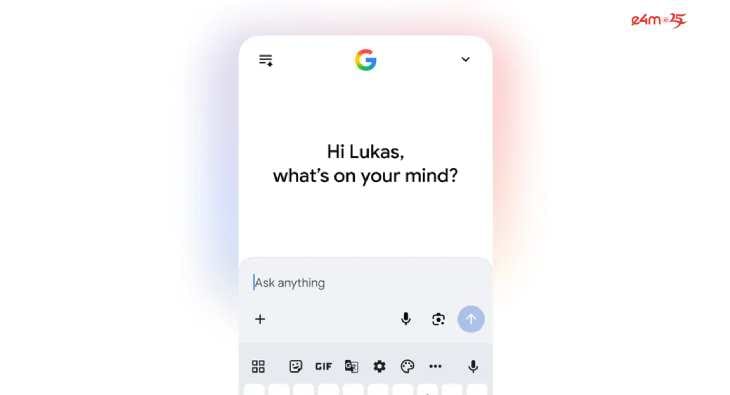

Google has begun rolling out Personal Intelligence within AI Mode in Search, marking a significant step toward highly personalized search experiences. The feature allows AI Mode to draw contextual signals from a user’s Gmail and Google Photos to shape responses that reflect individual preferences, plans, and past activity.
Personal Intelligence is available as an opt-in Labs experiment for Google AI Pro and AI Ultra subscribers. The rollout is currently limited to personal Google accounts in the United States and supports English language queries. Workspace business, enterprise, and education accounts are excluded from the initial launch.
At the core of the feature is Gemini 3, Google’s latest AI model, which processes search queries alongside connected account data. Once enabled, AI Mode can reference information such as email confirmations, travel bookings, and stored photo memories to provide more relevant and situationally aware results. For example, search responses related to travel can account for upcoming hotel reservations, while shopping-related queries can reflect brand preferences, destinations, and seasonal conditions inferred from flight details.
Google positions Personal Intelligence as a way to reduce the need for users to repeatedly explain context. By connecting data across Google apps, AI Mode aims to surface answers that align more closely with real-life circumstances rather than generic search intent.
The company has emphasized user control and privacy safeguards. Connecting Gmail and Google Photos is entirely optional, and users can disable access at any time. Google has stated that AI Mode does not train directly on Gmail inboxes or Photos libraries. Model improvement is limited to specific prompts and responses generated within AI Mode.
Google has also acknowledged the possibility of errors, including incorrect associations or misinterpreted context. Users can correct responses through follow-up prompts or provide feedback directly within AI Mode.
The introduction of Personal Intelligence could have far-reaching implications for advertising, marketing, and branding strategies. As search responses become increasingly personalized and context-driven, brands may find that visibility depends less on broad keyword rankings and more on relevance to individual user journeys. This shift could accelerate the move toward intent-led, first-party data strategies, while raising new questions around attribution, discovery, and how brands surface within AI-generated answers that may satisfy queries without a traditional click-through.
Read more news about Digital Media, Internet Advertising, Marketing News, Television Media, Radio Media
For more updates, be socially connected with us onInstagram, LinkedIn, Twitter, Facebook, YouTube & Google News