AI won’t replace media buyers, but will curb media buying inefficiencies: Rajkumar Remalli
Rajkumar Remalli, Founder Director, BidVid, discusses the inefficiencies that continue to plague digital media buying, the role of AI in programmatic advertising, why transparency remains a challenge
 by
by
Published: Jun 17, 2026 9:10 AM | 6 min read
 Follow Us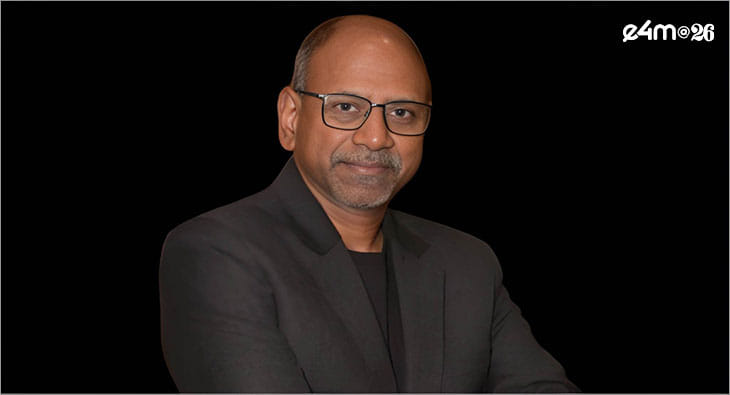

- Rajkumar Remalli, Founder Director of BidVid, highlights ongoing inefficiencies in digital media buying and emphasizes the need for technology that enhances value, transparency, and efficiency without altering existing strategies.
- Despite advancements in technology, Remalli asserts that media buying remains inefficient due to reliance on manual processes, and BidVid's AI-driven algorithms aim to optimize media purchases while maintaining advertiser control over inventory choices.
- The company has reported significant savings for brands, ranging from 20% to 50% in media efficiency, and aims to expand its presence in global markets while developing solutions for various digital advertising platforms.
- Remalli notes that while initial resistance to AI-led optimization exists among agencies, trust in algorithmic decision-making grows as measurable outcomes and transparency are demonstrated.
In conversation with exchange4media, Rajkumar Remalli, Founder Director, BidVid, discusses the inefficiencies that continue to plague digital media buying, the role of AI in
programmatic advertising, why transparency remains a challenge, and how BidVid is helping brands improve campaign performance through algorithm-driven optimisation.
You have spent years in the media and advertising ecosystem. What problem were you trying to solve when you founded BidVid?
We noticed significant inefficiencies in the way advertising budgets were being spent and the value brands were getting in return. Having worked on both the demand and supply sides of
programmatic advertising, I had visibility into where these inefficiencies existed.
The idea behind BidVid was simple: deliver greater value with integrity, transparency and efficiency. We wanted to build technology that could help brands optimise media buying
without changing their strategy, audience selection or inventory choices.
Media buying remains a major focus area for marketers. Do you believe it is still inefficient despite advances in technology?
Yes, I do.
Technology has evolved significantly, but the way it is deployed often remains inefficient. As long as media buying relies heavily on manual intervention, inefficiencies will continue to
exist. Technology can substantially reduce those inefficiencies by making decisions faster and more consistently than humans can.
Every agency today claims to be using AI. What makes BidVid different from other AI-driven media optimisation solutions?
There are only a handful of companies that can genuinely claim to do what BidVid does.
Our algorithms have been built specifically to identify and eliminate inefficiencies in media buying. These systems have been continuously refined over time. The objective is not simply
automation but creating measurable efficiencies for brands.
What differentiates BidVid is that the technology focuses on improving buying efficiency while respecting the advertiser’s existing campaign setup. We are constantly evolving the
platform to improve outcomes for brands.
Has AI genuinely made programmatic advertising smarter and more effective?
Absolutely.
The impact is visible across multiple brands that have worked with us, including Marico, Jyothy Labs, Zouk, Glenmark Pharma and Unilever in India and Indonesia.
Many of these brands have seen enough value from AI-driven optimisation to move towards always-on deployment models. The efficiencies generated through AI are translating into
tangible business outcomes.
What is the biggest myth marketers have about media optimisation?
One of the biggest misconceptions is that optimisation comes at the cost of media quality.
Some marketers assume that if costs are reduced, the inventory being purchased must be inferior or cheaper. That is not the case.
BidVid does not influence the inventory a brand chooses to buy. Advertisers continue to select their preferred inventory, audiences and platforms. The technology simply helps them
purchase the same inventory more efficiently and at a better price.
Where do brands waste the most money in digital advertising today?
There is some degree of wastage in almost every campaign.
The challenge is not capability but bandwidth. Media teams are managing multiple campaigns and cannot monitor performance around the clock. It is unrealistic to expect
humans to optimise campaigns 24 hours a day.
That is where technology can make a difference. BidVid operates continuously, analysing and optimising campaigns every hour without fatigue or interruption.
How are agencies responding to AI-led optimisation? Are they embracing it or resisting it?
The initial reaction is often resistance.
Whenever technology enters a space traditionally managed by people, there is a perception that it might replace human expertise. However, once agencies see how the technology
complements their work and handles repetitive optimisation tasks, adoption increases
significantly.
Many planners who were initially sceptical have become advocates because they see the value it creates in their day-to-day operations.
Is it difficult to convince marketers to trust algorithms with campaign decisions?
It can be challenging initially.
The industry has seen many promises around automation and AI that did not always deliver results. Naturally, marketers approach new solutions with caution.
However, once they experience measurable outcomes and see delivery firsthand, confidence increases significantly. Trust ultimately comes from performance and
transparency.
What has been your biggest learning since launching BidVid?
The biggest learning is that transparency remains one of the most valuable yet underappreciated aspects of media buying.
BidVid operates within the advertiser’s existing ecosystem rather than moving campaigns into a black box environment. The algorithm works on the advertiser’s own buying
infrastructure, allowing them to retain visibility and control while benefiting from optimisation.
How do you see media buying evolving over the next five years?
I expect a fundamental shift.
In the future, marketing leaders will simply define business objectives, and intelligent systems will generate execution strategies, forecast outcomes and provide multiple
scenarios for achieving those objectives.
The role of technology will move beyond optimisation to becoming a strategic decision-making partner that helps marketers choose the most effective path forward.
Can you quantify the impact BidVid has delivered for brands?
The results vary depending on the campaign, but we have seen savings ranging from 20% to 50%, with some exceptional cases reaching even higher levels.
For large global brands, a realistic expectation is typically around 20–25% improvement in media efficiency. If a campaign is already well planned and executed, BidVid can still
generate meaningful savings by improving buying efficiency.
Many companies claim to optimise campaigns. What is BidVid’s key
differentiator?
Most optimisation solutions focus on creative performance, copy variations, targeting adjustments or managed services.
BidVid takes a different approach. We do not alter creatives, targeting parameters or campaign settings defined by the advertiser. Instead, we focus exclusively on making the
buying process itself more efficient.
Our belief is that efficient buying at scale is one of the most difficult tasks for humans to perform consistently, and that is where technology can create the greatest impact.
Having worked both as a media leader and now as a technology entrepreneur, which side understands advertising better today?
There are highly capable professionals on both sides.
As with any industry, expertise varies from individual to individual rather than by category. There are people in both media and technology who understand the business exceptionally
well and others who are still learning.
What are BidVid’s key priorities over the next two years?
Our focus is on two fronts.
First, we want to expand our footprint across major global markets, particularly the US, Canada and Europe. We have already established a presence with leading brands in India,
Southeast Asia, Australia and the Middle East, and we see significant opportunity in Western
markets.
Second, we are expanding the product roadmap. While our current strength lies in open-web programmatic advertising, we are developing solutions for platforms such as Amazon and
the fast-growing quick-commerce ecosystem. The objective is to bring the same level of efficiency and transparency to a broader range of digital advertising environments.
Where does India stand in the global conversation around transparency in advertising?
India is broadly comparable to most developed markets.
The challenges around transparency are not unique to India; similar patterns exist across geographies. The real opportunity lies in adopting technologies that provide greater visibility
and accountability in media buying.
For advertisers seeking greater transparency and efficiency, technology-led solutions can play an increasingly important role in the years ahead.
Read more news about Digital Media, Internet Advertising, Marketing News, Television Media, Radio Media
For more updates, be socially connected with us onInstagram, LinkedIn, Twitter, Facebook, YouTube & Google News