Internet reacts to Ralph Lauren’s Rs 44k Bandhini skirt
Users question pricing, credit and use of traditional Indian craft
.png) by
by
Published: Apr 24, 2026 3:17 PM | 3 min read
 Follow Us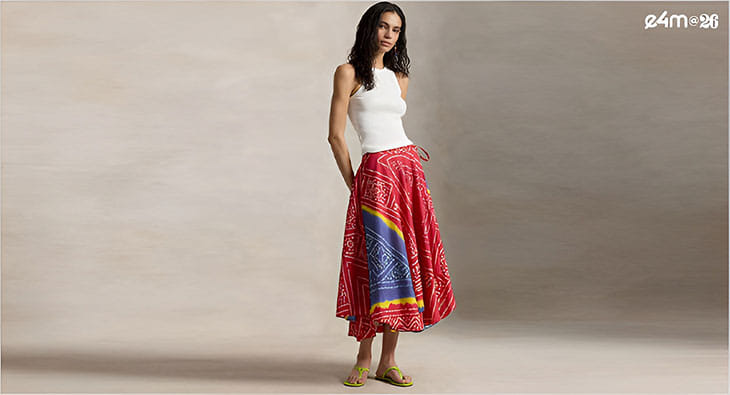

- Ralph Lauren is facing backlash on social media for selling a Bandhini-styled skirt priced at Rs 44,800, which critics argue lacks acknowledgment of its Indian origins and artisan communities.
- The controversy follows a previous incident involving Jhumka earrings, which were also criticized for not crediting their Indian heritage, raising ongoing concerns about cultural appropriation in fashion.
- Social media reactions focus on the need for proper attribution and fair pricing, with users expressing frustration over global brands profiting from traditional Indian crafts without recognition.
- The debate highlights the significance of Bandhini as an ancient tie-dye technique from India, emphasizing the cultural and historical importance of such heritage crafts.
Ralph Lauren is facing fresh criticism on social media again due to its listing of a Bandhini-styled skirt costing Rs 44,800, after a similar controversy that involved a piece that resembled a “Jhumka.”
This skirt, which is listed as a “print cotton wrap skirt,” features a pattern that “draws inspiration from Bandhini tie-dye techniques and motifs,” alongside other features including “a tied waist and cascading angled hem.” Nonetheless, this piece does not give credit to India or its artisans artisan communities associated with the craft, which has become a key point of contention online.
Bandhini material can be found in India at comparatively affordable rates, depending on the quality of the design and materials used leading to questions around value and positioning.
The backlash comes close on the heels after another controversy that the brand was involved in when the Jhumka earrings were shown as “vintage accessories,” without any indication of their Indian background.
This incident itself had triggered conversations around credit and cultural acknowledgement, and the Bandhini skirt has now reignited similar concerns.
“Where is the credit?” asks social media
Much of the online reaction has centred on attribution and pricing, with users questioning the lack of clear reference to Indian craftsmanship. Comments such as “Why, Ralph Lauren, why?” and “this is not even real Bandhani” have circulated widely, while others pointed out that the brand could have explicitly acknowledged the origin of the design.
A user wrote, “"We're so tired man. Zara, Ralph, and the Prada chappals. Like LEAVE US ALONE.” Another said, “Just because we don't 'patent' our crafts which are 100s of years old, it does not give anyone a free pass to plagiarize Indian Arts.”
Some users also raised broader concerns about global fashion houses drawing from South Asian textiles without credit, with reactions like “it’s high time Indian art gets due recognition” and “this is just rebranding traditional designs at luxury prices.”
This is how international fashion brands kiII Indian crafts. This is East India Company redux. @RalphLauren is selling this PRINTED bandhani skirt for a whopping 44,000 INR, without mentioning that it is Bandhani.
— Shefali Vaidya. ?? (@ShefVaidya) April 21, 2026
First of all, Bandhani or bandhej is a millennia old Indian tie… pic.twitter.com/stPuFS1Qq6
The debate regarding the skirt has moved from the garment to a broader one about the portrayal of heritage crafts.
Bandhini, an ancient tie-dye practice with origins dating back centuries in regions of Gujarat and Rajasthan, is more than aesthetics; it involves intricate skills that carry both cultural and historical weight.
Read more news about (internet advertising India, internet advertising, advertising India, digital advertising India, media advertising India)
For more updates, be socially connected with us onInstagram, LinkedIn, Twitter, Facebook YouTube & Whatsapp