From ‘Bassline’ to ‘Prashant’: How viral creator moments are changing brand responses
Vaseline’s response to a creator’s pronunciation joins a growing list of cases where brands have changed social handles, packaging and even products after the internet took over the conversation
 by
by
Published: Aug 29, 2026 9:11 AM | 5 min read
 Follow Us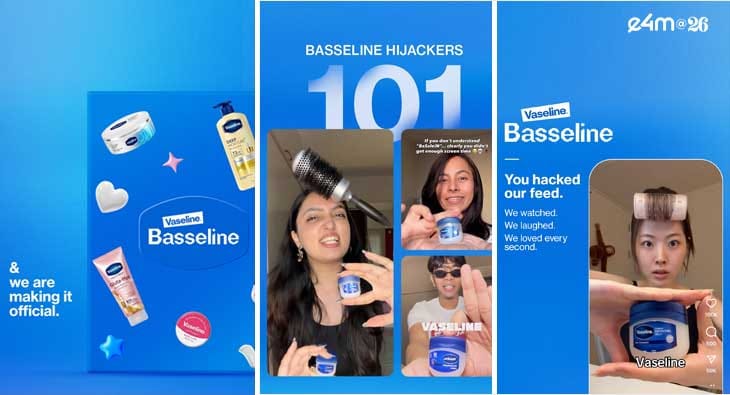

- Brands are increasingly adapting to internet-driven trends, as seen with Vaseline embracing the viral mispronunciation of its name as "Bassline" after a creator's video went viral.
- Vaseline launched a creator-led campaign, recognizing influencers as "Vaseline-Verified Hijack Icons" and inviting users to participate under the hashtag #VaselineHijacked.
- Other brands, such as Britannia and Parle, have similarly responded to viral moments by altering their branding and product offerings, showcasing a shift in marketing strategies.
- This trend signifies a departure from traditional marketing, where brands led campaigns, to a model where internet culture influences brand identity and product presentation.
Brands have long tried to create trends. But increasingly, the internet is creating the trend first, and brands are changing themselves to fit into it.
The latest example is Vaseline, which has embraced the viral “Bassline” pronunciation of its name after Korean skincare creator Min Day Lee referred to the brand as “Baseline” in a video showcasing her Vaseline collection. The video went viral, with the pronunciation spreading across social media. Vaseline then joined the joke, using the pronunciation in its social media communication and turning the moment into a creator-led campaign.
The brand has now gone a step further by recognising creators, including Lee, as “Vaseline-Verified Hijack Icons” and inviting users to create their own versions under #VaselineHijacked.
View this post on Instagram
Vaseline is not the first brand to let an internet moment change the way it presents itself. In India, brands have increasingly responded to accidental creator moments by changing social identities, product packaging and, in some cases, the product itself.
Britannia turned ‘Prashant’ into a product
One of the clearest examples came in 2025, when creator Ayush mistakenly pronounced “Croissant” as “Prashant” while guessing the names of bakery items in an Instagram video.
The clip went viral, crossing millions of views, and the joke quickly spread across social media. Britannia did more than post a meme. It temporarily changed its Instagram identity to *Britannia.Prashant*, changed its social communication around the product and later introduced limited-edition “Prashant” packaging.
View this post on Instagram
Swiggy also joined the trend by making “Prashant” a searchable term that led users to croissants on its platform. Other brands, including Philips, used the creator and the joke in their own content.
Britannia later said the social media rebranding was part of an effort to promote packaged croissants, a category that was still developing in India.
The important part of the episode was that a creator’s mistake did not remain a meme. It became a brand name, a social media identity and a physical packaging idea.
Parle’s Melody moment moved from meme to product
A similar pattern played out with Parle Melody earlier this year, although the trigger was not a mispronunciation.
When Prime Minister Narendra Modi gifted a packet of Melody to Italian Prime Minister Giorgia Meloni during his Rome visit, the moment immediately connected with the existing “Melodi” internet trend around the two leaders. Meloni’s video of the interaction went viral, crossing 100 million views within hours.
Parle quickly joined the conversation, sharing the video and responding to the moment on social media. The brand also went on to give Melody a dedicated Instagram presence after the viral moment.
The response later moved beyond social media. In August, Parle launched *Melody Tiramisu*, a limited-edition coffee-flavoured version inspired by the India-Italy conversation. Its packaging carried a message celebrating India-Italy friendship.
View this post on Instagram
In this case, the internet did not rename the product. It helped create the reason for a new version of it.
Parle-G also let a creator become the brand
There was an earlier example involving Parle-G in 2023.
Instagram creator Zervaan J Bunshah posted a reel joking about what one should call the owner of Parle-G. The reel went viral, and Parle-G responded by temporarily replacing its familiar mascot on the biscuit pack with Zervaan’s picture.
The change was not a permanent packaging redesign, but it showed how quickly a brand could turn a creator-led joke into a physical brand asset.
View this post on Instagram
These cases are different, but the brand response is similar.
The creator makes the first move. The audience picks it up. Meme pages and other creators spread it. Only then does the brand enter the conversation.
In the past, brands generally created the campaign, released it and waited for consumers to respond. In these cases, the order is reversed.
The audience creates the cultural moment first. The brand then decides how far it can take it.
Britannia changed “croissant” to “Prashant”. Vaseline played along with “Baseline” and “Bassline”. Parle turned the “Melodi” moment into a new Melody product. Parle-G temporarily put a creator on its iconic pack.
For marketers, the shift is significant. A viral post can now influence not just what a brand says on social media, but how the brand presents its product.
The challenge, however, is timing. Internet trends move quickly, and a brand entering too late can make the response look forced. In the Prashant case, Britannia moved while the joke was still spreading. Vaseline has similarly chosen to formalise the conversation while “Bassline” is still circulating.
View this post on Instagram
The larger change is that brands are no longer always deciding what their names, products and social identities mean online. Sometimes, the internet makes that decision first.
Read more news about (internet advertising India, internet advertising, advertising India, digital advertising India, media advertising India)
For more updates, be socially connected with us onInstagram, LinkedIn, Twitter, Facebook YouTube & Whatsapp