Desi by birth, K by choice: Here’s how Indian creators are riding the Hallyu wave
In a country where Bollywood once ruled, Indian creators are now building a parallel K-culture universe, one that speaks Korean but still feels proudly desi
 by
by
Published: Jul 24, 2025 1:32 PM | 7 min read
 Follow Us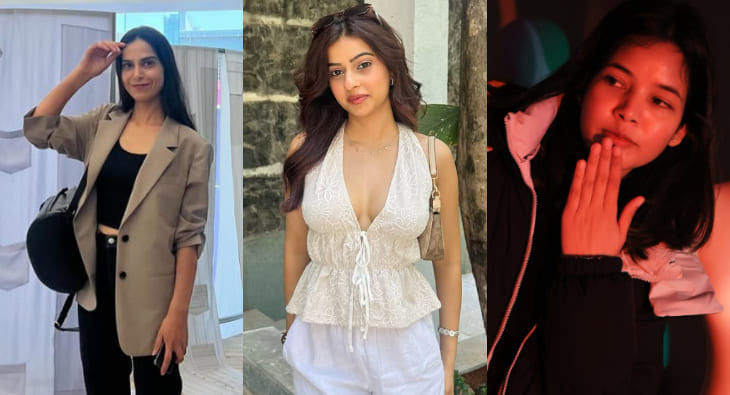

Somewhere between “Annyeonghaseyo” and “Omoooo,” a generation of Indian creators found their calling, not in Bollywood, but in Busan. Crocs' recent Korean ad featuring NewJeans became an instant internet fever dream, mixing ASMR, retro chaos, and K-pop flair. Indian creators lapped the wave up with reactions, memes, and reels, proving just how deep the K-wave has clomped into desi culture.
What started as late-night K-drama binges and impulsive attempts at Korean skincare routines has now spiraled into full-blown careers built on the Hallyu wave. From vlogging in Seoul’s street markets to unboxing BTS photobooks with the intensity of a cricket final, these desi influencers are no longer just fans, they're the face of India’s K-culture takeover.
Call it K-konnected, K-certified, or just plain Kimchi-core, but India is no longer immune to the Korean invasion. Beauty brands are borrowing K-formulas, fashion labels are copying K-cuts, and even dating advice now includes references to what “Namjoon would do.” But it’s creators like Pooh in Korea, Indian Unnie, Shivangi Singh, and MyLoveFromKorea, who’ve taken it mainstream. They're not just consuming content; they're localizing it, dubbing it, meme-ing it, and making it relatable enough for your mom to say “this Oppa looks nice.”
And the best part? They’re making money, getting awards in Korea, and turning every saranghae into solid ROI. While brands scramble to become “K-pop-ular,” these desi influencers have already drawn the blueprint.
The Hallyu wave didn’t just crash into India, it got a whole welcome committee, rangoli, filter coffee, and a viral reel soundtrack. And leading the parade? Indian creators who know exactly how to turn Seoul into swag.
Puneeta (Co‑creator of Korean Dost)
Puneeta is one of the driving forces behind Korean Dost, a popular YouTube and Instagram series that bridges Indian and Korean cultures through engaging vox-pop videos. Though her contributions aren’t individually tracked, the channel itself boasts approximately 109.5K subscribers, with many recent videos averaging around 5,000 views over the past month. Puneeta’s bilingual interactions and candid interviews, where Indians quiz Koreans about Indian culture and vice versa, helped Korean Dost position itself as a go‑to destination for authentic cross‑cultural content.
View this post on Instagram
@40kahani
“40Kahani” intriguingly flips the script: it’s not an Indian but a Korean creator who speaks Bollywood-style Hindi with a Bihari accent. A viral snippet on X (formerly Twitter) showed the Korean host debating changes in Bihar, remarking on infrastructure with a clean accent that amazed Indian viewers. While not Indian by origin, the account’s use of Hindi dialects and cultural references creates a fascinating cross-cultural appeal rooted in Korea, India content.
View this post on Instagram
Poonam Naruka (Pooh in Korea)
Poonam Naruka, known online as “Pooh in Korea”, is an Indian-Italian vlogger based in Seoul with a major presence in Korean lifestyle yachting. She has 5.35 million YouTube subscribers and 1.1 million Instagram followers, creating content around daily Korean life, skincare, cuisine, fashion, and travel. Her reputation was cemented when she received the Global Influencer Award at the 2024 Seoul Con Apan Star Awards. Though she recently faced criticism for videos near BTS residences, Pooh clarified she does not reveal private addresses. With roughly 135 videos uploaded and consistently high engagement, she is one of the most prominent India-origin creators living in Korea.
Sonal Yadav
Sonal Yadav is an Indian journalism graduate studying in Seoul, where she runs a popular YouTube channel focused on K-beauty tutorials, fashion tips, and vlogs about Korean life. With approximately 430K subscribers, she shares beauty reviews, career advice in journalism, and Seoul daily routines. Her authentic approach and educational background offer viewers a blend of personal storytelling and practical insight.
Mylovefromkorea (Neha & Jongsoo)
“MyLoveFromKorea” features Delhi-born Neha Arora and her Korean husband Jongsoo, who together explore their cross-cultural life in Seoul through vlogs on food, weddings, traditions, and daily adventures. Their channel rose quickly to around 310K subscribers, thanks to the charm of their intercultural journey and their Korean wedding videos. Note: some past vlogs have faced criticism, such as a deleted video accused of body-shaming Indian women, showing that their content occasionally sparks controversy.
Indian Unnie (Shivangi Singh)
Shailly, known as “Indian Unnie,” is a graduate of Ewha Women’s University in Seoul with an emphasis on Korean literature. Her channel (around 151K subscribers) features Korean street food adventures, cultural exploration, and life as an Indian student in Korea . Driven, genuine, and relatable, she stands out for offering a female-Indian perspective on Korean cuisine, travel, and academic life, making her a go-to guide for Korea-curious Indians.
Lucknowi Nawab in Korea (Im Sua)
Im Sua, known as the “Lucknowi Nawab in Korea,” is an Indian-origin digital marketer based in South Korea. Her YouTube channel provides insights into adapting to Korean life, comparing Indian and Korean cultural norms, and sharing personal anecdotes, similar to a cultural diary. She is featured among top Indian vloggers in Korea, though specific subscriber counts aren’t widely reported; she remains respected for her honest and informative content.
Radhika Bangia (@radhika_bangia)
Radhika Bangia is a passionate Korean-culture influencer based in New Zealand, though of Indian origin, who mainly shares K-pop, K-drama, Korean food, fashion, and art on Instagram. She’s often seen in hanbok and frequently contemplates moving to Korea. Her followers appreciate her enthusiasm and celebratory posts of Korean media, though she sometimes faces criticism around cultural appropriation.
Krutika (themermaidscales)
Krutika, aka TheMermaidScales, is a viral Indian creator known for her explosive Y2K fashion, anime-inspired makeup, cosplay, and comedic skits. She gained around 6.3 million Instagram followers and around 4 million YouTube subscribers, as reported by Vogue India and Entrepreneur India. Her content celebrates both anime and Korean aesthetics, many note her “weeb” inclinations and that her fashion sense aligns with broader Asian pop culture. While not strictly Korean, her focus on K-pop culture and cosplay resonates heavily with Hallyu fans.
MeowGirl (Mitali)
Mitali, known online as MeowGirl, runs the YouTube channel “Mitali vlog,” which is dedicated exclusively to all things Korean, ranging from K‑pop music video reactions to taste tests of Korean snacks and beauty skincare reviews. As of November 2024, her channel had about 12.5K subscribers, over 3.97 million total views, and a video library exceeding 1,470 uploads. Despite being smaller in scale, her content draws a loyal, niche community of Korean culture enthusiasts and reflects steady daily and monthly subscriber growth.
Pranjali (@singh.pranjali)
Pranjali has carved a strong presence in the Korean culture space through aesthetically styled Instagram videos, showcasing everything from K‑pop haul videos to Korean stationery and cozy drama vlogs. Her Instagram account, @singh.pranjali, has grown to around 226.5K followers, with an impressive 4.79% engagement rate, equaling roughly 10.8K likes and 75 comments on average per post. With consistent growth of around 7.2K new followers in the past four weeks, she remains a trusted voice and influence in India’s K‑culture scene.
View this post on Instagram
In a country where Bollywood once ruled entertainment, these creators have helped carve out a parallel universe, one that speaks Korean but feels entirely desi. By localizing Hallyu, they've made it accessible, emotional, and aspirational. Whether it’s trying on hanbok in a Delhi bedroom or decoding a K-drama’s ending in Hindi, they’ve proven that cultural exchange isn’t about imitation, it’s about immersion. As brands, agencies, and streaming platforms eye this growing fandom, it’s clear: the creators got there first.
Read more news about (internet advertising India, internet advertising, advertising India, digital advertising India, media advertising India)
For more updates, be socially connected with us onInstagram, LinkedIn, Twitter, Facebook YouTube & Whatsapp