Korean wave spices up India’s snacking and instant food sector
The Korean wave is changing snacks in India. Buldak ramen and kimchi chips are trending, thanks to Gen Z and K-pop culture. Brands are jumping on the trend by adding Korean flavours to local foods
 by
by
Published: Jun 12, 2025 9:04 AM | 5 min read
 Follow Us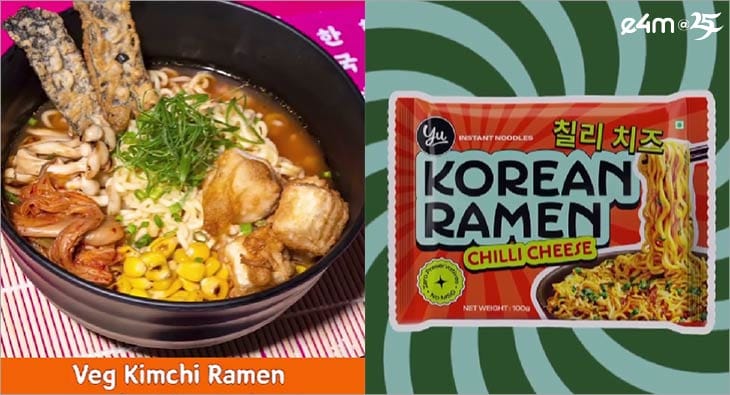

Move over, butter chicken, there’s a new flavour boss in town, dressed in fiery gochujang and backed by K-pop beats. Thanks to the unstoppable Korean Wave, or Hallyu, India’s snack aisles are no longer just about masala and chaat. From kimchi chips to buldak ramen, Korean flavours are crashing into Indian pantries faster than a K-drama cliffhanger. And guess who’s leading the charge? Gen Z, armed with chopsticks and TikTok obsessions.
Brands are scrambling to ride this spicy, fermented and occasionally cheese-drenched tsunami. Yu Foods swapped classic Maggi for Chilli Cheese ramen, ITC turned its potato chips into “Maeun Maeun” (Korean for “spicy spicy”), and even McDonald’s India gave its McSpicy a Seoul-style makeover. The verdict? Indians aren’t just snacking—they’re stanning Korean flavours like it’s BTS merch. The rise of Hallyu has introduced Indian consumers to Korean cuisine, with dishes like kimchi, ramen, and tteokbokki fast becoming household names. Brands such as Yu Foods Co, ITC Limited, McDonald’s India and Nestlé’s Maggi are capitalising on this trend, blending authentic Korean flavours with local taste preferences.
Bharat Bhalla, Founder of Yu Foods Co, notes that Korean ramen has revolutionised the instant noodle category in India. “The Hallyu wave introduced Indians to Korean cuisine through shows and music. We launched Korean ramen last year, like Chilli Cheese and Creamy Hot Sauce, to tap into this demand. These aren’t just noodles; they’re a cultural experience. Unlike traditional Indian instant noodles (stuck in the Rs. 15-20 range for decades), Korean ramen offers new textures and flavours, think gochujang instead of masala. It’s a subcategory revolution.”
ITC’s Bingo! was the first to launch Korean-style potato chips in India, while its YiPPee! Noodles introduced Korean-inspired flavours. Kavita Chaturvedi, Chief Operating Officer of the Snacks Business of ITC Foods, highlights the brand’s cultural marketing strategy, “Bingo! collaborated with Korean singer Aoora and released a K-pop song ‘Maeun Maeun’, which reached over 20.4 million users on YouTube and garnered 45.7 million impressions on Instagram. We strategically collaborated with Korean influencers to build authenticity, resulting in over 67.9 million impressions.”
Gen Z (ages 15–30) are the primary drivers of this trend, who are drawn to the trend through digital platforms and pop culture. While consumption is highest in metros, Tier 2 and 3 cities are quickly catching up, thanks to rapid delivery platforms like Blinkit and Zepto, which make these products accessible nationwide.
Shobhit Agarwal highlighted this consumer focus when he said, “We've seen a clear behavioural shift towards more adventurous eating, especially among Gen Z and millennials. The Korean Chilli CRUSTIES have become particularly popular among high school and college students, with packaging designed to reflect this youthful, fashion-forward energy. Cities like Delhi, Bangalore, Mumbai, and Pune have emerged as key demand hubs."
McDonald’s India has observed a growing appeal for its offerings across a broader demographic. Arvind R P, Chief Marketing Officer, McDonald’s India (W&S), says, “Initially, Korean-inspired meals were predominantly driven by Gen Z. But the interest is now cascading across broader demographic segments. The core audience remains digitally savvy, globally connected, and actively seeking novel food experiences.” The brand’s limited-time Korean range, featuring gochujang sauce and kimchi-infused items, has been well received, with customers pairing Korean flavours with traditional McDonald’s favourites.
One of the biggest challenges for brands is adapting bold Korean flavours to suit Indian palates. Yu Foods Co, for instance, adjusted the spice level in its Cheesy Buldak Carbonara ramen to better align with Indian tastes. Similarly, McDonald’s infused Korean elements into familiar formats, like adding gochujang to the McSpicy Chicken, creating a balance between novelty and comfort.
Nestlé India’s Maggi brand has embraced the Korean food trend with its Korean noodle range, featuring fiery red packaging to reflect the bold, spicy flavors typically associated with Korean cuisine. A Nestlé India spokesperson emphasised, "The growth of Korean noodles stems from millennials' and Gen Z's love for all things Korean, be it music, dramas, or cuisine. Driven by social media trends and easy online access, Korean noodles have become an exciting new segment." Saumya Rathor - Marketing Director, Lay's India said, "This surge in demand for Korean snacks reflects a fundamental change in how young consumers engage with food. Driven by digital exposure and the popularity of K-pop and K-dramas, they're actively seeking global culinary experiences."
Industry leaders believe the Hallyu is more than a fleeting trend. Bharat Bhalla compares its rise to the enduring popularity of Chinese and Italian cuisines in India, suggesting that Korean flavours are here to stay. McDonald’s India sees this as a strategic, long-term opportunity, given the cultural affinity for bold, spicy flavours shared by both Korean and Indian cuisines. Rathor remarked, "Korean snacks in India represent a significant cultural shift. We don’t see this as just a passing craze, Korean flavours have the potential to become a major flavour bucket of the future."
So, will this culinary crush last or will Korean snacks go the way of fidget spinners? Next time you see a teenager slurping ramen while binge-watching ‘Squid Game’, know this: it’s not just a meal. It’s a movement. And if brands play their cards right, kimchi could just give achaar a run for its tangy throne.
Read more news about Marketing News, Advertising News, PR and Corporate Communication News, Digital News, People Movement News
For more updates, be socially connected with us onInstagram, LinkedIn, Twitter, Facebook, YouTube & Google News