Brands, creators nudge influencer agencies to shun ‘one-size-fits-all’ approach
Market watchers say influencer agencies are falling for templated strategies and not category-wise adoption; creators call for collabs that fit naturally
 by
by
Published: Jul 2, 2025 8:38 AM | 10 min read
 Follow Us

As influencer marketing gains ground as a crucial brand-building tool, many companies are beginning to voice a growing concern — a lack of tailored strategies from influencer marketing agencies. Many brands are running into the same wall: agencies pitching near-identical campaigns, regardless of category, objective, or audience.
Agencies are now responding and defending their process and pushing back on what they say is an incomplete narrative.
Minimalist’s Brand Manager Divyankshi Puri put this concern into the spotlight in a recent LinkedIn post, where she wrote, “Over the past few days, I have spoken to several agencies and what has struck me the most is how similar their strategies sound. Almost every agency that I have talked to has pitched a one-size-fits-all approach. The same ideas, the same influencer lists, the same templated campaigns.”
The post resonated widely, especially with brand managers tired of hearing “we’ll do 3 reels, 2 stories, and a YouTube short” irrespective of the product category or GTM challenge.
‘No Context, Just Content’
For platforms that increasingly reward originality and algorithms that penalise sameness, the cost of uninspired execution is steep. Abhishek Shetty, CMO at Swiggy Instamart, underlined the issue: “Brands can easily spot a templated strategy almost immediately—it usually starts with a standard list of influencers, follows a predictable content format, and lacks any tie-in to the brand’s unique voice or business challenge.”
He pointed out that influencer marketing is being treated like paid media by some agencies—prioritising output volume over strategic input. “If the strategy doesn’t consider the brand’s current cultural moment, its audience cohorts, or the platform-specific nuances, it’s a red flag,” he said.
What does this mean for agencies? That content strategy should start by solving a real brand problem—not by distributing a predetermined creator list. “At Instamart, we always ask: what problem are we solving with influencers? Is it new user acquisition? Category adoption? Building top-of-mind recall during festivals? The answer dictates the strategy, not the other way around,” Shetty added.
What do creators want from agencies?
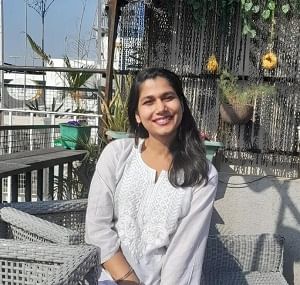
Creators have also voiced the same worry of agencies wanting them to fall into the same pattern. Travel influencer Aparna Umesh highlighted a similar need for flexibility and trust. Her content is grounded in treks and offbeat travel, and her best collaborations are those where the brand message folds into her world naturally.
She recalled a campaign with electronics retailer MyG. “They wanted a store visit—which I never do. But I found a way to make it work,” she said. She tied it to a trek she was preparing for, and featured the store visit as part of her gear-prep content. “It felt natural, looked good, and served the brand goal without losing my voice.”
https://www.instagram.com/p/DCT-NwwNrPU/?hl=en
For agencies, this is a reminder: creators are more than distribution channels—they’re storytellers. Great campaigns don’t force-fit a brand into a feed. Agencies need to find a point where creator story intersects with brand messaging.
How Agencies Are (Finally) Adapting
Some agencies and platforms are already shifting course. Keren Benjamin, Lead of Research & Strategy at Gen Z research lab Capital Z (White Rivers Media), noted that legacy models no longer work for younger audiences.
“The first principle is: belonging beats broadcasting,” she said. “Gen Z doesn’t gather around the loudest voice, they gather around what feels real.” For agencies, that means less scripting, more listening.
"One example that still resonates deeply is our collaboration with IShowSpeed for boAt," said Benjamin. "Initially, we approached it like any other brief—structured, with clear brand beats and talking points. But we quickly realised that Speed’s chaos was the charm. Structure would've killed it. What made the campaign unforgettable wasn’t a scripted moment, but capturing his raw, unfiltered energy. From chanting Tunak Tunak Tun to going rogue at Colaba Causeway, it clicked because it felt spontaneous—just like the way his digitally native audience consumes content: fast, unpredictable, and undeniably real," Benjamin said.
Fit Over Followers: The Creator Brand Fit Index
For performance-focused brands, this shift also demands new metrics. Enter platforms like Qoruz. Co-founder Praanesh Bhuvaneswar says their approach starts with understanding brand identity, not creator availability.
“Before touching a creator list, we ask: who are you trying to influence? What does a ‘win’ look like for your team internally? What kinds of creators don’t work for you?” he said. Their Creator Brand Fit (CBF) Index factors in over 20 data points—including tone, audience skew, caption style, and values alignment—to match the right creator to the right brief.
In one campaign for a fashion e-commerce brand, Qoruz shifted focus from big fashion creators to regional voices. “Our data showed most of the brand’s conversion came from Tier 2–3 cities, especially young women. So we picked creators who post in local languages and feel accessible rather than aspirational,” he said. The result: better engagement, higher conversions, and zero wastage on misaligned creators.
Rethinking Success Metrics
Agencies often still pitch performance in terms of views, likes, and CPMs. But increasingly, brands are chasing something deeper: creative impact.
“Engagement rates are important, but they don’t tell you if a creator’s tone fits your brand,” Bhuvaneswar explained. “A creator might perform well on metrics but still feel off-brand. That’s where the CBF Index helps. A creator who’s perfect for a bold skincare startup might not work for a conservative BFSI brand—and that’s exactly how it should be.”
Cultural Match > Follower Count
Ritesh Ujjwal, Co-Founder of Kofluence said it best: “We don’t think of influencers as media purchases, but as an extension of the brand voice.” Kofluence doesn’t just measure audience overlap and engagement—they look at tone-of-voice, values, and even visual cues. “We specifically look for creators with clean, uncluttered content, soft visuals, and intentional design. Even if there’s a louder creator with more reach, cultural alignment beats scale every time.”
Why Regional and Platform-Specific Thinking Must Lead
Too many agencies still present “Instagram-first” solutions that ignore geography, format preferences, and cultural nuance. “Customisation extends to regional context and platform behaviour—Reels, YouTube, memes, even WhatsApp content,” said Shetty. “For instance, a comic, a college student, and a young mom will each approach a late-night snacking campaign differently—and that’s the point. The brief isn’t ‘post this.’ It’s: ‘here’s the idea—how would you own it?’”
For advertisers, this is a nudge to demand not just content pieces, but platform-fit creative with strategic clarity.
Takeaway for Agencies and Advertisers
Yash Chandiramani, Founder and Chief Strategist at Admatazz, believes the problem with most influencer campaigns is that they start too late. According to him, marketers often skip the most important question — when and why do people even think of this category?
“It’s the same way we begin any strategy. Scientifically. We start with the basics most people skip: category entry points,” he said. “We identify what mental or contextual moments we want to be remembered in — not what hashtag is trending.”
Once these entry points are clear, everything else — influencer selection, messaging, tone — is built around creating recall in those moments. The goal, as he put it, is not just to get seen, but to get stored in memory.
He recalled working with an insurance brand that initially wanted to tap large male-led audiences with finance-heavy content. But when he looked closer at the audience data and saw something surprising. “We saw women aged 25 to 40 were a fast-growing segment, actively seeking control over their investments but under-served in the content ecosystem,” he said.
So the team flipped the approach. Instead of finance creators, they brought in voices who could connect with that life stage — new moms returning to work, or women entrepreneurs. “The results? Good quality reach, minimal ad avoidance as it was meaningful educational content but well branded and engagement above benchmarks,” he shared.
For Chandiramani, a good fit is not just about who has the most views. It’s about who helps build the brand’s distinctive identity.
“We apply what we call ‘distinctive tone-matching.’ This isn’t just about tone of voice. It’s about how the influencer helps build the brand’s distinctive assets,” he said. “Does their personality clash or complement? Can they reinforce the visual, sonic, or behavioural codes the brand wants to be remembered for?”
He made it clear that his agency does not take on plug-and-play projects. “We don’t work with brands where we are merely execution partners. If they have a concept, script and even an influencer wishlist ready we don’t take up that work,” he said.
Their process starts from the purpose of the campaign, not the people. Once KPIs are defined, usually around unduplicated reach and minimal ad avoidance, only then does creator mapping begin.
How regional creators are turning heads
Nishi Kikla, Business Manager at Nofiltr Group, sees a big shift happening in the regional creator space. “Today, about 25 to 30 percent of big brands — both national and international — are actively exploring partnerships with regional creators,” she told exchange4media.
That share may have been smaller a year ago, but it is growing every quarter. Brands are beginning to allocate budgets specifically for vernacular content and rural or tier-2 influencers who bring cultural authenticity to the table.
To help regional creators get noticed by national brands, Kikla’s team builds credibility first. “We often help regional creators secure smaller barter campaigns or pro bono projects that let their content reach national brand managers,” she said.
These collaborations work as proof-of-performance. Once a regional creator is visible in mainstream campaign case studies, it becomes easier to pitch them as scalable partners. Engagement rates and language affinity are also used to prove ROI to advertisers who are still hesitant.
There is still a visible gap between what metro and regional creators earn. “Regional creators typically earn around 30 to 40 percent less than metro creators with similar audience sizes,” Kikla said.
This wave of feedback signals a clear mandate: agencies need to stop handing out pre-packaged playbooks and start building nuanced narratives. And brands need to demand more than reach—they need relevance.
Campaign success in today’s influencer economy doesn’t come from pushing content. It comes from creators and brands co-owning the message, aligning not just on what’s being said, but how and why it’s being said in the first place.
Read more news about Influence Zone, Marketing, PR and Corporate Communication, Internet Advertising, People Movement
For more updates, be socially connected with us onInstagram, LinkedIn, Twitter, Facebook, YouTube & Google News
