Rewriting Bihar: The communication legacy of Nitish Kumar’s governance
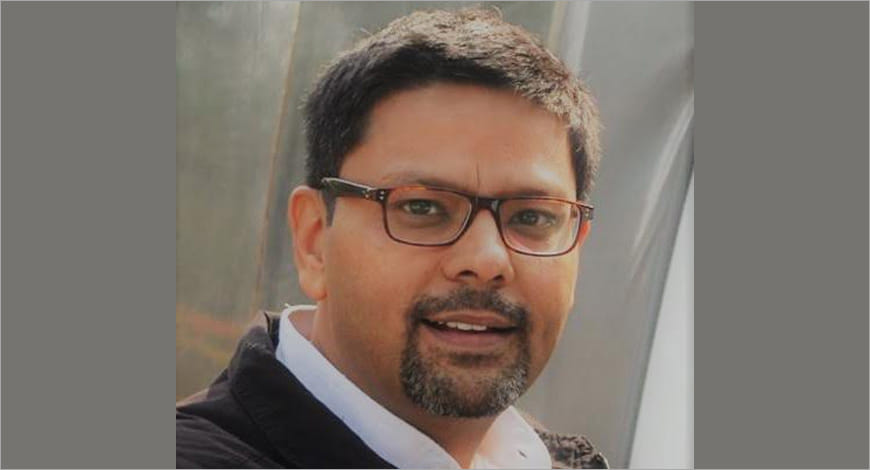
BAJAKO Co-founders and Communication & Media Professionals, Anup Sharma and Amitesh Sufi explore the evolution of Bihar’s image through the lens of communication and lived experience
 by
by
Published: Apr 17, 2026 11:27 AM | 5 min read
 Follow Us

As Nitish Kumar, former CM, Bihar moves to the Rajya Sabha, it feels like more than a political transition. For many of us who grew up outside Bihar, but never outside its identity, it feels like the closing of a deeply personal chapter.
We write this not just as Communication & Media professionals or observers of politics, but as Biharis who experienced the state from a distance.
Educated in and outside of Bihar. Professionally shaped outside it. And like many of our generation, we left Bihar not entirely by choice, but by circumstance. Because when we were growing up, Bihar did not offer enough.
Not enough institutions.
Not enough opportunities.
Not enough confidence in its own systems.
Leaving Bihar was not a rebellion. It was routine.
The Bihar We Explained
There was a time when introducing yourself as a Bihari came with a pause. A moment where you anticipated a reaction.
The phrase “Bihari kisko bola?” wasn’t just slang;, it was a reflection of how identity had become defensive.
Bihar, in those years, was defined more by perception than by possibility. Words like “jungle raj” travelled faster than any counter-narrative. And for those of us outside the state, that narrative stuck to us.
You didn’t just carry your name. You carried Bihar’s reputation.
The Shift That Came Quietly
When Nitish Kumar took over in 2005, the change was not loud. It was gradual, almost understated. But it was real.
We sensed it not through policy announcements, but through conversations back home.
Travel seemed safer.
Governance seemed visible.
The state, slowly, seemed present again.
This was not a transformation in headlines. This was a restoration in reality.
And over time, something subtle but powerful began to change - perception.
A Different Political Grammar
Nitish Kumar was never a conventional political figure. Coming from socialist roots, aligning at key moments with the Bharatiya Janata Party, breaking away, re-aligning with Lalu Prasad Yadav, and shifting again,- his politics often defied easy categorisation.
Critics saw inconsistency.
Supporters saw pragmatism.
From our vantage point as communication and media professionals, what stands out is his ability to reset the narrative and remain relevant even as the script kept changing. He understood something fundamental: in a state like Bihar, governance could not wait for ideological perfection.
The Change We Felt Outside Bihar
For those of us who were not living in Bihar, the biggest shift was psychological. There was a time when saying “I’m from Bihar” felt like an explanation. Today, it feels like a statement. See the number of viral reels and stand up comedians from Bihar.
That change did not happen overnight. Nor did it happen perfectly. But it happened.
And a large part of that shift can be traced back to the years when governance under Nitish Kumar began to stabilise, when systems began to function, and when Bihar stopped feeling like a lost cause.
From Migration To Identity
The truth is, an entire generation of Biharis left the state because the ecosystem had collapsed around them. Even today, Delhi NCR is known as the second biggest city of Bihar, with a huge population of the Bihar diaspora based here.
Education took us out. Careers kept us out. But identity never left.
In many ways, that shared experience led to the genesis of BAJAKO - Bihar Jharkhand KOumUnity, a platform we co-founded for professionals with roots in Bihar and Jharkhand.
It was born from a simple realisation: that people like us needed to reconnect - not out of nostalgia, but out of evolving pride. Because something had changed.
From “Bihari kisko bola?” to “Main Bihar se hoon” - said with a certain quiet confidence.
That shift in tone, in self-perception, did not emerge in isolation. It came from a Bihar that, while still evolving, had begun to rebuild its credibility.
Now The Rajya Sabha Moment
Nitish Kumar’s move to the Rajya Sabha feels like a structural shift - from running Bihar to representing it.
So, is this the end of the Nitish era?
As Chief Minister, perhaps yes.
As a political force, it would be premature to say so.
Because if his career has shown anything, it is this - he has an instinct for reinvention.
How Should We Remember Him?
Not as a perfect leader.
Not as an ideological constant.
But as someone who stepped into a broken system and made it function again.
Someone who altered not just governance, but perception.
For people like us, that may be his most lasting legacy.
Not just roads or policies.
But a shift in identity.
A move from hesitation to ownership.
As Bihar moves forward and writes its next chapter, Nitish Kumar steps into a different role.
But for a generation that grew up leaving Bihar and learning to explain it, his tenure will always mark a turning point.
Because somewhere along the way, the question changed.
From “Bihari kisko bola?”
To simply “Haan, main Bihar se hoon.”
Disclaimer: The views expressed in this article are those of the author and do not necessarily reflect the views of the publication.
Read more news about PR and Corporate Communication News, Internet Advertising, Marketing News, Digital Media News, People Movement News
For more updates, be socially connected with us onInstagram, LinkedIn, Twitter, Facebook YouTube & Google News