Communicating the Crisis: Who tells India's energy story to 1.4 billion people?
As India navigates a complex energy landscape, industry experts unpack the challenges of pricing, perception, and transition, while highlighting what the new communications playbook must look like
 by
by
Published: Apr 14, 2026 4:15 PM | 10 min read
 Follow Us

In today’s fast-changing world, India’s energy crisis is not just a discussion topic of policy rooms or industry conversations, it is something people experience and think about every day. It is impacting their daily lives, livelihoods, and the cost of living in tangible ways.
The impact is not confined to the energy sector alone. Its waves have touched a wide range of industries, from hospitality and transport to agriculture and manufacturing. From fuel price fluctuations to electricity tariffs and the shift toward renewables, energy has become both personal and sensitive. Add to this the impact of global developments, from the United States-Israel-Iran conflict, and the importance of clear communication only grows.
A Crisis of Complexity
Unlike previous decades, India is not facing a traditional energy shortage. The grid is stable, supply is largely secure, and infrastructure has expanded significantly. Yet, the sense of crisis persists.
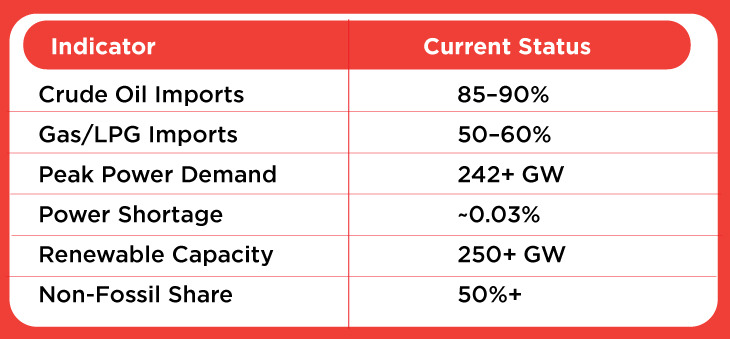
Tanmana Rath, Former Lead Communications and Stakeholder Engagement, TERI explains, “Communicating India’s energy story to 1.4 billion people is no longer just about information, it is about responsibility. In a landscape where India imports nearly 85–90% of its crude oil and around 60% of its LPG, even distant geopolitical tensions involving the United States, Israel, and Iran can translate into anxiety around fuel prices and household budgets.
The real challenge is not the lack of information, but how it is framed. Overstating risks can create panic; underplaying them can erode trust. What is needed is communication that is measured, transparent, and rooted in context, helping citizens understand not just what is happening, but what it means for them.”
Manoj Pal, Senior Communications & Public Affairs Professional, Energy Sector explains it, “I wouldn’t describe India’s current situation as a traditional energy shortage. It’s more a challenge of volatility, affordability, and public confidence. Despite our structural dependence on imports of about 85% of crude oil and nearly 50% of natural gas the power system has shown strong resilience. We have been able to meet a peak demand of 242.49 GW, and shortages are down to 0.03%. What has really changed, however, is how quickly global developments start reflecting in domestic sentiment. Whether it’s geopolitical tensions or price movements, the impact is almost immediate.”
Shailini Singh, Integrated Communications, Brand & Sustainability Expert, Fractional CCO & CSO echoes this shift, “India’s energy situation today is not a conventional ‘crisis’ of shortage, it is a crisis of complexity. We are managing a delicate balance between energy security, affordability, and sustainability, all at once, and at an unprecedented scale. Add to that the ripple effects of geopolitical disruptions like the USA–Israel–Iran tensions, and energy becomes deeply intertwined with global politics and market volatility.”
The Communication Shift: From Proactive to Protective
Historically, crises have demanded more communication, not less. But in the current energy landscape, the opposite seems to be unfolding. Many brands are choosing caution over communication.
Communications teams are operating in risk-averse environments. Messaging is being tightly controlled, often limited to regulatory or policy-aligned statements. This marks a clear transition from proactive storytelling to protective silence.
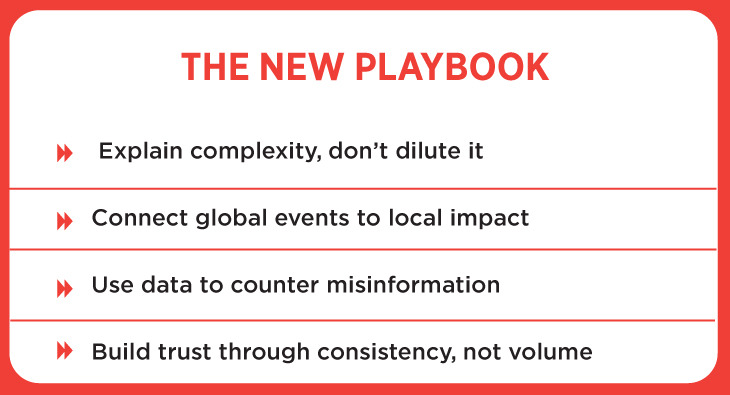
Describing this shift, Singh says, “From a communications standpoint, first, we’ve moved from reactive to anticipatory communication—stakeholders today expect us to explain what’s coming, not just what has happened.
Second, there is a much stronger focus on simplifying global complexity into local relevance—how does a conflict thousands of miles away impact electricity tariffs or fuel prices in India?
And finally, there’s an increased emphasis on building trust through consistency, because fragmented or delayed communication creates uncertainty.”
However, while the intent may be to avoid missteps, the consequence is that
Silence is no longer being neutral, it is actively shaping public perception.
Because when official voices pull back, alternative narratives step forward, often incomplete, sometimes misleading, and rarely accountable.
The Real Challenge: Explaining Pricing in a Volatile World
If there is one aspect of energy communication that consistently proves difficult, it is pricing.
For consumers, the experience is simple: a higher bill, a more expensive LPG cylinder, or rising fuel costs. For the system, however, pricing is the outcome of multiple moving variables, global crude prices, exchange rates, taxes, subsidies, and regulatory decisions.
.jpeg)
Pal brings it down to the core consumer question, “Prices are influenced by several moving parts. But for the consumer, all of that complexity gets reduced to one question: why am I paying this much? Where we often fall short is in how we communicate this. We tend to explain pricing in technical or regulatory terms, while consumers are looking for a clear and relatable answer. The real task is not simplifying the issue, but making it understandable. Because in this sector, clarity builds trust and confidence.”
Rath encounters this challenge, “The most challenging aspect lies in bridging the gap between global volatility and household impact. For consumers, issues like the LPG crisis, fluctuating fuel prices, or fears of oil shortages are immediate and personal, while the underlying drivers such as geopolitics, supply chain disruptions, and strategic reserves remain complex.
Explaining price rises despite adequate crude storage and efforts to ensure continuous supply requires simplifying layered realities without diluting facts.”
Singh frames it as a mismatch, “The most difficult aspect is explaining price volatility in a system that consumers expect to be stable and predictable. The gap lies in this mismatch between system complexity and consumer simplicity. What we’ve learned is that communication needs to move beyond technical explanations to contextual storytelling:
Not just what changed, but why it changed
Not just policy intent, but consumer impact
Not just short-term fluctuation, but long-term value of reforms”
Energy Transition: Challenge or Opportunity?
India’s energy transition is one of the most ambitious in the world. With over half of installed capacity now coming from non-fossil sources and aggressive targets for renewables, the country is positioning itself as a global clean energy leader. Yet, for consumers, the experience often feels contradictory.
Rising tariffs, concerns around reliability, and uneven awareness create friction between policy ambition and reality.
But is this shift being experienced as progress, or pressure?
Manoj Pal defines the energy transition as clearly an opportunity, but also explains the challenges that come with it.
“The shift is already well underway, India, for instance, has crossed the 50% mark in non-fossil fuel installed capacity well ahead of its 2030 target. That tells you something important that the transition has moved beyond intent and into execution. That’s where communication becomes critical. If the focus is only on promoting the scheme, policy or technology, it doesn’t build confidence. What works better is explaining the value in a transparent and practical way.”
He highlighted the role of trust economy in managing crisis situations, briefing, “In today’s environment, credibility matters a lot. The moment communication feels exaggerated or unclear, trust drops. On the other hand, when organisations are upfront and realistic, consumers are far more willing to engage and adopt. In many ways, good communication is what turns clean energy from an idea into a viable and natural choice.”
For Shailini Singh, the transition is more an inflection point, “The energy transition is both—but fundamentally, it is India’s biggest opportunity disguised as a challenge. It opens up new economic pathways—from renewables to green hydrogen to storage—and positions India as a global leader in clean energy. However, the pace and complexity of this transition have also created misinformation and unrealistic expectations. We often see narratives that oversimplify the transition—either assuming it can happen overnight or questioning its economic viability.”
Tanmana Rath describes the energy transition as both a challenge, and adds that how it is communicated shapes consumer perception.
“It is a challenge because consumers often experience it through rising tariffs, LPG price sensitivities, and concerns around reliability, creating space for misinformation and scepticism. At the same time, it offers brands an opportunity to build credibility by positioning themselves as partners in a more secure and sustainable energy future.”
Rath illustrates some real-time examples of how brands are addressing misinformation by combining innovation with credibility. “Tata Power, for instance, is driving data-led transparency through its Energy Insights & Innovation Lab, while ITC Hotels and Marriott International rely on globally recognised certifications like LEED to substantiate sustainability claims,” she mentions.
.jpeg)
The Silence Problem: A Defining Shift
Perhaps the most under-discussed trend in India’s energy ecosystem today is:
Corporate communication is becoming quieter during moments of peak public anxiety.
Whether driven by regulatory caution, reputational risk, or internal alignment challenges, this silence is reshaping how the energy story is told. But silence comes at a cost.
In the absence of credible, empathetic communication:
- Social media narratives gain traction
- Half-truths become dominant explanations
- Consumer distrust deepens
Analysing this challenge, Pal cautions, “In such an environment, if you’re not communicating proactively, someone else will fill that space often with incomplete or incorrect information.”
This raises an important question that “If brands don’t tell the story, who will?
Because energy is a complex and consequential sector where communication should not be considered just as a corporate function, but as a public responsibility.
Lessons for the Future: The New Energy Communication Playbook
What emerges from this period is not just a set of challenges, but a clear blueprint for the future.
Rath captures the shift, explaining, “The key lesson is that communication must be dynamic and real-time, not static. Equally critical are context and credibility, simplifying global volatility into relatable impact through transparent, data-backed messaging.
Finally, the shift is towards solution-led, anticipatory communication, focused on resilience and self-reliance, ensuring it not only informs, but reassures and builds trust.”
Singh adds a structural perspective and elucidated, “First, communication and policy are now inseparable. Communicators must understand regulation, geopolitics, and economics.
Second, trust has become the central currency because stakeholders look for clarity, honesty, and consistency. Third, data-backed storytelling is critical as misinformation can only be countered with credible, transparent data. And finally, relevance is everything and we need to connect national energy narratives to everyday consumer realities.”
Moreover, Pal reinforces the operational shift, “Communication can no longer be treated as a support function, it has become central to how the sector operates. We’re also seeing a shift from campaign-driven communication to more continuous engagement. That means better spokesperson preparedness, stronger media relationships, more focus on regional outreach, and the ability to respond quickly in the digital space”
The Way Forward
India’s energy story is entering a new phase where information alone is not enough, what is needed is clear and authentic interpretation.
- Explaining not just what is happening, but why it matters
- Connecting global disruptions to household realities
- Balancing reassurance with realism
To move ahead, Pal asserts the importance of trust, saying, “In a country as diverse as India, effective communication will come down to how well we can explain complex issues in a way that people understand, without oversimplifying or overstating. Trust will remain the defining factor.”
Closing Thought
India’s energy story is rich with data, policy direction, and visible progress. What it now needs is more consistent, credible, and human communication. Clear communication is essential because this is a space that impacts every household. And when the story is told with clarity and care, it strengthens understanding, trust, and stability across the 1.4 billion people of the country.
Read more news about PR and Corporate Communication News, Internet Advertising, Marketing News, Digital Media News, People Movement News
For more updates, be socially connected with us onInstagram, LinkedIn, Twitter, Facebook YouTube & Google News