The Big Question: Can Sudhir Chaudhary reboot DD News?
The agreement reflects the challenges and ambitions of the present public broadcasting leaders and the present dispensation ruling the country
 by
by
Published: Mar 24, 2025 12:15 PM | 5 min read
 Follow Us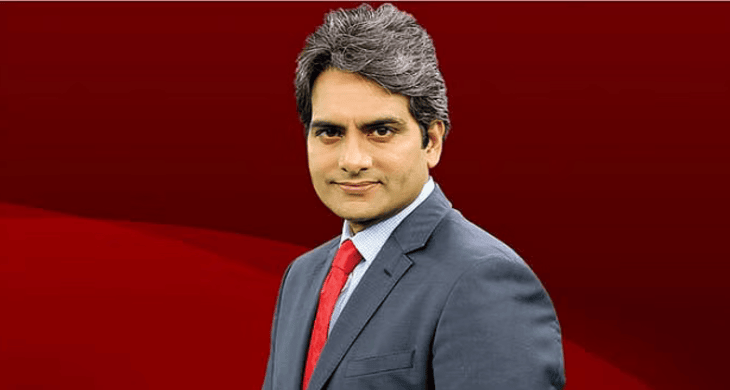

When Prasar Bharati approved a ₹18 crore annual agreement (including taxes) for a daily show featuring popular television anchor and journalist Sudhir Chaudhary, the response was swift and sharply divided. The show, produced by Chaudhary’s company Essprit Productions Pvt Ltd, is set to air five days a week on DD News for a total of 260 episodes annually.
Supporters of the decision have called it a much-needed intervention to revive DD News’ flailing viewership and advertising revenues. Critics, including several public commentators and digital media voices, have questioned the size of the payout, the nomination-based process through which it was awarded and the editorial implications of such a high-profile partnership.
The debate touches on deeper concerns, about the evolving role of public broadcasters in India, the influence of media personalities and the viability of state-run platforms in a highly commercialised news ecosystem.
Rationale Behind the Deal
As we know, the contract was finalised after multiple rounds of negotiations and approved under Rule 194 of the General Financial Rules, which allows for direct engagement in exceptional cases. The cost, officials say, falls within the ceilings prescribed by the Central Bureau of Communication for similar programming formats. Importantly, the intellectual property rights for the content will remain with the broadcaster.
The decision, however, is less about one anchor and more about a broader institutional gamble, one that aims to inject new energy into an aging broadcaster by leaning into the personality-driven nature of today’s media consumption. Whether it is the right strategy and whether it can be implemented with editorial safeguards and fiscal responsibility, remains to be seen.
A Proven Track Record
Some media industry insiders point to Chaudhary’s previous programmes—DNA on Zee News and Black & White on Aaj Tak, as evidence of his ability to drive both ratings and revenue. According to those familiar with internal performance data at both networks, the shows consistently topped rating charts in their respective slots and attracted premium ad rates, owing in part to strong viewer loyalty and advertiser confidence in personality-led formats. These observers suggest that the current partnership with DD News could, if managed well, replicate that success on a platform that has historically lagged behind its private competitors in commercial traction.
An Institution in Urgent Need of Reform
DD News, along with its parent Prasar Bharati, has long struggled to retain relevance in an environment where news is consumed on smartphones, YouTube channels, and social media reels. Despite its vast infrastructure and reach, particularly in rural and regional markets, the broadcaster has largely lagged behind private networks in innovation, production value, and brand equity.
Part of the challenge lies in its hybrid identity: funded by public money but expected to compete with market players. This dual expectation has led to chronic underperformance in key metrics like viewership share and digital engagement. The decision to engage private production talent, while not unprecedented, is part of a growing trend to bring commercial expertise into public media operations.
Leadership and Recalibration
The contract comes under the chairmanship of Shri Navneet Kumar Sehgal, who assumed charge of the Prasar Bharati Board in December 2023. A retired IAS officer with experience in media and cultural administration, Sehgal has publicly emphasized the need to modernize Prasar Bharati’s content and operational model. Since his appointment, the organization has undertaken efforts to enhance digital strategy, diversify programming, and explore public-private collaborations. According to sources close to the board, the Sudhir Chaudhary deal is viewed as part of this broader institutional reform, not an isolated editorial decision.
A Divided Newsroom
Reports from within DD News suggest a split in opinion among staff. Some employees welcome the move, viewing it as a credible attempt to arrest the channel’s declining influence and restore visibility. They argue that high-profile content could serve as a gateway for newer, more engaged audiences.
Others, however, raise concerns over editorial concentration and the implications of anchoring a significant portion of the broadcaster’s identity to a single individual. Several have privately questioned whether the move erodes the foundational ethos of a public broadcaster, which has traditionally emphasized institutional plurality over personality-led programming.
This internal divide mirrors a broader tension within public media globally, between preserving neutrality and embracing innovation.
The Bollywoodification of TV News?
The ₹18 crore annual payout has also reignited discussion about the growing celebrity status of Indian television news anchors. With Chaudhary’s deal placing him in the income bracket of top entertainment personalities, some observers have dubbed the trend the “Bollywoodification” of news.
Media scholars note that the phenomenon is not unique to India, but it does reflect a deeper shift in the industry, from journalism as an institutional service to news as a personality-driven product. Anchors with mass appeal and digital followings are now seen not just as editorial leaders, but as brand assets capable of driving monetisation.
Whether this trend is sustainable or risks conflating entertainment and information is a question that continues to divide opinion.
Between Public Mandate and Market Logic
National media institutions worldwide are experimenting with partnerships, hybrid revenue models, and digital-first strategies to remain relevant without compromising editorial integrity. In the UK, the BBC has ventured into streaming and cross-platform licensing. In the United States, PBS leans on philanthropic support and syndication.
Prasar Bharati’s context is uniquely complex, shaped by regulatory limitations, government oversight and the vast linguistic and demographic diversity of its audience. What makes the Chaudhary agreement distinct is its symbolic weight, it signals a willingness to compete more aggressively in a market that prizes speed, visibility, and voice.
Whether this bold step evolves into a case study in successful reinvention or an episode of misplaced ambition will depend on execution, audience response and continued adherence to public broadcasting values.
Read more news about Television Media, Digital Media, Advertising India, Marketing News, PR and Corporate Communication News
For more updates, be socially connected with us onInstagram, LinkedIn, Twitter, Facebook YouTube & Google News