Celebrating Rajat Sharma: The man who put the nation in the witness box
From the bylanes of Delhi to the helm of one of India's most-watched news channels, Rajat Sharma's career is the stuff of legend. And today, we celebrate the man himself
 by
by
Published: Feb 18, 2026 9:15 AM | 4 min read
 Follow Us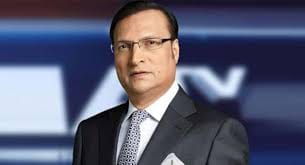

Today, as Rajat Sharma celebrates his birthday, it is worth pausing to ask a question that few in Indian journalism can prompt: how does one man, born in the bylanes of Sabzi Mandi in Delhi, go on to interview every prime minister, president, film star, and cricket icon the country has produced over the last three decades, and make each of them sweat? The answer lies in a career so singular, so relentlessly driven, that it reads less like a biography and more like a chronicle of modern India itself.
Rajat Sharma's educational journey is inseparable from the political fire that shaped him. He did his schooling in Delhi before the course of his life was dramatically altered by the turbulence of the mid-1970s. Swept up in the movement led by Jayaprakash Narayan against the Emergency declared by Prime Minister Indira Gandhi, the young Sharma was arrested and imprisoned in Tihar Jail for eleven months: an experience that would forge in him a fearlessness no classroom could have taught.
After his release, he channelled that defiance into academic ambition, pursuing a degree at the Shri Ram College of Commerce (SRCC), one of Delhi University's crown jewels, before completing his M.Com. from the same institution. In 1977, in a sign of things to come, he was elected General Secretary of the Delhi University Students Union (DUSU), his first taste of standing before an audience and holding his ground.
Sharma began his journalism career the way all great journalists do: from the bottom. He started as a researcher for veteran political columnist Janardan Thakur in the late 1970s, absorbing the craft of storytelling and the discipline of verification before earning his own byline. He went on to become a reporter at the fortnightly magazine Onlooker, rising steadily through the ranks to become its chief of bureau by 1984 and editor by 1985.
He then took the editorial helm of the Sunday Observer in 1987, and later edited The Daily until 1992. By the time he had traversed print from bottom to top, he was ready for the medium that would make him a household name.
In 1993, Rajat Sharma launched Aap Ki Adalat on Zee TV, a show so original in its concept and so compelling in its execution that it has never been off air since. The format is brilliantly simple: a mock courtroom in which Sharma, playing prosecutor, subjects his guests to the kind of probing, relentless, sometimes uncomfortably personal questioning that no press conference would permit. Prime Ministers, Presidents, Bollywood legends, cricket superstars, industrialists, and controversial figures of every stripe have sat across from him, and very few have left without revealing something they hadn't planned to.
More than three decades on, Aap Ki Adalat holds the distinction of being the longest-running reality show in Indian television history. That is not a statistic; it is a monument.
If Aap Ki Adalat made Sharma famous, India TV (which he co-founded with his wife Ritu Dhawan in 2004) made him a force. As its Chairman and Editor-in-Chief, Sharma built a news channel that combined breaking news credibility with mass accessibility, reaching audiences in cities and small towns alike. The channel became one of India's most-watched Hindi news networks, a testament to Sharma's instinct for what the country wants to see and hear.
His influence on the industry was formally recognised in July 2024, when he was unanimously elected President of the News Broadcasters & Digital Association (NBDA), the largest organisation of news broadcasters and digital media in India. It was a fitting acknowledgement of a man who had not just participated in Indian broadcast journalism but helped define it. In 2025, he was unanimously re-elected as the NBDA President for the 2025–2026 term. He has led the industry body in promoting ethics and professional standards in digital and broadcast media.
In 2015, the Government of India awarded Rajat Sharma the Padma Bhushan for his contributions to journalism. It was recognition that felt both overdue and entirely deserved. But if awards were the measure of Rajat Sharma, we would be missing the point. His real legacy is the standard he set: that a journalist from a modest background, armed with nothing but tenacity and talent, can build something that outlasts every trend, every platform, and every era.
And if his professional milestones speak to the scale of his contribution, his personal discipline and vitality speak just as powerfully about the character behind the achievements. Even today, at 69, he remains remarkably fit and disciplined — so much so that he scarcely looks his age — embodying the same energy, rigour and self-belief that have defined his journey.
Read more news about Television Media, Digital Media, Advertising India, Marketing News, PR and Corporate Communication News
For more updates, be socially connected with us onInstagram, LinkedIn, Twitter, Facebook YouTube & Google News