World News Day: The audience has changed, platforms have changed, but human nature has not
Guest Column: Chintamani Rao, Strategic Marketing and Media Consultant, traces news media’s evolution and argues that while platforms change, trust, credibility and journalistic integrity remain vital
 by
by
Published: Sep 28, 2026 9:24 AM | 8 min read
 Follow Us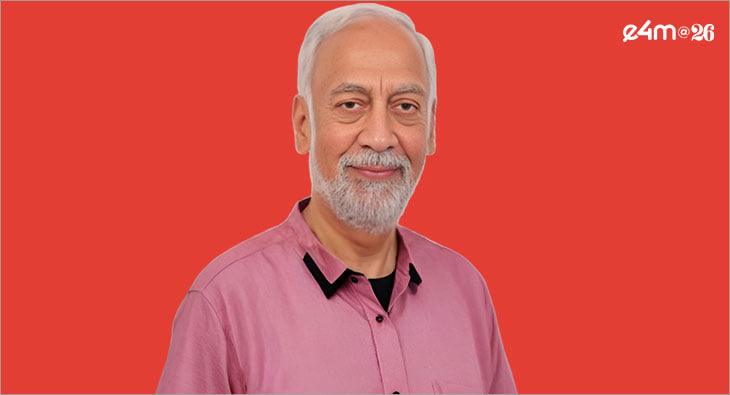

- World News Day serves as a reminder of the evolving role and responsibilities of the news media, highlighting the significant changes in news dissemination from traditional formats to the current digital landscape with 24/7 access.
- The article notes a decline in trust in news sources, with social media and video networks now being the primary sources of news, while traditional media struggles with advertising revenue and credibility.
- Despite the overall decline in trust in institutions, there remains a level of faith in individual news brands, emphasizing the importance of journalistic integrity and the need for news organizations to prioritize accuracy and verification.
- The future of news will depend on the ability of media outlets to build and maintain trust with their audiences, as credibility becomes a crucial commodity in an age of overwhelming information.
World News Day is an apt occasion to pause and reflect on the role and responsibilities of the news media, and particularly so in this very fraught year.
When I began my career, the news media were newspapers; a few news magazines; and All India Radio. When you went to see a movie, which was once or maybe twice in a month, you saw the newsreel made by the Films Division of the Government of India. That was all. Doordarshan was a single channel that went on air in the evening. Both DD and AIR were general content broadcasters that also had news bulletins. Colour TV came in 1982, with the Asian Games.
In May 1991 Rajiv Gandhi was assassinated. That was at a little past 10 pm. I was travelling. I was in Madras, about 40 km from where it happened. My wife, who was at home in Bangalore, called and told me. She used to write for The Hindu, and someone from there had called to tell her this had happened. Doordarshan had closed for the night, as it did every night at 10:00 pm. No news until the next morning. That’s how news was!
Sometime in the late 1980s we heard of a crazy plan by a Hong Kong businessman to broadcast TV via satellite, with a simultaneous telecast across Asia. Everyone could watch the same thing at the same time, from Karachi to Kuala Lumpur, from Hyderabad to Hong Kong. It sounded like science fiction. That was the birth of Star TV. Not a lot of people may even know today that the name Star was an acronym for Satellite Television Asian Region: S-T-A-R.
And here we are today, with 24X7 news on TV, and nearly 400 Indian news channels, across all languages, and access to myriad international channels in a variety of languages. Online, the distinction between TV and print has blurred, with all news outlets putting out content in both video and text. And, of course, all of us have 24X7 access to it all, in our pockets.
What has not changed is that, barring a few exceptions, the media — not just news, but across genres — continue to depend on advertising revenue. But the mainstream media — traditional print and broadcast models — are losing ad revenue to the digital space. While analysts’ numbers vary, it is safe to say that digital takes about 70% of ad spend globally and 60 to 65% in India. But it is not as if digital platforms are making money: globally, the MAANG companies — Meta, Amazon, Apple, Netflix, and Google — earn 70% of digital ad revenue (by one estimate, 56% of all global ad revenue), leaving 30% for hundreds of thousands of other digital companies and platforms.
When it comes to news, which platforms are those?
Reuters Institute of Media Studies publishes an annual Digital News Report, now in its tenth year. It says in its latest edition, published earlier this year:
“2026 represents a significant milestone: for the first time, social media and video network consumption is now ahead of other news sources as the most widely used source of news globally. The use of both TV news and news organisations’ websites and apps has fallen…since 2020. The relative decline of television as a source of news is well recognised across the industry. What is perhaps less well acknowledged is that people’s use of news websites and apps has declined at a similar rate in recent years.”
So, in the digital space it is social media and video networks, not the websites and apps of news organisations, that are the biggest disseminators of news.
That is the change - quite incredible change, really - in the dissemination and availability of news in my own professional lifetime.
Today, the biggest issue in the news space is trust. Back in the day, if you saw or heard it on the news or read it in a newspaper, you believed it. Even the government-owned news media - Doordarshan and radio - may have over-reported some things while ignoring or under-reporting others, but they did not misreport, did not deliberately mislead. Now we have hundreds of news sources at our fingertips, 24 hours a day, but we are not sure which ones we can trust. The term “fake news” has come into our lexicon in the last few years, and, on the other hand, “mainstream media” has become almost a pejorative. All of us get WhatsApp forwards telling us something “mainstream media won’t tell you”, don’t we?
I’m sure all of us feel the insecurity, around us, the social polarisation, the lack of trust. That is true not only of India but universally. I turned to the Edelman Trust Barometer. It is an annual survey, this year among 34,000 respondents in 28 countries. Here is what the 2026 edition says:
"…seventy percent of respondents across 28 nations now are hesitant or unwilling to trust someone who has different values, information sources, approaches to societal problems, or back grounds than them."
This holds across income levels, gender, age groups, developing and developed markets. Paradoxically, in our hyperconnected and over-communicated world we are becoming increasingly suspicious and insular.
Reuters endorses this. “Trust in news at a low. Some of this worldwide drop in trust reflects wider anxieties beyond the news industry – trust in institutions and leaders is widely declining, and journalism is also often under direct attack from high-profile politicians.”
But, all is not gloom and doom. Somewhere in all this there is a glimmer of hope. “Despite these pressures,” says Reuters, “trust in the most widely used individual news brands is holding up better than trust in news overall. We see a range of responses: anxiety, disengagement, and cynicism, but also openness to new sources and formats, and continued belief in what news at its best can offer.”
“Against the backdrop of disruptive political, economic, and social change, core news values remain relevant. While opinions may be fragmenting in many countries, support for principles such as impartiality persists, even if audiences express dissatisfaction with aspects of their current news experience.”
So, for all the anxiety and insecurity, despite the overall decline in trust in institutions in general, despite the doubt and dissatisfaction with their news experience, people have not entirely lost their faith in individual news brands, or their belief in what news at its best can be.
To build, maintain, and strengthen that faith: that is, that must be, the mission of those who manage news brands.
At the heart of news TV is immediacy. Powerful news TV takes me to where the action is. I get to see for myself what is happening, and to hear directly from people on the spot. It’s the closest to being there.
The GulfWar of 1991 was, in effect, the coming-out party of a little-known news channel called CNN, whose live coverage of the war changed TV news for ever. Real-time reporting by Bernard Shaw, John Holiman, and Peter Arnett turned CNN from a minor cable channel to a global news leader.
Where is that immediacy in our TV news channels today? When I watch the news, I wonder, where the reporters are. All I see most of the time is a bunch of talking heads, most often in a shouting match. If there is no immediacy, why do we need 24-hour news channels?
To be clear, I don’t mean news shows must only be reporters in the field. What I am saying is, please give me the news first, before you debate it.
Beyond that, what differentiates one channel from another - one news outlet from another - is the people who make it what it is: the quality of its journalism; the integrity of its editorial judgment; and the trust it earns over time. Technology can be bought. Studios can be built. Graphics can be redesigned. Artificial intelligence will make many things faster and cheaper. But credibility cannot be manufactured. It has to be earned, one story at a time, and protected and nurtured every single day.
The challenge before the news media, therefore, is not merely to adapt to new technology or new business models. It is to rediscover the values that define journalistic integrity: accuracy before speed; verification before amplification; reporting before opinion; and fairness before partisanship.
The audience has changed, and the platforms have changed, but human nature has not. People still want to know - all the more, in these fraught times - what is happening; why it matters; how it affects them; and whom they can believe. In an age of limitless information, trust has become the scarcest commodity of all.
The future of news will be decided not by algorithms, nor by who shouts the loudest. It will be decided by those that convince their audiences, day after day, that they deserve to be believed. That is a demanding standard, but it is also an extraordinary opportunity. For those who can build and maintain trust, will not merely survive this period of disruption - they will emerge stronger and more valuable than ever.
Read more news about Digital Media, Television Media, Out of Home Advertising, Print Media, Latest Advertising India
For more updates, be socially connected with us onInstagram, LinkedIn, Twitter, Facebook, YouTube & Google News