Shyam Benegal: A guiding light in Indian cinema and my journey
Guest Column: Pankaj Saxena, an alumnus of FTII Pune, recounts a journey of personal and professional growth inspired by Shyam Benegal
 by
by
Published: Jan 2, 2025 12:32 PM | 15 min read
 Follow Us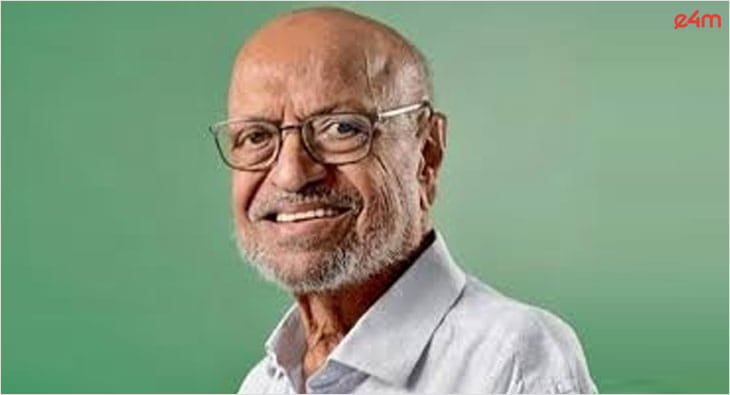

The 55th edition of International Film Festival of India has gone off well. The line-up of films is ascribed as one reason for its success and as the festival’s Artistic Director of Programming, some credit for this success has been attributed to me. So, the current going can be described as worthwhile for a 65-year-old, who is getting to do what he enjoys and gets paid for it - both in terms of money as well as recognition. And for this present situation of life, I feel grateful to Shyam Benegal. The reason for this sentiment is to be found in an interview that took place in Poona 44 years ago. The setting was the Conference Room of the Film and Television Institute of India (FTII) and Shyam Benegal was heading an interview board which was mandated to select 21 students for the 1980 batch of FTII. I was one of the 50 odd candidates who had made their way to this stage from among the 8000 applicants. My claim for a seat at that point was not very strong. I had graduated a year ago from SRCC – India’s best commerce college, but that didn’t matter here. I had an above average interest in Hindi films. But that interest was largely confined to the popular films that I had seen in commercial cinema theatres. I had also seen a small number of art films on Doordarshan. But that didn’t make me to be a great art film enthusiast.
The interview began with FTII faculty asking me several technical questions, most of which sounded Greek to me. Thereafter, FTII Director NVK Murthy asked me the reason for changing tracks from Commerce to Cinema and I answered, “because Cinema is Commerce.” The board laughed and I realized that my answer was worded inappropriately, even if not entirely incorrect. There was a moment’s uneasy silence before Chairman Benegal took charge of the conversation. He asked me to speak about a film or films that I admired. My answers interested him and he questioned me intensely on the reasons behind my choices. I remember making every earnest bid to answer his queries. The conversation went on for a while. I felt I had succeeded in engaging everyone’s attention. But I didn’t get the impression that I had impressed anyone. Still, I was happy. Taking the trouble of travelling to Pune had been more than memorable and meeting Shyam Benegal was its crowning glory. Early next morning, before leaving for Poona Railway Station to catch the train for Delhi, I was told that my name was present in the list of selected candidates.
Admission to FTII was a life altering event. I would now have to leave the protective and comfortable environment of home, jettison the possibility of becoming a Chartered Accountant, lose the company of childhood friends and make peace with a faraway town whose language, culture, climate and food would all be alien to me and where not one resident was previously known to me.
But all my apprehension about Poona and FTII were laid to rest once I joined the great institution. It offered a wonderful learning environment and through my years in the hallowed portals, there were several occasions to meet Mr Benegal. Each one of those meetings were highly enriching experiences. They included watching his trail blazing films discussing them with him, talking to him about India, its myriad complexities and problems, and the way to deal with them. Towards the middle of my course, there was also a clash, where, as a member of the student association, I found myself pitted against him as the Chairman of our Governing Council. I will never forget that late night at the Director’s bungalow where Shyam Babu sat down to hear our grievances. As is their nature, the students didn’t take long to get impatient and confrontational. Shyam Babu didn’t concede his ground but not once did he lose his temper or speak harsh language. To be honest, until that point, I had not seen a man keep his cool against such provocations and deal with the situation with such dignity and poise.
During my school years of early 70s, I must have been too consumed with the anger of Inspector Vijay Khanna of Zanjeer to take note of the meaning in the little boy casting a stone at the landlord’s house in Ankur. It was much later that I understood the import of that climax. It took me some more years to realize, that with Ankur’s climax, Shyam Benegal had also cast a stone on the then placid and predictable waters of Hindi cinema - an act that added fuel to the fire that was later labelled as the Indian New Wave.
Shyam Benegal was not the pioneer of that New Wave. That credit would go to Mrinal Sen for Bhuvan Shome or Basu Chatterji for Sara Akash. Or may be even more to Mani Kaul for Uski Roti, given its path breaking cinematic form. To be sure, Shyam Benegal didn’t experiment with form like Mani Kaul did, but he did take up subjects that were unthinkable for Hindi films of that time. And he vested his narrative with such stark realism that actually made them powerful instruments of social change.
It is intriguing how despite Shyam’s urbane upbringing in Hyderabad and professional life in Bombay, his attention got focused on the ills plaguing rural India. One reason for this could be his family background and education that inculcated in him an ability to grasp social realities of the time including their architectures of oppression. Often, the stories that he chose for his films centred on the condition of women from the lower strata. And on many occasions, his protagonist was an outside agent of disruption who willed and broke new grounds for a just social order. It will therefore be fair to say that in spirit, Shyam Benegal was a reformer, and he made his films to make the world a better place.
Unlike Mani Kaul, or Kumar Shahani later on, Shyam Benegal’s films followed conventional structure. Their power came from the nobility of his purpose, his resolve to take up the cause of the downtrodden, his ability to recreate stark reality and weave a relentless, dramatic and disturbing narrative to advance his argument. In addition to the films mentioned earlier in this piece, Aarohan, Mandi, Susman and many others, also bear testimony to this fact. And all of them carry Shyam Benegal’s distinct signature of authenticity. Almost all of them are shot on actual locations. The characters are grounded in specific vocations. They speak the language of the soil. And like the plots and characters of these films, their music too is firmly rooted in the same cultural milieu. Benegal didn’t use a lot of music in his films, but when he used it, he used it with telling effect. Ankur opens with a drone like beat of drums accompanying the villagers as they march towards the temple through a rocky landscape. Nishant ends with the evocative strains of Piya Baaj Pyala wafting over the death stilled faces of Rukmani and Sushila. Mero Gaam Katha Parey of course represents the very soul of Manthan. Much of the credit for the music in Shyam Benegal’s films can be given to his association with Vanraj Bhatia who composed for dozens of his films – advertising, documentaries, serials and most notably features. Together they created the music tracks of such masterpieces as Ankur, Nishant, Manthan, Bhumika, Mandi and Sardari Begum among others.
With the establishment of the Film Finance Corporation, many upcoming directors of that era sought to depend on this government body to finance their first or early films. Benegal however was far more resourceful. He got advertising film producers Blaze Films to produce his debut work. Blaze was also in distribution, so this ensured that Ankur – unlike FFC films – got the benefit of good marketing and good distribution too. But the crowning glory of Shyam Benegal’s production and distribution acumen has to be Manthan. The film was produced with a contribution of Rupees 2 each by 5 lakh milkers of AMUL, and this ensured not only full creative freedom for the director, but also assured him of half a million audience even before the first shot of the film was canned. Even bigger than the above two innovations – was the role that the film played in expanding the milk cooperative movement in Gujarat – a development that eventually spread far and wide, and catapulted India from being a milk starved nation to its biggest producer in the world.
By mid 80s, Shyam Benegal had made 10 feature films. And as for me, I was nearing the end of my studies at FTII. A little before this time, I had developed an interest in documentary films. This was largely on account of a film called Man Against Himself that I got to make under the supervision of William Greaves, an eminent black American documentary film maker. Greaves was a big admirer of Shyam. In our conversations with Greaves, we got a hint of how the world had begun to view Shyam Babu by this time. In the initial stages of my studentship, I had harboured a desire to assist Shyam Babu after completing my studies. But my focus on documentaries took me away to Delhi where I got busy making films of my choice with Press Trust of India Television – a production house led by Sashi Kumar, the highly regarded journalist and news anchor of the time, who allowed me full freedom in making my films. On his part, Shyam Benegal was now preparing to make Susman – a feature film based on the struggles of handloom weavers of Pochampally.
My paths crossed with him again in the early 1990s at Bangalore, where I had come to manage the operations of Odyssey Video Communications Ltd. - one of the many businesses of advertising top gun Bunty Peerbhoy. To advise him on his flagship company MAA Bozell – Bunty had sought the expertise of Shyam Babu as Advisor who, by this time, had made two more films – Antarnaad and Suraj Ka Saatvan Ghoda. We spent one evening catching up at Bunty’s house and I found Shyam Babu as full of life, energy and ideas as I always knew him to be. A close friend of mine - Prasann Jain - was chosen to shoot Benegal’s next film Mammo. It would be the first of Shyam’s celebrated trilogy of films on Muslim women. Parallelly, the age of satellite television was dawning upon India and before I could feel the pangs of desire to be with Shyam Babu and Prasann on the sets of Mammo, I was invited to join the revolution with a management position in Star TV. This was 1993 and besides Star TV, many other MNCs were arriving on India’s shores. For Shyam Benegal, it was still a good time to continue his relentless film making activities. Between 1995 and 2005 he made 6 more feature films and 2 more television serials. The first decade of the 21st century saw him adding another 5 films to his oeuvre and these included the much-loved Welcome to Sajjanpur and the relatively mainstream Zubeida.
By 2017, I had embarked upon teaching for FTII’s country wide film education programme called Skilling India in Film and Television (SKIFT). Two years later the Institute invited me for a full-time position and I found myself setting off for Pune, quite like I had done 37 years ago, albeit in a different role. The breakout of Covid in 2020 led to the suspension of classes at FTII and I chose to utilize the resultant free time to revisit the works of Shyam Benegal. Looking at his films today may give an impression that he always worked with top class actors. But the reality is that he never hesitated in working with new or non-actors. Ankur is Shabana Azmi’s first film. An oft-recounted device to achieve her excellent performance involved Shyam Babu making her live the life her poor, peasant woman character - including wearing worn out clothes, sitting on her haunches and eating alone in a corner while the rest of the crew dined together at the table. No wonder that many a lay audience found it difficult to believe that this unkempt, sullen faced girl was not really a low caste Telugu speaking, poverty-stricken peasant woman but eminent Urdu poet Kaifi’s Azmi’s Bombay bred, St. Xavier’s educated and FTII trained daughter. Shabana got the National Award for Best Actress in a Leading Role for Ankur. Similarly, many of the actors now considered legends – Amrish Puri, Naseeruddin Shah, Anant Nag, Om Puri, Smita Patil and many more – all largely cut their teeth in the profession on Shyam Benegal’s sets.
In relooking Shyam Bengal’s films at FTII, I was also amazed to see how quickly his mise-en-scene had evolved after Ankur. I consider Bhumika as his peak of excellence in this regard. Based on Hansa Wadkar’s autobiography Sangtye Aika, Bhumika is an unusual film that depicts a woman’s rejection of the male oriented world and the consequent acceptance of a life of loneliness. The film is set in the Bombay film industry during the initial years of the talkie era. It features amazing recreations, ingenious lensing, telling compositions, powerful character blocking, splendid camera movements and near invisible time transitions. No amount of repeat viewing of this film is enough to marvel at Shyam Benegal’s talent for shot taking and scene construction.
So much is written about the quality of Shyam Benegal’s cinema that the quantity aspect of his work is often missed out. The fact is that Benegal was not only incredibly prolific but also made films in a wide range of genres. Making ad films was a part of his work as an advertising professional and he made hundreds of them in the 1960s. He diversified into documentaries pretty early and then went on to create a huge body of work comprising of over 40 non-fiction films that included such feature length gems as the Indo-Russian Nehru, which he directed along with Yuri Aldokhin, and Film Division’s Satyajit Ray, which remains to this day a superb research and reference point for studying the great master. Benegal made his feature film debut with Ankur at a comparatively late age of 40, but he went on to make 23 more features in the next 5 decades. He debuted on TV about a decade after Ankur with Yatra and then went on to set a new benchmark of excellence for television serials with the 53-episode magnum opus Bharat Ek Khoj. At the ripe old age of 80, he made Indian constitution accessible to the common man with the 10-parter Samvidhaan: The Making of the Constitution of India. This was 2014 and film making technology had undergone comprehensive changes in the 40 years since Ankur. I remember asking Samvidhaan’s sound engineer Ravidev Singh about it and he said Shyam Babu knows today’s technology like he was born into it. Indeed, Shyam Benegal was as much a master of cinema technology as he was the wizard of film craft. His stellar contributions to cinema were recognized with 18 National Awards and eventually with the country’s highest honour in the field of cinema – the Dadasaheb Phalke Award.
Shyam Babu made fascinating films. But his life was no less spectacular. In 2021, I approached him with a plan for a series of long interviews focused on his contribution to the Indian New Wave. He was not in great health at that time. And also, very busy with completing Mujib: The making of a nation. Yet he agreed to make time for me. We did the first interview of the series on December 22, 2022 wherein he spoke at length about the origins of cinema in India, the emergence of the new wave, and the role of FTII, FFC/NFDC and NFAI in making it possible. With the advent of 2023, marketing and preparations for the release of Mujeeb were getting into top gear. And life was conspiring to move me from FTII Pune to NFDC Delhi. Mujib: The making of a nation was released later that year. And it became Bangladesh’s highest grossing film. Shyam Babu’s health was in decline at this point but I guess he must have felt happy completing Mujib and satisfied with his other accomplishments over a long career. But he was equally willing to keep going. Aseem Sinha, who edited his films all the way from Mammo to Mujeeb told me that he had two more scripts ready for filming next. But that was not to be. Just like my second and subsequent interviews were not to be. The questions planned for those interviews will now remain questions. But just like Shyam Babu the person, and all his films, my last conversation with him will remain one of my most precious possessions. May be someday I will share it here.
(As shared with BW Businessworld)
The author is a former student of FTII Pune and holds a diploma in Film Editing and a post-diploma in Film Direction. He has written, edited, directed, and produced documentaries, short fiction films, TV programs, and news stories. He frequently lectures and conducts workshops on topics related to this field.
Read more news about Digital Media, Television Media, Out of Home Advertising, Print Media, Latest Advertising India
For more updates, be socially connected with us onInstagram, LinkedIn, Twitter, Facebook, YouTube & Google News