Radio, cinema, theatre and AI: Salone Mehta on storytelling in transition
Mehta, Founder of The Artistes Studio, speaks about moving between creative mediums, the economics of theatre, and the threat artificial intelligence poses to voice artists
 by
by
Published: Sep 23, 2026 9:42 AM | 8 min read
 Follow Us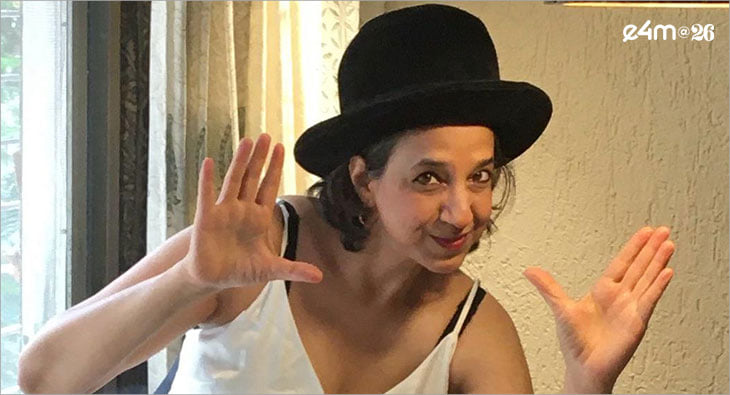

- Salone Mehta is a versatile artist with a career spanning theatre, cinema, radio, and audio storytelling, known for her roles in productions like "Dear Zindagi" and "Hedda Gabler."
- In an interview, she discusses the evolving landscape of radio in a digital world, emphasizing its intimate nature and potential for a comeback, while also addressing the impact of immersive sound on storytelling.
- Mehta highlights the importance of active listening in communication and critiques the declining attention spans of audiences, which affect theatre productions.
- She expresses concern over the threat of artificial intelligence to voice artists, noting a significant decrease in pay and opportunities in the industry, while also sharing her ambition to direct a new production of "Amadeus."
Actor, singer, playwright, voice artist and drama coach Salone Mehta has built a career across theatre, cinema, radio and audio storytelling. The founder of The Artistes Studio, Mehta’s screen credits include Dear Zindagi, The Archies and Dahaad. On stage, she has recently appeared as Aunt Julian in Hedda Gabler and played multiple characters in Atul Kumar’s adaptation of The Curious Incident of the Dog in the Night-Time.
In this interview, Mehta speaks about moving between creative mediums, the economics of theatre, the importance of active listening, the growing role of immersive sound and the threat artificial intelligence poses to voice artists.
Excerpts
You have worked in films and series such as Dear Zindagi, The Archies and Dahaad. Is Indian cinema creating enough meaningful roles for mature actors?
I would certainly like to do many more interesting roles—characters with shades of grey, contradictions and emotional nuance.
Cinema has also given me some wonderful friendships. When people work together over extended schedules in places such as Goa, Bhopal or Mumbai, they form their own family. I enjoy the medium, but I am now looking for parts that allow me to explore more complex human behaviour.
You were associated with the early years of Radio Mirchi. How do you view radio’s evolution in a digital and podcast-driven world?
Radio is a very local and intimate medium. A good presenter has the ability to speak to one person, even while broadcasting to thousands. That companionship cannot be recreated by simply playing a playlist.
Radio personalities such as Roshan Abbas, Brian Tellis and Hrishikesh Kannan became a part of people’s everyday lives. It would be wonderful to have that “radio friend” back on the airwaves.
I hope radio is eventually permitted to carry more news because the ability to hear an immediate news break while driving would add tremendous value. The medium may be passing through a difficult phase, but I believe it can make a strong comeback.
You have worked on immersive audio experiences at the Red Fort and the Museum of Solutions. How is sound changing storytelling?
Those were among my most exciting creative experiences because we were effectively dressing an entire environment with sound.
Immersive formats are growing across museums, exhibitions, escape rooms and art experiences. Sound can create a complete reality inside a physical space. A creator can combine sound effects, music and voice to bring emotion, mood, colour and texture to a story without relying entirely on visuals.
It opens up remarkable possibilities for experiences designed for both children and adults.
As a playwright, you have explored relationships, addiction and materialism. What inspires your writing?
Life and interpersonal relationships inspire me most—love, fidelity and the changing balance of power between people. Sometimes something seemingly small, such as an untruth coming to light, can completely alter a relationship.
I am also interested in the anatomy of violence. Why must an “alpha male” be someone capable of striking another person? Why do so many films depend on violence or titillation? Is peace considered boring? These are questions I would like to examine through my writing.
Crystal Anniversary was largely autobiographical and followed two artists struggling to earn a living. Crack explored addiction and shifting power equations, while Beyond Bling examined the idea that a person is more than what they possess.
My stories tend to be tragic. I do not seem to have much of a funny bone, and audiences often leave in tears. Ultimately, however, I write about relationships because relationships run the world.
Your career spans theatre, cinema, radio, writing and voice acting. What has kept you creatively engaged across these different mediums?
My first love is actually music, but every medium offers something different. I loved radio because it was live and immediate. During the Times FM days, we worked out of All India Radio, played advertisements from spools and sometimes had to kick the CD player to make it work. Radio Mirchi later brought an entirely different technological environment.
Theatre remains a great love because it gives you a high that nothing else can. After a performance, it can take hours to unwind. Cinema can initially appear isolated, but when you shoot together for days, the cast and crew become a family.
I cannot say that I prefer one medium over another. What keeps me going is restlessness and the desire to keep challenging myself.
You recently played Aunt Julian in Hedda Gabler. What drew you to the character, and how did you approach the role?
Aunt Julian is not a very large part, but who can say no to a production of that quality? She initially appears to be a kind and loving person who is deeply devoted to her nephew. However, her affection can also become suffocating.
She is, in some ways, responsible for the isolation Hedda experiences. Once I began looking beyond Aunt Julian’s sweetness, I discovered her shades of grey, and that made the character interesting.
Life is ultimately an actor’s greatest drama school. By a certain age, you have experienced joy, heartbreak, sorrow and pain. Those memories become part of your emotional toolbox.
In The Curious Incident of the Dog in the Night-Time, you played multiple characters. How difficult was it to switch between such different personalities?
It was more fun than difficult, although the costume changes were extremely rapid. I would run into the wings and change from a swimsuit into a sari, and then from a sari into a dress.
Normally, the process of applying make-up and getting ready allows an actor to leave their own world behind and gradually enter a character. I did not have that luxury in this production.
Atul Kumar helped me identify a distinctive physical language for every character. Miss Carvalho, for instance, always carried a cup and saucer, which became almost an extension of her body. She was fluid, flirtatious and looking for love. The principal, on the other hand, had a rigid body and a fiery personality.
The challenge was to use a small physical action in the wings as a reset before entering as the next person. In such situations, craft becomes extremely important.
Through The Artistes Studio, you have trained actors, young adults and corporate professionals. What is the biggest communication weakness you observe today?
The biggest weakness is listening—particularly active listening. People are often so eager to say what they have prepared that they do not really hear the other person.
Active listening means paying attention to the words, reading the person and observing their body language. Sometimes what people say is the opposite of what they actually mean. Actors call that subtext, but it exists in everyday communication too.
The second problem is the shrinking attention span caused by endless scrolling. Theatre productions were shortened from two hours to one because audiences were believed to have shorter attention spans. Now, creators are competing with 15-second reels. Theatre-makers must find ways to hold attention without sacrificing the depth of the work.
With AI increasingly capable of replicating human voices, how do you see the future of voice artists and dubbing professionals?
It is more than a threat—it is already real, and I find it tragic. There was a time when voice artists could spend an entire day recording telephone prompts and go home with a respectable payment. Recently, I was offered ₹2,000 for a one-hour dubbing assignment. I declined because it would barely cover the cost of travelling to the studio.
Voice-over and dubbing assignments once paid five or even ten times more. Many stage actors depended on this work to support themselves while continuing to do theatre. That source of income is now drying up.
At present, AI voices often lack emotion and the slight imperfections that make a voice human. My fear is that the technology will eventually become sophisticated enough to reproduce both.
There will still be audiences who prefer human voices. However, routine work—such as dubbing a series into five languages—may increasingly move towards AI because it is faster and cheaper. The future will depend partly on whether people continue to value the emotional texture of a real human performance.
Having reinvented yourself across disciplines, what remains an unfulfilled ambition, and what can audiences expect next?
I am now formally donning the director’s cap. I have directed from the sidelines for years, but I had never fully taken on that responsibility. Amadeus, which is expected to open in January, represents a new challenge.
Whenever you give yourself a fresh challenge, you are compelled to rise to it. Everything becomes new again—the work, the anxiety and the thrill. I think I am still rebelling. I am simply too restless to relax, and that restlessness keeps me moving forward.
Read more news about Digital Media, Television Media, Out of Home Advertising, Print Media, Latest Advertising India
For more updates, be socially connected with us onInstagram, LinkedIn, Twitter, Facebook, YouTube & Google News