Media industry needs to rethink its business model: Avinash Kaul
In this freewheeling conversation, Avinash Kaul spoke about his book 'The Next Mountain', the changing media landscape, his leadership philosophy, and much more
 by
by
Published: Aug 3, 2026 9:30 AM | 6 min read
 Follow Us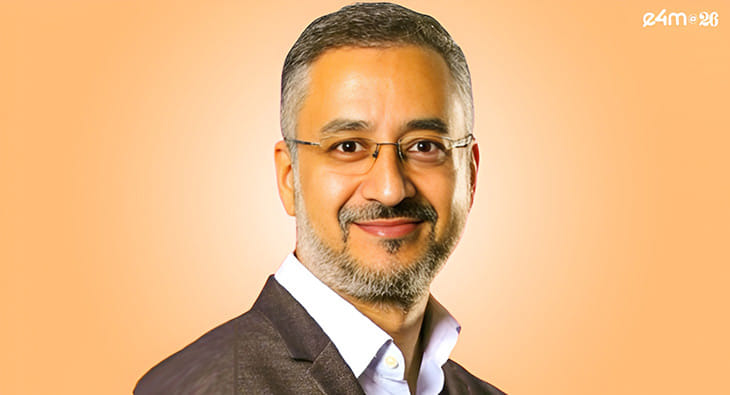

- Avinash Kaul, a veteran in the media and broadcasting industry, has released a book titled "The Next Mountain: Notes on Resilience, Leadership, and Purpose," which reflects on his personal journey and the lessons learned through struggles and achievements.
- The book's title symbolizes the continuous challenges and goals in life, emphasizing that success is not a destination but a process of growth and learning.
- Kaul discusses the significant changes in the media industry, highlighting the shift towards individual content creators and the need for traditional media to adapt its business model to remain relevant.
- He offers advice for young professionals, encouraging them to embrace mistakes as learning opportunities and to take personal responsibility for their careers, while also expressing a desire to guide those with limited resources in the media field.
Media and broadcasting industry veteran Avinash Kaul, recently published his book, "The Next Mountain: Notes on Resilience, Leadership, and Purpose."
In an extensive interview with samachar4media, Kaul spoke about the book, which explores struggle, leadership, change, and the pursuit of new heights after each achievement. He also shared his personal journey, changes in the media industry, his leadership philosophy, and important lessons for young people.
Excerpts:
What inspired you to write 'The Next Mountain'? What is this book about?
For me, this isn't just a book, but the essence of my entire life. I don't consider it a book in the traditional sense, but rather a document of my journey. It tells the story of a man who never imagined he would reach a leadership role in the media industry. Coming from a modest middle-class family, this book reflects the lessons I learned while facing numerous struggles and difficult circumstances. Just as life has constantly tested me, this book is also shaped by those experiences. Therefore, everything written in it is not based on theory, but on life's experiences.
What was the thinking behind naming the book 'The Next Mountain'?
For me, mountains have always been a metaphor for life. The journey doesn't end after climbing one mountain; the next one always stands. So, I thought there couldn't be a better name than "Next Mountain." I've conquered some mountains in my life, and there are many more to climb. After every achievement in life, a new challenge awaits. Therefore, for me, every next goal will always be "Next Mountain."
How much did the experience of migrating from Kashmir change your life?
I'm confident that if that incident hadn't happened, my life would have been completely different. That experience taught me at a very young age that life can change at any time. That period taught me to take every step very carefully. Perhaps, after completing engineering, I would have been working in a government department. But the circumstances I faced gave me the mindset to constantly move forward and be prepared for every challenge. That period played a huge role in where I am today.
What does success mean to you?
For me, success isn't about a destination. If you're a climber, the true joy isn't in reaching the summit, but in the process of climbing it. Mountains challenge you at every step, and that challenge is what drives you forward. Life and career are the same. If you're willing to learn, grow, and continually improve yourself, you can't stop. Every achievement brings a new goal, and that's what motivates you to keep moving forward.
What did you lose and what did you gain in this journey to success?
Every success has its price. Working late into the night often meant less time with family, so from that perspective, I lost a lot. But that journey also gave me the opportunity to learn, understand, and grow. I always believe that every person has their own mountain. Just as I had to climb my own mountain, my family and children also have their own journeys. Everyone has to climb their own mountain, and that's the biggest principle in life.
After observing the media industry so closely, what do you think is the biggest turning point in Indian media?
The media industry has seen rapid change. We witnessed the dawn of news channels, and now, we are witnessing a time when people are questioning the future of traditional news channels. The biggest challenge in the future will come from individual news and content creators. The way people consume news has changed. Instead of watching a single channel for a long time, they prefer short videos and news on digital platforms. Therefore, traditional media will also have to rethink their model.
If you had to create a new blueprint for a media company today, what would be your biggest priority?
I believe the media industry needs to seriously reconsider its business model. Only when expenses are low and revenues are high will investment in quality journalism be possible. I would prefer to invest more in good talent rather than in luxurious studios and large offices. Ultimately, the true strength of the news industry lies in its people. If good people are not given opportunities and resources, they will find their own way.
What is your leadership philosophy? Why did you thank the security guards and housekeeping staff first in your farewell message from your previous company?
My journey began from humble beginnings, so I fully understand the importance of those who work behind the scenes. The success of any organization isn't solely driven by the CEO or senior executives. Security guards, housekeeping staff, camera crews, lighting, sound, and field workers are equally important. If a leader doesn't respect their contributions, their success is incomplete. I still consider myself one of those people.
What would be your most important advice for young professionals?
First, don't be afraid of mistakes. If mistakes are made, you'll learn quickly. Second, don't repeat the same mistake twice. And third, never stop. If you keep moving forward in the right direction, you will definitely reach your destination. It's more important to work on yourself than to blame others. Ultimately, every person is the CEO of their own life and is responsible for it.
What is your 'next mountain' now?
The next phase of my life is one of purpose. After struggle and leadership, I now strive to guide those with limited resources. I want those in the media profession to maintain the same passion and positive attitude toward their work. I believe that if we only talk about problems, they will appear even bigger. It's better to do something ourselves and inspire others to bring about change.
Why should readers read 'The Next Mountain'?
I just want to say that this book doesn't contain any sermons. It's the story of my journey. Perhaps some readers will find their own story in it. When faced with career challenges, reprimands from their boss, or leadership decisions, the various chapters in this book can offer a fresh perspective. After all, being a leader isn't about giving orders, but about leading with the entire team.
Read more news about Television Media, Digital Media, Advertising India, Marketing News, PR and Corporate Communication News
For more updates, be socially connected with us onInstagram, LinkedIn, Twitter, Facebook YouTube & Google News