Mahatma Gandhi: The strongest brand of recall India has ever known
Gandhi is a name that inspired millions, influenced leaders across the world and continues to be remembered more than seven decades after his death, writes Dr Annurag Batra
 by
by
Published: Oct 1, 2026 9:41 AM | 5 min read
 Follow Us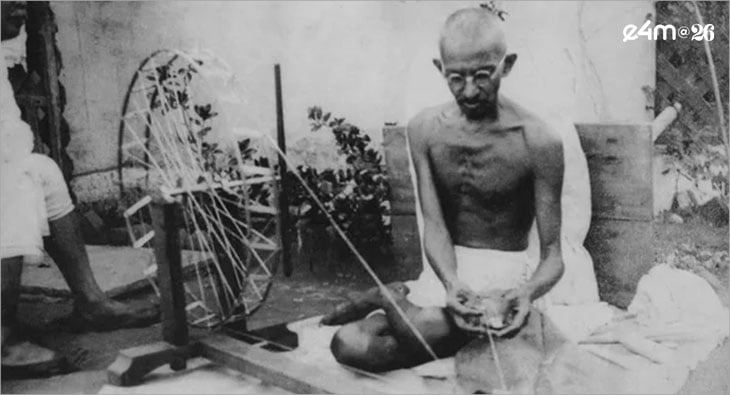

- On October 2, Mahatma Gandhi's birth anniversary, his legacy is examined through the lens of branding, highlighting how his name symbolizes values such as truth, non-violence, and peace without any formal marketing efforts.
- Gandhi's authenticity stemmed from the consistency between his beliefs, words, and actions, which fostered trust and a deep connection with the people, allowing his ideas to spread organically across India.
- His influence extended beyond India's independence, inspiring global leaders and movements advocating for peace and justice, illustrating how personal identities can evolve into larger ideas that endure over time.
- Unlike modern branding strategies, Gandhi's identity was not manufactured; it emerged organically from his actions and convictions, emphasizing the importance of living one's values as a foundation for lasting impact.
On October 2, as the country remembers Mahatma Gandhi on his birth anniversary, perhaps we can look at him through a slightly different lens — as a brand.
Not a commercial brand, of course. But a name that came to represent a powerful set of values and ideas. A name that inspired millions, influenced leaders across the world and continues to be remembered more than seven decades after his death. In communication terms, there are few stronger examples of a name becoming a brand with extraordinary recall.
He had no advertising campaign, no social media strategy, no logo and certainly no marketing budget. Yet say the name Gandhi, and a whole set of associations immediately comes to mind — truth, non-violence, simplicity, courage, self-reliance and peace.
That is the power of a strong brand. The name becomes larger than the person or the product. It begins to stand for something.
A Brand Built Through Life
Gandhi's greatest strength was the consistency between what he believed, what he said and how he lived. His philosophy was not something written in a presentation or communicated through a carefully crafted campaign. It was visible in his everyday life.
The simple dhoti, khadi, walking stick and round spectacles became instantly recognisable symbols. They were never designed as brand assets, yet they became powerful visual identifiers of Gandhi.
Today, brands spend enormous amounts trying to communicate authenticity. Gandhi did not have to communicate it. He lived it.
His simplicity was not a positioning statement. It was a way of life. His commitment to non-violence was not a campaign theme. It was central to his philosophy. His belief in self-reliance was reflected in his advocacy of khadi and the spinning wheel.
The message and the messenger were inseparable.
Trust Was His Greatest Asset
Every brand wants to build trust. Gandhi earned it through consistency.
People followed him because they believed in the sincerity of his convictions. His words carried weight because there was a visible connection between his beliefs and his actions. That created an extraordinary bond with ordinary Indians.
He had no television, no digital platforms and no social media to amplify his message. Yet his ideas travelled across the country.
People themselves became the medium.
That perhaps offers an important lesson even for today's brands. When people believe in a message, they carry it further than advertising ever can.
From a Person to a Movement
Gandhi's influence did not stop with India's freedom struggle. His philosophy travelled across borders and generations.
His ideas of non-violent resistance influenced leaders such as Martin Luther King Jr. and movements around the world. His name consequently became associated not merely with India's independence but with a broader conversation around peace, justice and human dignity.
This is when a personal identity becomes something much larger.
It becomes an idea.
And ideas can outlive the people who create them.
He Never Tried to Become a Brand
There is an irony at the heart of the Gandhi story.
There was no personal branding strategy. No image consultant. No attempt to manufacture a public persona. The identity emerged from his beliefs, his actions and the impact he had on people.
This perhaps is one of the strongest lessons for today's brands.
We talk constantly about purpose, authenticity, storytelling and trust. But these cannot simply be communicated into existence. They have to be supported by action.
A brand promise is meaningful only when people can see evidence of it.
Gandhi's life was the evidence.
The Gandhi Lesson
For those of us in communication and marketing, Gandhi offers an unusual case study.
His identity was distinctive. His message was simple. His symbols were memorable. His purpose was clear. His actions reinforced his words. And most importantly, people connected emotionally with what he represented.
He demonstrated many of the principles that modern marketers now discuss as essential to building strong brands — long before these became part of the marketing vocabulary.
But there is an important difference.
Gandhi did not build a brand to sell something. He built trust to change something.
That distinction perhaps makes his story even more powerful.
A Legacy That Still Speaks
Gandhi remains a historical figure whose ideas and actions have been debated and interpreted in different ways. Yet his influence is undeniable. His teachings continue to be discussed, his quotations continue to be repeated and his image remains instantly recognisable around the world.
That is perhaps the ultimate test of an enduring brand: what remains when the original communicator is no longer there?
In Gandhi's case, what remains is a set of ideas that continue to find relevance.
So, this October 2, perhaps we should look beyond the familiar photographs, statues and ceremonial tributes and ask ourselves what made the name Gandhi endure.
The answer may lie in something very simple:
Truth over convenience.
Simplicity over excess.
Courage over conformity.
Purpose over personal gain.
And action over words.
Gandhi never needed advertising to build his identity. He never needed a tagline to explain his purpose. He never needed a campaign to establish his values.
He lived the message.
And perhaps that is why the brand called Mahatma Gandhi continues to speak to us.
A man became a message.
The message became a movement.
And the movement became a legacy.
Disclaimer: The views expressed here are solely those of the author and do not in any way represent the views of exchange4media.com.
Read more news about Digital Media, Television Media, Out of Home Advertising, Print Media, Latest Advertising India
For more updates, be socially connected with us onInstagram, LinkedIn, Twitter, Facebook, YouTube & Google News
