Peps is allocating 75% of its marketing budget to digital: MD & Co-founder G Shankar Ramm
G Shankar Ramm speaks to e4m about how the brand has evolved over the years, the rationale behind its digital push, and the strategies driving its next phase of growth
 by
by
Published: Sep 25, 2025 9:05 AM | 7 min read
 Follow Us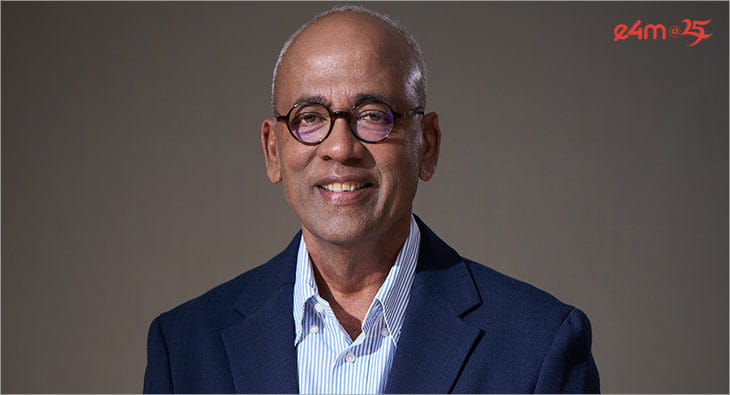

Sleep as a category in India has come a long way. Once defined by functional products with limited focus on comfort or technology, the market has been reshaped by urbanisation and rising awareness of sleep quality, driving demand for spring mattresses, memory foam, and other premium solutions. According to Mordor Intelligence, the Indian mattress market is projected to reach $2.40 billion in 2025. Yet, very few brands have been able to remain consistent over the years—one of them being Peps Industries.
Primarily known for its retail presence, Peps is now reimagining its playbook with a sharper focus on marketing and digital. The company spends around ₹25 crore annually on marketing, with overall spends, including outdoor and gross signage, touching ₹28–29 crore. Of this, the brand has been directing approximately 65–75% towards digital and online platforms, while the remaining 25–35% towards traditional media such as TV, radio, and outdoor.
In an exclusive interaction with e4m, MD and co-founder G Shankar Ramm spoke about how the brand has evolved over the years, the rationale behind its digital push, and the strategies driving its next phase of growth.
Digital Reboot
This digital-first shift marks a turning point for the brand, as for most of its journey it has remained retail-first, relying heavily on dealer networks and in-store experiences. In fact, the company was initially reluctant to go online. “Whenever we tried to scale online, our dealers objected. Since we were doing extremely well in retail, we deliberately delayed our digital play,” said Ramm.
Peps did experiment with online sales only in 2017, and the results were promising at first. However, it soon realised that e-commerce came with thin margins and often cannibalised offline sales. “There was no real money to make online. With more than a thousand workers and no investor backing, we had to be smart about where we put our focus. So, we stuck to the dealer network and capped our online sales,” he added.
That strategy, however, has now been re-engineered. Over the last few months, Peps has doubled down on building its digital presence. Its Instagram campaigns have already helped the brand regain recall value. At the same time, it has revamped its internal policies to ensure that its partners remain motivated and earn fairly, even as the company expands its online footprint. Currently, its strategy rests on a two-pronged approach—strengthening its own website as a direct-to-consumer channel and expanding brand awareness across digital platforms.
It has also reimagined its marketing strategy to align with this digital reboot. The brand now spends around ₹25 crore annually on marketing, with overall spends, including outdoor and signage, touching ₹28–29 crore. Of this, 65–75% is directed towards digital platforms, with the remaining 25–35% invested in traditional media such as TV, radio, and outdoor. South India continues to be the company’s stronghold, commanding 80–85% of Peps’ overall marketing investments. Last year the brand directed 60% to digital and 40% to traditional media. But the blueprint is gradually evolving.
“In 2025, our marketing goals are anchored in three strategic priorities: educating the consumer about sleep wellness as spring mattress is a natural progression, building omnichannel trust, and differentiating through innovation. We’re not just selling mattresses—we’re selling deeper rest, better posture, and healthier lifestyles. Our focus is to take that conversation beyond metros, into the heart of Tier II and III India, where awareness is still nascent but aspirations are growing,” Ramm told e4m.
A key driver of this shift has been the success of its digital-first storytelling, from everyday customer journeys to festive campaigns like the Diwali 2025 “Tug of War” campaign, all of which have spotlighted family rituals in an engaging and relatable format.
“We’re also investing heavily in digital-first storytelling, content that demystifies mattress choices, explains our innovations in simple terms, and connects emotionally with users at different life stages, whether it’s a young couple setting up their first home, a mid-aged couple upgrading their mattress as they move to their own home, or a senior looking for orthopedic comfort,” said Ramm.
Peps Through the Years
Over the years, Peps has grown from a niche industrial unit into one of India’s leading mattress manufacturers. Founded in 2005 by Ramm, who brings decades of experience in the coir and foam industry, and Manjunath Punyamurthy. The company began its journey by introducing spring mattresses for the first time in the country. In the first year itself, it made 8,700 mattresses. Today, it produces over 3 lakh spring mattresses annually, with a turnover of ₹325 crore in the spring segment.
According to Ramm, Peps was built on word of mouth and the founders’ passion to create a standout brand. The brand’s marketing journey started with signboards and scroll ads on channels like NDTV, which later evolved into structured brand-building with guidance from advertising veterans. “Every detail—from signboard colors to featuring a mattress in the design—was carefully planned,” said Ramm.
To further strengthen its retail presence, the brand also undertook strategic initiatives like setting up factories in Pune and Delhi, participating in hotel exhibitions, and partnering with hotel chains.
Over the years, Peps’ growth playbook has rested on a few clear strategies. The company bet big on affordable luxury, introducing spring mattresses at price points accessible to India’s emerging middle class, while still offering seven-year warranties and easy finance options. It has kept marketing hyper-local yet innovative. Innovation has been at the core of the brand’s growth: it was the first Indian company to introduce memory foam-backed Spine Guard mattresses.
Further, Peps has strengthened distribution through deep dealer relationships and has focussed on long-term execution rather than quick wins. A key driver of its growth has been a repeat purchase rate of nearly 75%.
Future roadmap
In an increasingly crowded market where new-age D2C mattress startups are trying to disrupt the category, Peps is betting on differentiation rooted in product authenticity and innovation. The brand has consistently championed spring mattresses, at the same time, it is reviving rubberised coir mattresses, which are farmer-linked, sustainable, and biodegradable. What makes it unique is that the brand currently holds more than 300 design patents and has invested significantly in coir-based R&D. This blend of sustainability and proprietary technology helps the brand defend its edge.
Apart from its product offerings, and digital expansion, Peps continues to expand its retail footprint, aiming to increase its store count from 80 to 150 by FY26 and grow its network of dealers to 5,000. Currently, 90% of its stores are located in South India. As part of its expansion strategy, the company is evaluating a new plant in North India.
On the revenue front, Peps claimed to have closed FY25 at around ₹500 crore, of which ₹400+ crore came from mattresses and about ₹100 crore from accessories like sheets, sofas, and related products. Ramm admitted that for the last 3–4 years growth had been somewhat stagnant, something common for first-generation entrepreneurs who never initially imagined hitting ₹500 crore. However, the company is now setting a strong base for the next phase, where digital will play a key role. For FY26, Peps is targeting a 20–25% revenue jump, with sharper brand building.
It is looking to reach the ₹1,000 crore revenue mark in the next five years, on the back of expanded retail and digital presence, innovative product launches and a focus on quality and affordable luxury mattresses.
Read more news about Marketing News, Advertising News, PR and Corporate Communication News, Digital News, People Movement News
For more updates, be socially connected with us onInstagram, LinkedIn, Twitter, Facebook, YouTube & Google News