Home furnishing e-comm underpenetrated, has growth potential: Bhavana Jaiswal, IKEA India
Bhavana Jaiswal, Country E-commerce Integration Manager, IKEA India, shares the brand’s plans to replicate offline experience online, with online sales to contribute approx. 40% of revenues by 2030
 by
by
Published: Mar 26, 2026 8:55 AM | 8 min read
 Follow Us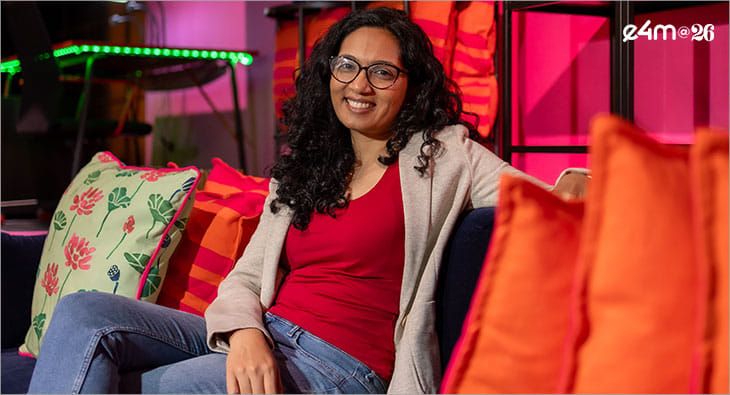

For anyone visiting the flagship IKEA large-format stores, known as the signature blue box, for the first time, it is an experience to be remembered. And, why not – right from the size ranging from 200,000 to over 500,000 square feet (roughly 4.5 to over 10 acres) to showcase the extended IKEA range, multiple set-ups showcasing design spaces offering solutions across price-points, and of course the renowned food in the in-store restaurant.
However, evolving consumer needs has seen IKEA adapt to launching small-format stores in city centers and the furniture conglomerate is now focused on replicating the elevated off-line experience online.
Bhavana Jaiswal, Country E-commerce Integration Manager, IKEA India shares how the brand is betting on its online business and expects online sales to contribute around 40% of revenues by 2030
Edited excepts
Q: Today, “experience” is a buzzword for most brands. But for IKEA, it’s always been core to its DNA, particularly when it comes to visiting your large format store. How are you translating that in-store experience into the online world?
The flagship IKEA store provides an elevated experience and remains the most immersive IKEA experience, and nothing can fully replace that. However, online, we don’t treat our website like a typical product listing platform. It’s not about showcasing over 6,400 products - it’s about offering solutions, content, providing inspiration and even buying on the platform.
We have a dedicated section, “Rooms,” where customers can explore solutions and setups based on spaces. We offer consumers a walk-through room displays as it is in a store. We’re also working on enhancing this further to mirror the in-store experience even more closely.
Importantly, our communication is never just product-led. For instance, we don’t just say “buy a BILLY bookshelf”—we show how this is a solution to transform and elevate your living space or how BILLY can be repurposed creatively, like a shoe rack. Similarly, with products like our shelving solution, KALLAX, we highlight how customers can customise them with inserts, boxes, drawers, or doors and other accessories to enhance storage. The aim is to never sell KALLAX but to provide a solution and elevate the experience.
Q: So, aspiration plays a big role in this experience?
Absolutely. Aspiration is central. We’ve also introduced digital tools like IKEA Kreativ on our app—an AI-based solution where you can scan your room, eliminate the existing furniture, and then replace and visualise it with IKEA products.
This is something even stores can’t offer, envisioning how the furniture will look in your home. So, while we bring elements of the store online, we also create unique digital-first experiences that go beyond physical retail.
Q: Last year, IKEA launched its first-ever ‘Plan and Order Points’ (PaOP) in Bangalore. Can you share details on this?
Plan and Order Points are part of our services suite. IKEA isn’t just about selling products—we also offer design services.
These touchpoints allow customers to leverage IKEA’s expertise for a design solution for specific spaces, whether it’s a kitchen, wardrobe, or even an entire home. Our experts work with them to create tailored interior design solutions. This service is also available online. Customers can access planning and design service consultations via video calls, making it fully integrated with our e-commerce ecosystem.
Q: Online currently contributes around 30% of your sales. What’s the strategy to grow this further?
While we are currently at 30%, We aim to take that to around 40% by 2030. This growth will come from two areas—expanding into new cities and deepening engagement in existing markets.
We’ve already expanded to regions like Delhi NCR and other northern cities. We’re continuing to grow our footprint by entering online to Chennai and we see a lot more scope to expand online. Additionally, year-on-year we are seeing increased growth in our existing markets.
Today, when you look at online retail, majority of the sales are taken up by only two categories – electronics and fashion and beauty. At the same time, home furnishing e-commerce is still underpenetrated—currently around 7% of total online retail. We believe this category has strong growth potential, and we intend to cash in on that growth.
Q: Brands are increasingly betting on smaller cities for growth. What is your strategy for this area and how are you looking to build awareness about brand IKEA?
Our physical expansion, particularly in the large-format stores, will be centralized and focused on six major markets—Mumbai, Delhi, Bengaluru, Hyderabad, Pune, and Chennai and still have to grow in these markets.
However, we’re actively monitoring demand from smaller cities to understand the market for consumer investments in home furnishings. We already have an online presence across cities like Jaipur, Lucknow, Goa, Ahmedabad, and Coimbatore.
There are no immediate plans for physical stores there but based on how demand shapes up we could explore small-format presence, as we believe in being accessible.
For us, omnichannel is key. In markets without stores, online becomes the primary access point. We are still new to the market and started selling online in 2020, and online allows us to reach many more customers without being limited by physical infrastructure.
Q: Many consumers today research online but purchase in-store. How are you integrating this journey and vice-versa?
You’re absolutely right—that’s exactly how customers behave today. We have adapted ourselves to consumer behaviour and this can be seen in e-commerce as well as the small-format retail stores viz-a-viz our large format stores. Many consumer journeys often start online, especially for high-involvement categories like furniture. Purchase decisions don’t have to be instant. Customers research, shortlist products, visit stores for a touch-and-feel experience, and then either purchase in-store or return online to complete the transaction.
We’ve built our ecosystem to support an omnichannel seamless movement for the customer. For example, our app helps customers locate products in stores, view existing offers, and navigate aisles to find a selected product. Similarly, in-store digital screens allow customers to check availability or continue their online journey.
Similarly, even design services are integrated—if you start customizing a wardrobe online, our in-store experts can access and refine it with modifications, and vice versa. These are the features that we are focusing on to deliver an omnichannel experience.
Q: India seems to be a strong app-driven market. Are you seeing that reflect in your business?
We have the highest share of online sales through the app across Ingka Group, nearly 50% —second only to China. This aligns with broader trends in India, where most digital retailers see a majority of transactions happening via apps.
Q: Since launching e-commerce in 2020, what have been your biggest learnings?
Initially, we only serviced three cities, Hyderabad, Mumbai and Pune. Now, we service almost 80 cities and there have been several learnings in the process.
A major shift has been in logistics to ensure faster deliveries. Earlier, all deliveries were largely fulfilled through a central warehouse in Pune. We moved away from that format and today, our stores – in Hyderabad, Mumbai and Bangalore - are full-fledged fulfilment centres.
This has helped us optimise costs and significantly reduce delivery times. In cities like Bengaluru, Mumbai, and Hyderabad, we now deliver within a day across our entire range—not just select products, and this is a differentiating factor when compared to competition who may cater limited SKUs.
Another key learning has been around services. India is a service-oriented market, and our services are paid. We’ve had to adapt our pricing and packaging for delivery, assembly, and installation to better suit customer expectations.
Content is another big learning. Unlike physical stores, which can localise for each city, our website is uniform. We have to carefully balance our content—showing both compact urban living solutions and larger home setups to stay relevant and appeal across audiences.
Q: Could you elaborate on your content strategy for online platforms?
Our content strategy is focused on engagement—reducing bounce rates and ensuring customers stay immersed in the journey. We prioritise continuity and consistent experience. For instance, if a user clicks on a social or display ad, the landing page experience must align with what intrigued them and drew them in. Post that our content and merchandise should move the customer along the purchase journey.
Beyond that, we mirror our in-store approach through content particularly when it comes to seasonal and local relevance. Indian homes change with seasons and festivals—whether thick duvet in winter versus lighter bedding in summer, food storage solutions during summer, New Year clean-ups, or festive colourful décor for celebrations.
We create content that reflects these moments—helping customers refresh their homes with simple, affordable changes to make their home look spectacular while staying culturally relevant.
Read more news about Marketing News, Advertising News, PR and Corporate Communication News, Digital News, People Movement News
For more updates, be socially connected with us onInstagram, LinkedIn, Twitter, Facebook, YouTube & Google News